Smart Home Automation
Top 10 Smart Home Automation Ideas 2026 for Best Modern Homes

In 2026, smart home automation goes beyond convenience, creating homes that are intelligent, adaptive, and energy-efficient. By integrating AI, sensors, and connected devices, smart homes adjust lighting, temperature, security, and appliances automatically to match your lifestyle.
Modern systems are now affordable, scalable, and easy to use, offering enhanced comfort, safety, and cost savings. With thoughtful integration, even everyday households can enjoy seamless control, smarter energy use, and a personalized living environment.
What are the Smart Home Automation Ideas in 2026?
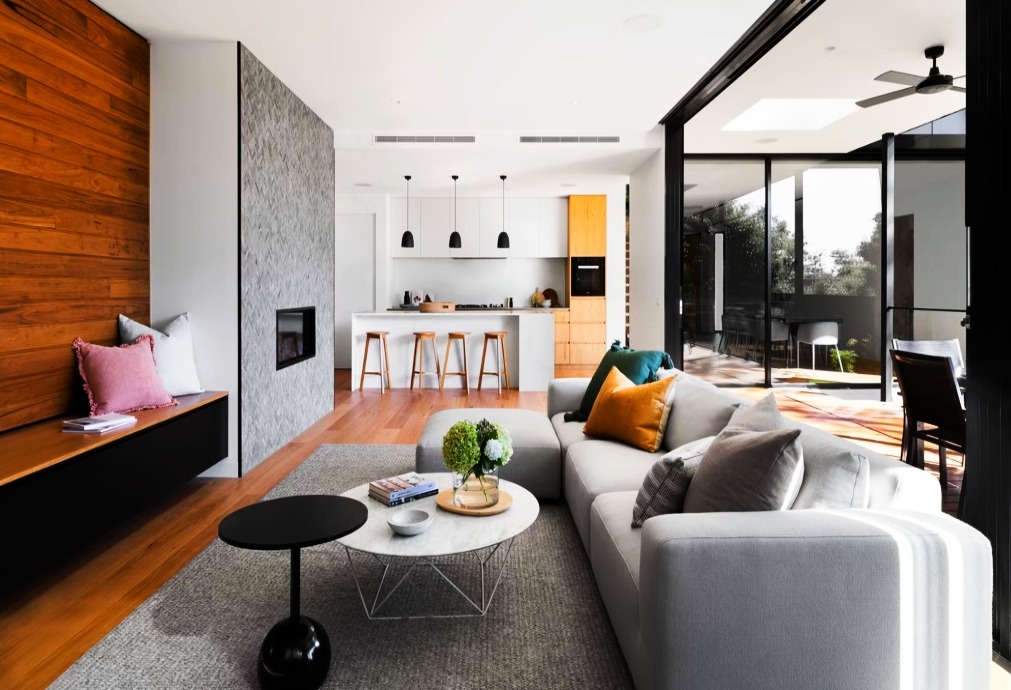
Smart home automation ideas in 2026 focus on building homes that are intelligent, adaptive, and user-centric. Instead of controlling devices manually, modern systems integrate lighting, climate control, security, and appliances into a single smart ecosystem that operates automatically.
These home automation ideas use AI and smart sensors to learn your habits, so your home adjusts temperature, lighting, and energy usage exactly when needed, without constant input.
The real value of smart home automation ideas lies in comfort, health, and efficiency. Intelligent climate systems maintain ideal indoor conditions, while smart lighting follows natural circadian rhythms to support better sleep and focus.
Advanced home automation ideas also include proactive security features like motion detection, smart locks, and real-time alerts, giving homeowners peace of mind whether they’re home or away.
In 2026, home automation ideas will no longer be limited to luxury homes. Affordable smart devices and scalable systems make automation practical for everyday households. These smart home automation ideas help reduce energy bills, minimize daily decision fatigue, and create personalized living spaces that truly match your lifestyle.
Benefits of Smart Home Automation Ideas in 2026
Smart home automation ideas in 2026 are designed to make everyday life simpler, safer, and more efficient. By integrating intelligent devices into a single connected system, these home automation ideas remove daily friction and enable your home to respond automatically to your needs. From security comfort, the benefits go far beyond basic convenience.
Enhanced Convenience & Control
One of the biggest advantages of smart home automation ideas is convenience. You can automate lighting, climate control, and appliances to work on schedules or respond instantly through your smartphone or voice commands. These home automation ideas reduce repetitive tasks, saving time and making your daily routine smoother and more stress-free.
Improved Energy Efficiency & Cost Savings
Modern home automation ideas help reduce unnecessary energy usage. Smart thermostats adjust temperatures based on occupancy, while intelligent lighting turns off when rooms are empty. By optimizing energy consumption automatically, smart home automation ideas in 2026 help lower electricity bills while supporting a more eco-friendly lifestyle.
Stronger Home Security & Peace of Mind
Advanced smart home automation ideas also focus on security. Features like smart locks, motion sensors, and surveillance cameras work together to monitor your home in real time. These home automation ideas send instant alerts for unusual activity, allowing you to check in remotely and feel secure whether you’re at home or traveling.
10 Best Smart Home Automation Ideas in 2026
Intelligent Climate Control Systems
Overview
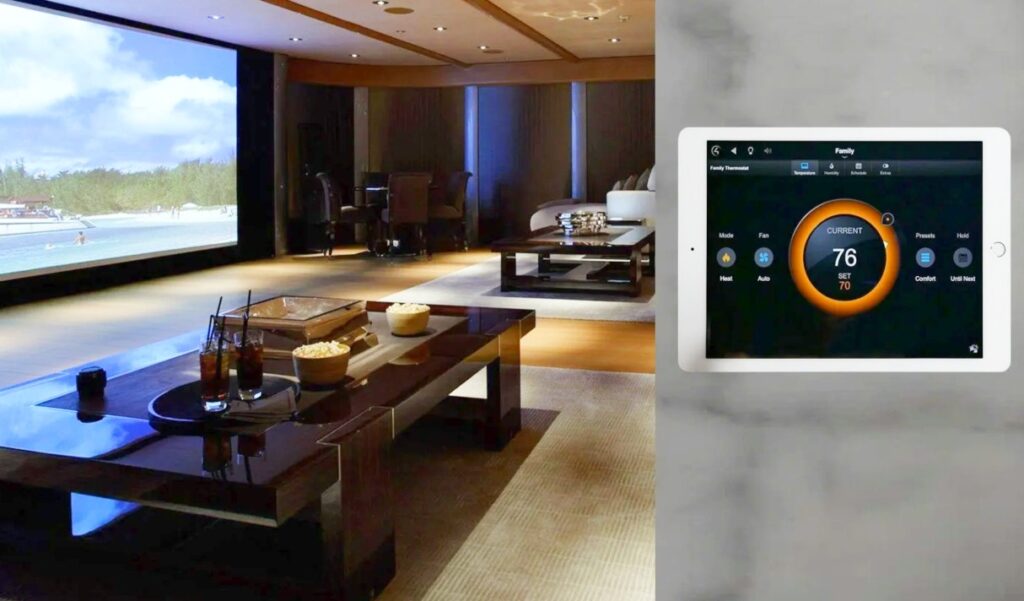
Smart climate management systems are good home automation ideas in 2026. These systems regulate temperature, humidity, and airflow to ensure your home remains comfortable all day long with no manual interaction required.
Intelligent climate control utilizes smart sensors and AI-driven learning that automatically adjust the atmosphere of your home based on your everyday patterns, changing outdoor climate,s and even room occupancy, allowing for optimal comfort while eliminating the need for constant manual control.
Specifications
- AI-based temperature learning and auto-adjustment
- IoT sensors for humidity, occupancy, and air quality
- Support for a mobile app and voice assistants (Alexa, Google Assistant, Siri)
- Two solutions for zoned heating and cooling.
- Tracking of energy consumption and monthly reports
- Integration with essential home automation concepts, such as intelligent blinds and lighting
Pros
- Ensures a comfortable experience no matter the season
- Saves energy and utility costs
- Learns user preferences over time
- Being able to control it from wherever you are using your smartphone
- Integrates with other home automation ideas
Cons
- More expensive in the beginning than regular thermostats
- Account for a stable internet connection at all times
- Professionals may need to install complicated setups
Conclusion
Intelligent climate control systems are a big part of home automation ideas 2026. These systems are more than just temperature control: they create a balanced, energy-sustainable indoor environment based on your lifestyle.
When done right, these systems help make your home more comfortable, cost-effective, and future-proof in terms of sustainability, efficiency, health, and comfort.
Automated Lighting Design
Overview
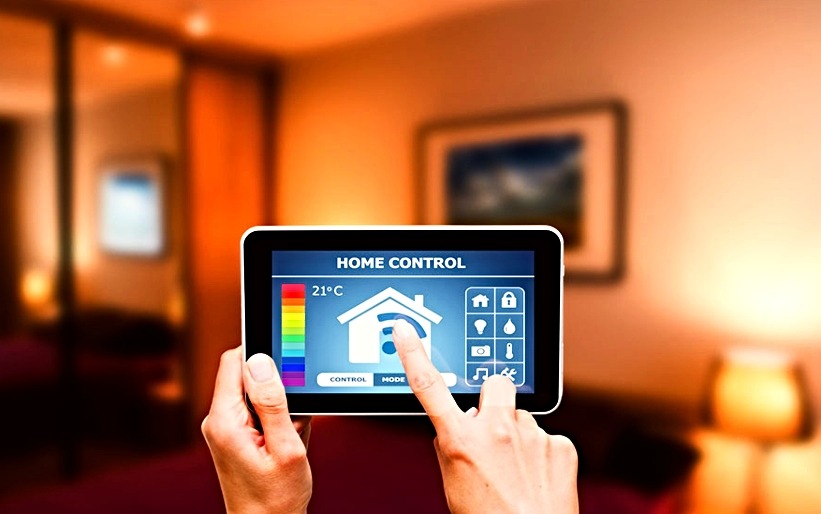
Home automation ideas in 2026: Automate lighting designing Smart lighting is more than switching lights on or off; these systems can brighten and dim lights, change color temperature, and set a mood without a single touch, automatically, according to your schedule, activity, or even the amount of sunlight outside.
Home automation in HOMESPACES, along with sensors, AI, and smart controls, ensures your entire home is comfortable, energy-efficient, and visually appealing for you.
Specifications
- Brightness and color temperature adjustment via AI
- Automatic on/off with motion and occupancy sensors
- Scenes and moods for work, relaxation, and entertainment
- Control via Alexa, Google Assistant, or Siri
- Scheduling and remote control using the mobile app
- Home Automation control ideas to bring it together with other smart home like climate and security
Pros
- Dynamic lighting helps set connected comfort and tone
- Helps conserve energy by keeping unused lights off
- Different scenes that can be used for different activities and times of the day
- Helps keep homes secure by imitating being home when actually away
- Blends seamlessly with other smart home automation concepts
Cons
- High Initial Cost (Smart Bulbs Cost More Than Regular Bulbs)
- Requires a Wi-Fi network for maximum operation
- Some of the more advanced features may require a technician to install
Conclusion
Still, the 2026 home automation ideas remain centered around features like designing automated lighting. This not only increases the ease of use and energy efficiency but also makes your spaces smart, adjustable environments. Automated lighting increases comfort, security, and smart home experience by integrating aesthetics, functionality, and intelligent technology.
Smart Window Treatments
Overview
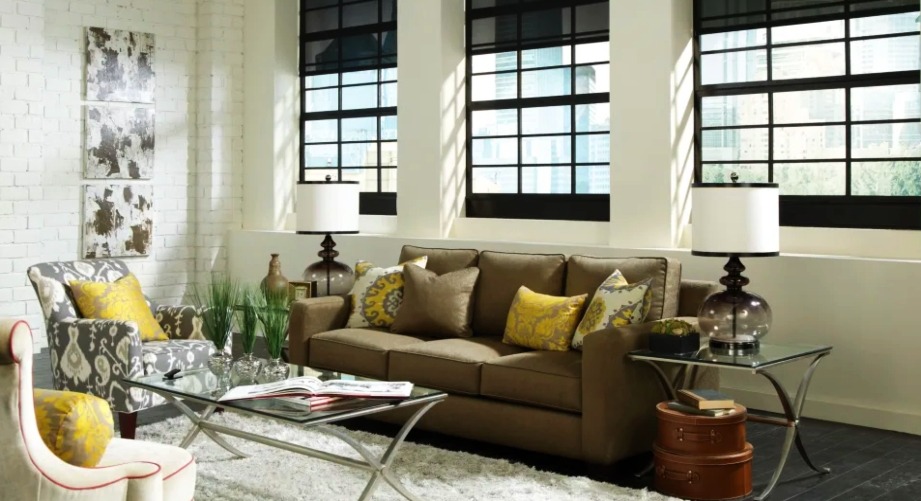
Smart window treatments: Getting a home automation system for 2026 would be incomplete without smart window treatments. Automated blinds, shades, and curtains to learn when to adjust themselves according to the time of day, sun exposure, or whatever you prefer.
These window treatments are able to increase comfort, energy efficiency, and privacy without the push of fingers through an integration of the following elements: sensors, AI, and the hub of home automation.
Specifications
- Different Designs Of AI Driven Schedule Motorized Blinds And Shades
- Sensors that detect light and temperature and adjust settings accordingly
- Control by voice from Alexa, Google Assistant , or Siri
- Mobile app for remote-control and routine presets
- Compatibility with smart climate control, lighting, and security systems
- Suppression of loss/gain of heat energy
Pros
- Improves comfort by controlling the sun and temperature indoors
- Helps save energy, which reduces utility costs
- Provides Privacy and Security Automation when you are out
- Schedules and scenes that can be configured according to the time of day
- Easily integrated with other smart home automation concepts
Cons
- More expensive initial investment compared to standard window treatments
- Powered systems come with the need for electricity and periodic maintenance
- Complete functionality is reliant on Wi-Fi stability and hub compatibility
Conclusion
Smart window treatments are a fashionable and eco-friendly component of smart home ideas for 2026. They are convenient, energy-efficient, and secure, while also working well with other smart systems – such as lighting and climate control. Our home fits our lifestyle with smart window treatments that help provide a comfortable, efficient, and future-ready living space.
Whole-Home Audio
Overview
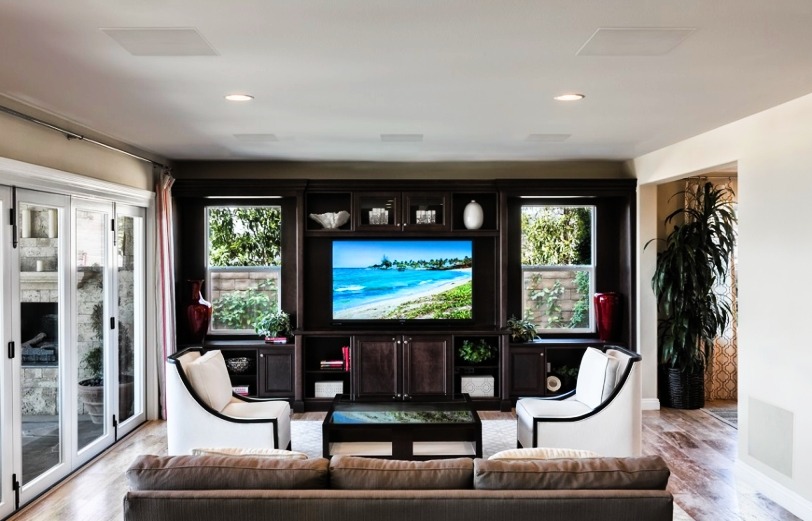
Modern home automation ideas 2026 have a most reliable and efficient integral feature, which is whole-home audio. Music and podcast alerts can be played through every room without a glitch, creating an integrated ambient lifestyle.
When paired with smart assistants and automated routines, whole-home audio can provide tailored sound in every space in a home, responding to your needs and preferences to elevate your entertainment, relaxation, and everyday activity.
Specifications
- Centralized control of seasonal streaming audio throughout the home
- Room and activity sound optimisation powered by AI
- Compatibility with voice assistants like Alexa, Google Assistant, and Siri
- App-controlled wireless speakers and smart hubs
- Playback on a schedule for alarms, routines, or moods
- Supports music services such as Spotify, Apple Music, and Amazon Music
Pros
- Listen to synchronized music in every room or send targeted audio to a zone
- Control it by voice or mobile app while your hands are free
- Improves your daily routines, your workouts, and your home entertainment
- Compatible with other smart home automation concepts for scenes and schedules
- Utilized for alerts, reminders, or security notifications.
Cons
- More expensive to install in more than one room
- Set up a professional to enable advanced functions
- Relies on Wi-Fi for effortless streaming
Conclusion
Whole-home audio makes normal living areas feel like a smart, living surround sound studio. A 2026 home automation ideas a smart entertainment system offers the 2022 comfort, entertainment, and seamless interaction with other smart home systems.
Access Control Systems
Overview
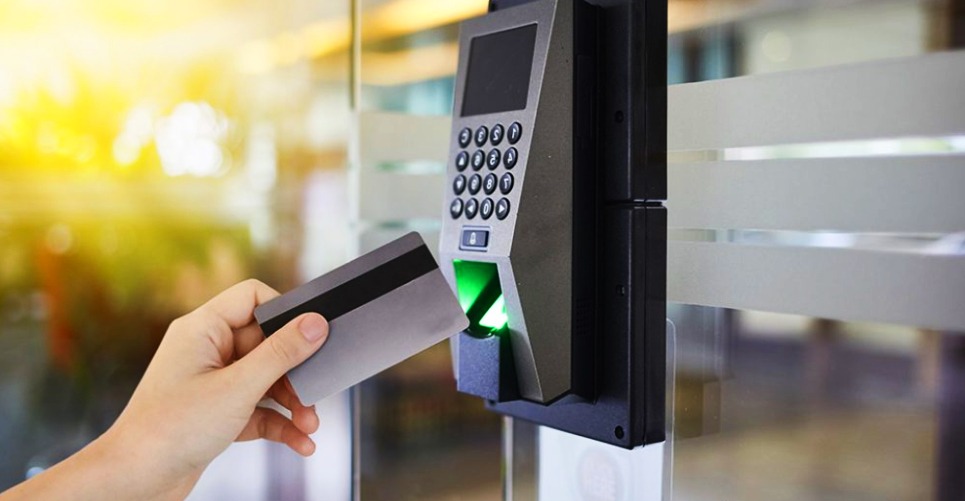
The home automation ideas for 2026 also revolve around an access control system, which would be one of the integral parts of any home automation system and will play an important role by ensuring that the home remains secure and only authorized users can enter the house.
Smart locks, keyless entry systems, biometric access, and the proverbial internet of things combine to help you control who goes where in your home and when.
Specifications
- PIN-Code / RFID / Biometrics-Permitted Smart Locks
- App for remote lock/unlock and access enablement
- Seamless integration with security cameras, alarms, and smart home hubs
- Instant alerts on any unauthorized access attempts
- Guest or service personnel access on a temporary or scheduled basis
- Works with voice assistants such as Alexa, Google Assistant, and Siri
Pros
- Improves home security by managing and monitoring entry
- No more physical keys to worry about
- Notifies you in real-time about any strange attempts to break entry
- For guests or staff, you can provide temporary or scheduled access
- Works together with other home automation concepts for a complete smart home environment
Cons
- Upfront Costs That May Be Higher Than Conventional Locks
- Full function on the hub or Wi-Fi dependency
- A specific maintenance and software update are needed from time to time
Conclusion
Home automation ideas for 2026 would not be complete without access control systems that offer security, convenience, and smart access control. These systems allow for monitored access and provide cation peace of mind with a customizable experience.
Smart Kitchen and Appliance Integration
Overview
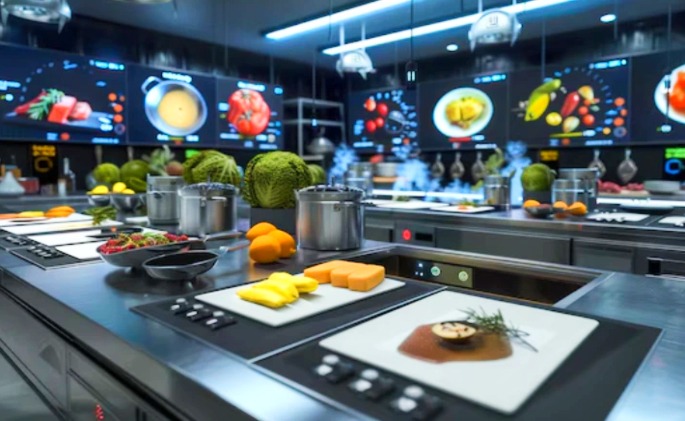
One of the most useful home automation concepts in 2026 is smart kitchen and appliance integration to save time and effort spent on cooking, cleaning, and meal planning.
Interactive devices, such as smart refrigerators, ovens, dishwashers, and coffee makers, communicate with one another and your smart home hub to automate processes, track usage, and even suggest cuisine based on the data.
By now managing this integration, it will certainly save times leads to efficient and easy tasks in the daily kitchen routine.
Specifications
- Refrigerators that know what’s inside them, and tell you when something is about to expire
- Smart Ovens and microwaves with Wifi connectivity for remote control and recipe instructions.
- Automated schedules for smart dishwashers + washing machines.
- Compatibility with Alexa, Google Assistant, or Siri for voice control
- Remote monitoring and control through mobile app integration
- Tracking energy consumption, automation for maximum efficiency
Pros
- Makes it so cooking, cleanup, and appliance handling are streamlined
- Inventory Tracking and Notifications: To Reduce Food Waste
- Provides the ability to control and schedule from a distance for convenience
- Works to improve energy efficiency by optimizing the way different electrical devices in your house are being used
- That works perfectly with other Smart home automation Ideas
Cons
- More expensive than their traditional counterparts up front
- Needs a reliable Wi-Fi connection and software updates every so often
- Some of the features could require professional installation
Conclusion
Integration of smart kitchen and appliances is one of the main pillars of any home automation ideas in 2026, creating convenience, efficiency, and smart control.
A smart kitchen hub is a smart device for a kitchen that connects all your appliances and automates your daily tasks to make your kitchen smart, communicative, and time-saving.
When well-implemented, these systems improve lifestyle, save energy, and future-proof your home.
Outdoor Landscape Management

Overview
2026 home automation concepts will consist of outdoor landscape management, technology that automatically tends to gardens, lawns, and/or outdoor spaces with little to no work required from the individual.
With smart irrigation systems, automated sprinklers, and smart sensors-powered outdoor lighting, just the right amount of water, cool breeze, and energy will circulate your home, making your landscape healthy, eye-catching, and energy-efficient.
These systems respond to the weather, soil moisture, and time of day to make sure the area outside your windows is lush and lively at all times.
Specifications
- Weather-based scheduled smart irrigation systems
- Sensors for Soil Moisture and Temperature to Enable Targeted Irrigation
- Schedule, motion-sensor-based automated outdoor lighting
- Compatibility with smart home automation systems and applications
- Smartphone-based remote monitoring and controlling
- Energy-efficient pumps and water-saving automation
Pros
- Eff Space Saving Gardens and Lawns Keeping
- It saves both water usage and energy costs
- Automated lighting for increased safety and beauty of your outdoor areas, automatische Zeitschaltuhr for increased outdoor forces and charms
- Allows for remote operation and instant alerts
- Easily Works with Other Smart Home Automation Concepts
Cons
- Increased initial investment compared to regular landscaping systems
- Periodic sensor maintenance and calibration are needed
- While the device is comparatively functional standalone, full functionality relies on Wi-Fi and hub connection
Conclusion
Smart home automation ideas for 2026, Part 9: Smart outdoor landscape management is also quite feasible and sustainable, based on automation adding to the smart home features. It automates watering, lighting, and monitoring to maintain a healthy, safe, and beautiful outdoor space.
Home Energy Management
Overview
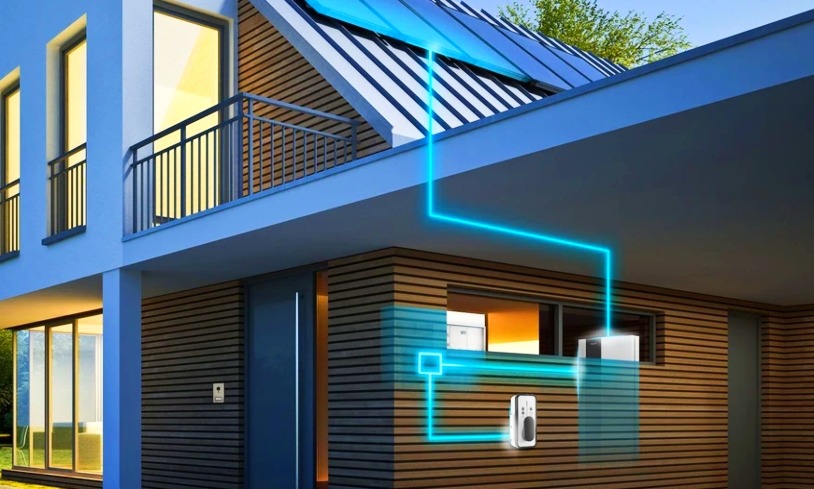
Home energy Management system is very much a part of home automation ideas 2026, to ensure energy-efficient usage, reduced energy expenses, and an eco-friendly home system. By making these systems monitor your electricity, heating, and cooling consumption in real-time in front of you, you can start making more informed choices.
Specifications
- Energy monitoring for appliances, lighting, and HVAC in real-time
- Recommendations for AI-driven reduction of energy consumption
- Smart thermostat, solar panel, and battery storage integration
- Use tracking, alert, and remote control via the mobile app
- Automated schedules for high-consumption devices
- Trend, savings & footprint reports
Pros
- Decreases electricity expense with energy optimization
- Lowers carbon footprint to advocate for sustainable living
- Gives visibility into energy trends to make better choices
- Works with other smart home automation ideas seamlessly
- Gives you the ability to control and automate remotely for optimal efficiency.
Cons
- Advanced systems could cost more up front
- Tied to wifi and smart hub connection
- A few features might need a professional installer
Conclusion
Smart Home Energy Management 2026 home automation ideas 2023 summer is a smart, practical, and environmentally friendly addition. Smart Home Meter provides convenience, cost savings, and sustainability by tracking usage, reducing consumption, and integrating with other smart devices.
Smart Bathroom and Wellness Systems
Overview
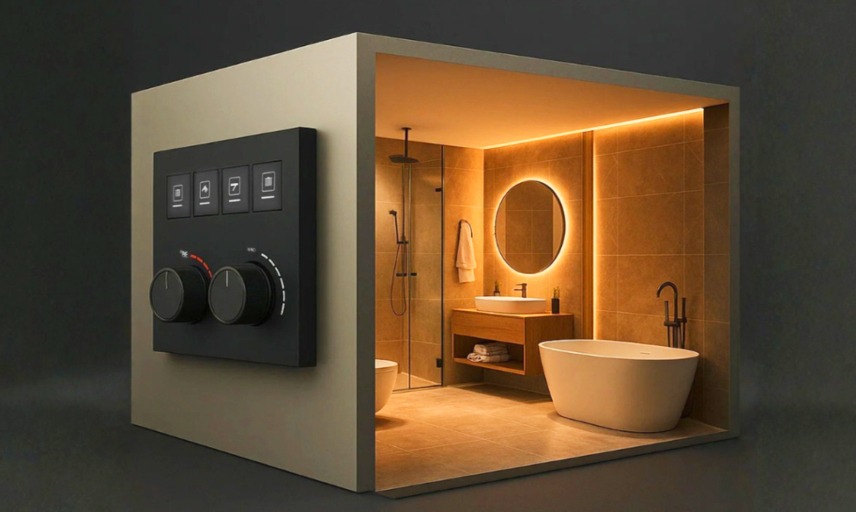
Occupants can also enhance their comfort with smart bathroom and wellness systems, which are an essential part of 2026 home automation ideas designed specifically to promote hygiene and personal well-being. There are smart showers, faucets, mirrors, toilets, and wellness devices that adjust to your needs and habits.
These smart systems combine sensors, AI, and smart controls for a more luxurious, health-driven, and energy-efficient bathroom.
Specifications
- Showers that remember your favourite temperature as well as water-saving modes
- Motion-activated faucets and touchless faucets
- Smart Mirrors, those that include lights, a health tracker, a virtual assistant, etc.
- Self-cleaning, high-tech, water-saving, bidet-style among new smart toilets
- Smart scales to monitor your weight, humidity monitors to track humidity in your homes, and aromatherapy diffusers are some wellness devices
- Integration with mobile app and voice assistant (Alexa, Google Assistant, Siri)
Pros
- Provides comfort and convenience in daily life
- Offers sanitation and health benefits through automated & contactless systems
- Helps conserve energy and water, managing usage smartly
- Personalizes settings for multiple users
- Fits perfectly well with other smart home automation concepts
Cons
- More expensive initial investment than regular bathroom features
- Full functionality requires Wi-Fi or smart hub connectivity
- Installation of advanced features may need to be done by a professional
Conclusion
Smart bathroom and wellness systems enhance your daily habits into a more customized, attentive, health-oriented experience while seamlessly integrating with your lifestyle. They represent just 2026 home automation ideas.
But these very types of automated units explained below combine comfort along with hygiene, with energy saving, simultaneously blending well with other smart systems.
When implemented properly, these systems turn your bathroom into a smart, eco-friendly, and wellness-oriented sanctuary.
Intelligent Home Networking
Overview
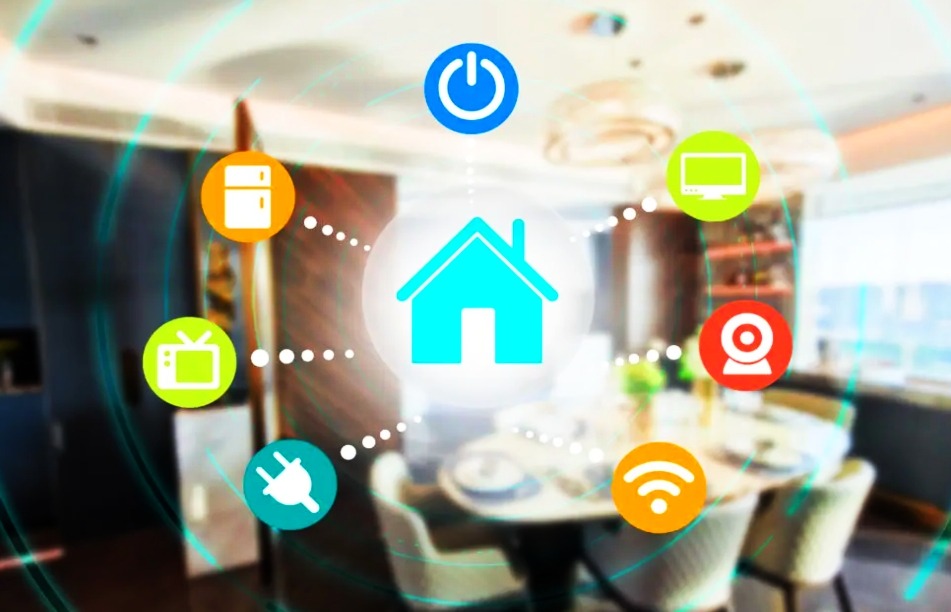
Background, intelligent home networking is the internet network that connects all smart devices, and it is what makes home automation ideas of 2026 possible; it is what allows smart devices to communicate and work seamlessly together, even if they are from different manufacturers.
This network is cyber secure and powerful enough to tie lighting, climate control, security, entertainment, and appliance systems together so that they can be automated, accessed remotely, and monitored in real-time.
No matter how high-end your smart home automation ideas may be, alone with slow and weak internet connection, no automation ideas can work.
Specifications
- Fast Wi-Fi 6/6E or Whole-Home Mesh Network Coverage
- Smart hubs and routers that connect multiple devices
- Security features of the network, such as firewalls and encryption
- High Quality (Qos) For Priorization Of Smart Traffic
- Delivers network performance monitoring and device status on-the-go via a Mobile app
- Ability to integrate with any smart home automation ideas for capturing and controlling from a single portal
Pros
- Provides a consistent and reliable connection for all smart home devices
- Improves the performance and responsiveness of automation systems
- A unified set of troubleshooting and monitoring tools
- Allows to be controlled from a remote distance and receive notifications instantly
- Enhances protection for data and connected devices
Cons
- Further configurations and the initial rote process may require professional assistance
- Mesh Routers & High-Performance Router Hardware Expenses hoc gundack
- Over-reliance on the quality of the internet service provider for full functionality
Conclusion
Smart Home Networking, Succeeding Home Automation Ideas in 2026. Providing the required connection and security for devices to work seamlessly, it enables a complete smart home that is responsive to needs and ready for the future.
A robust home network connects all the other automation systems, lighting, security, climate, and appliances to work seamlessly together to provide convenience, efficiency, and comfort.
Comparison of Smart Home Automation Ideas
| # | Idea | Quick Overview | Key Benefits | Pros/ Cons |
| 1 | Intelligent Climate Control | Auto temp, humidity & airflow with AI | Comfort, energy savings, remote control | Expensive, needs Wi-Fi |
| 2 | Automated Lighting | Smart brightness, color & scenes | Mood setting, energy-efficient, security | Costly bulbs, Wi-Fi required |
| 3 | Smart Window Treatments | Motorized blinds/shades auto-adjust | Comfort, privacy, energy-saving | Power needed, Wi-Fi/hub required |
| 4 | Whole-Home Audio | Multi-room audio with AI sound | Entertainment, hands-free, routine alerts | High cost, Wi-Fi dependent |
| 5 | Access Control Systems | Smart locks & monitored entry | Security, remote access, no keys | Expensive, hub/Wi-Fi needed |
| 6 | Smart Kitchen & Appliances | Connected fridges, ovens, dishwashers | Saves time, reduces waste, energy-efficient | Costly, Wi-Fi & updates required |
| 7 | Outdoor Landscape Management | Smart irrigation & lighting | Healthy gardens, saves water/energy | High setup cost, sensor maintenance |
| 8 | Home Energy Management | Monitors & optimizes energy use | Lower bills, eco-friendly, remote control | Advanced systems cost more, Wi-Fi needed |
| 9 | Smart Bathroom & Wellness | Smart showers, toilets, mirrors | Comfort, hygiene, energy/water savings | Expensive, needs Wi-Fi, pro install |
| 10 | Intelligent Home Networking | Backbone connecting all devices | Reliable connectivity, remote monitoring | Setup cost, dependent on ISP |
How to Integrate Intelligence with Intent in Your Smart Home: Step-by-Step Guide (2026)
Creating a truly intelligent home is about more than installing gadgets; it’s about purposeful integration that enhances your lifestyle. Here’s a step-by-step approach to turn your smart home automation ideas 2026 into a seamless, intuitive, and future-ready living environment.
- Step 1: Define Your Lifestyle Priorities
Decide what matters most: entertainment, wellness, security, energy efficiency, or a combination. Your priorities will guide every automation decision, ensuring technology supports your daily life rather than complicating it.
- Step 2: Plan Early and Collaborate
Engage architects, designers, and smart home professionals from the blueprint stage. Plan network infrastructure, concealed wiring, and equipment spaces in advance to avoid costly retrofits and maintain a clean, integrated design.
- Step 3: Build a Cohesive Ecosystem
Avoid a patchwork of devices. Choose a unified platform (Control4, Crestron, Savant, etc.) to connect lighting, climate, security, and audio systems. Seamless communication across devices ensures one-touch convenience and true smart home functionality.
- Step 4: Automate Intelligently
Use AI-driven systems to anticipate your needs:
Climate systems adjust temperature and humidity based on habits. Lighting sets moods automatically with circadian rhythms. Appliances and irrigation operate efficiently without manual intervention
- Step 5: Monitor, Optimize, and Personalize
Track energy usage, adjust automation routines, and refine settings to suit your lifestyle. The smarter your home learns your patterns, the more efficient, comfortable, and personalized it becomes.
- Step 6: Focus on Harmony, Not Gadgets
The ultimate smart home disappears into the background, delivering convenience, security, and comfort without overwhelming you with technology. Integration is about intentional intelligence, not flashy features.
By following these steps, your smart home automation ideas 2026 evolve from simple convenience to a thoughtfully integrated, intelligent living environment. With early planning, ecosystem thinking, and AI-driven automation.
Why Smart Home Automation Ideas Matter in 2026?
Smart home automation is no longer just a trend; it’s transforming the way we live. By connecting devices that communicate seamlessly, homeowners can control lighting, climate, security, and access systems all from their smartphones or with simple voice commands.
Here’s why smart home automation ideas matter in 2026:
1. Energy Efficiency
Automated systems intelligently reduce unnecessary electricity and heating usage, helping you save money while supporting sustainable living.
2. Enhanced Security
Smart locks, cameras, and motion sensors provide 24/7 protection, giving you peace of mind whether you’re at home or away.
3. Ultimate Convenience
Schedule, control, and monitor devices remotely. From turning off lights to adjusting thermostats, automation makes daily life effortless.
4. Accessibility for Everyone
Smart home solutions make life easier for seniors, busy professionals, or anyone seeking a more comfortable and manageable living environment.
5. Cost Savings
Many smart home automations lower utility bills by optimizing energy use, offering long-term financial benefits alongside lifestyle improvements.
In 2026, smart home automation ideas are not just about gadgets; they’re about creating a home that works for you, saving energy, increasing safety, and making everyday life smarter, simpler, and more efficient.
FAQs
How does a smart home adapt to my daily routines automatically?
Smart homes leverage the power of artificial intelligence (AI) and smart sensors to understand when you wake up, go out, start cooking, go to bed, and everything in between. Using this data, the system optimizes lighting, temperature, and even the appliances according to your schedule.
Your thermostat can warm up the house in the morning before you wake up, lights can automatically dim in the evening at your designated time to relax, and the coffee maker can start making coffee at the right time, without you having to press a single button.
Can smart home automation work in an affordable, everyday household?
Absolutely! This is also why smart home automation is no longer a thing only for luxury homes. There are a load of inexpensive, scalable smart devices able to be added over time in 2026: smart plugs, smart light bulbs, smart thermostats, and smart burglar alarms or sensors.
Using even a small amount of funds, they can be facilitated with an intelligent home, connected appliance, energy-efficient, convenient house, and responsive to the lifestyle.
What role does AI play in modern smart home systems?
AI is the brain behind modern smart homes. It learns your preferences, predicts your needs, and automates daily tasks. For example, AI can adjust room temperature based on your comfort, turn off unused lights to save energy, or suggest optimal appliance usage. Essentially, AI ensures your home runs efficiently, saving energy, time, and effort while making your daily life more comfortable.
How can I make sure my smart home devices work seamlessly together?
The secret to a truly smart home is integration. Using a unified platform, like Control4, Crestron, or Savant, allows all your devices (lighting, climate, security, audio) to communicate and work together.
Planning early with architects or smart home professionals helps set up proper wiring, network infrastructure, and device compatibility. This prevents conflicts between devices and ensures smooth, one-touch control across your entire home.
Conclusion
Smart home automation ideas in 2026 are no longer luxury innovations; they are essential tools for creating intelligent, efficient, and comfortable living spaces. From AI-driven climate control and automated lighting to smart security and kitchen integration.
The true value of a smart home lies not in gadgets, but in how seamlessly devices work together to anticipate your needs, enhance your lifestyle, and create a future-ready home. By carefully planning, prioritizing your lifestyle, and integrating smart systems
In 2026, embracing smart home automation isn’t just about technology; it’s about designing a home that works for you, every hour of the day.
Home Appliance Automation
Top 10 Smart Home Innovations in 2026: The Future of Living – Transform Your Home Today

With the rapid development of smart home technologies, homes in 2026 will be more intuitive, secure, and energy-efficient. Automation based on AI, solar energy, and quantum encryption will not only make life more comfortable and convenient but also contribute to energy self-sufficiency and sustainability.
The combination of edge computing and blockchain will provide more efficient and reliable smart home control, and health-related Smart Home Innovations such as air quality sensors and sleep optimisation devices will enhance overall well-being.
Moreover, the designs that are age-inclusive will ensure that smart technologies are accessible to the elderly, making them safer and more independent. Adopting such innovations now will guarantee a smarter and more sustainable living environment tomorrow.
Top 10 Smart Home Innovations in 2026
Explore the Top 10 Smart Home Innovations in 2026 that are set to transform the way we live. From AI-powered automation and energy-efficient systems to advanced security solutions and health-focused technologies
1. AI-Driven Predictive Automation: Your Home Knows What You Need
By 2026, houses will transform into predictive spaces, with AI-based systems, rather than reactive ones. The future of Smart Home Innovations will not only react to your commands like the smart homes of today, but it will also anticipate your needs even before you can utter them. These Smart Home Innovations will get to know your habits and will adapt the environment to them, so that there is a smooth comfort and energy saving.
- Machine Learning: How a Self-Tuning Home is Built.
This transformation will be centred on machine learning (ML) that will enable homes to self-tune according to daily routines. As an illustration, when you usually turn down the thermostat at night, your house will begin to do it automatically, without you having to make a manual adjustment.
Example: Smart Home Innovations are already used by companies such as Nest and Ecobee to learn your schedule and adjust to maximise energy consumption. This feature will be extended to lighting, security, and even Smart Home Innovations in 2026.
- Predictive Maintenance: Money and Time Saving.
The future of smart appliances will be predictive maintenance. These Smart Home Innovations can detect problems early before they turn into significant problems by tracking such factors as vibration patterns, temperature variations, and performance indicators.
Expert Insight: A report by McKinsey suggests that predictive maintenance would save homeowners up to 200 dollars annually by avoiding major Smart Home Innovations failures and lowering the cost of emergency repairs.
2. Solar + Storage + Blockchain: Energy Independence

The future of home energy device is decentralised, where smart home innovations become micro power plants capable of producing, storing, and distributing their own energy. This energy autonomy will greatly decrease the use of conventional power grids and utility bills.
- Smart Energy Storage Systems.
Solar panels and energy storage smart home innovations will be installed in modern homes, enabling them to be almost grid-independent. With improvements in battery technology, smart home innovations will store surplus energy generated during the day and use it during the night, achieving up to 90% energy independence.
Example: Tesla and LG Chem are already selling home battery systems that can be used with solar panels so that homeowners can store surplus solar energy to be used later. These smart home innovations will be more efficient and affordable in 2026, and they will be available to a wider group of homeowners.
- Peer-to-peer Energy Trading: Sell Your Unused Power.
The blockchain technology will allow homeowners to sell surplus solar energy to their neighbours via peer-to-peer energy trading and smart home innovations. This will enable the homeowners to cash in on their untapped energy, particularly at peak hours when the cost of electricity is highest.
Expert Insight: The World Economic Forum estimates that blockchain will facilitate peer-to-peer energy trading worth 19 billion by 2030, and thus will be a major force in energy markets of the future.
3. Cross-Brand Harmony: The Matter Protocol Revolution

The emergence of the Matter protocol will standardise smart home devices, allowing products of various manufacturers to communicate with each other. This cross-brand compatibility will enable homeowners to incorporate a range of smart home innovations in their homes, enhancing the overall user experience.
- One Standard to Rule Them All.
More than 550 companies, such as Apple, Google, and Amazon, are developing the Matter protocol to make smart home innovations interoperate, no matter the brand. This standardisation will make it easier to set up and minimise configuration errors, which have been a thorn in the flesh of smart home management.
Example: Matter-compatible devices will enable homeowners to manage lighting, climate, and security smart home innovations on one platform, be it their smartphone, voice assistant, or dedicated smart hub.
- Easy Home Control.
Matter-enabled control smart home innovations allow users to build customised scenes that can automatically control a number of devices simultaneously. As an example, a Good Night scene could be used to turn off the lights, lock the doors, and turn down the thermostat, all at the same command.
Expert Insight: A study by the Consumer Technology Association has found that the rate of user set-up success has improved by 40 per cent with early adoption of Matter-compatible smart home innovations.
4. Quantum Encryption: The Future of Smart Home Security

As smart home innovations become more connected, security will be more important than ever. The next step in ensuring that smart home devices are not hacked will be quantum encryption, which will guarantee that sensitive data is not exposed to cyber threats.
- The failure of Traditional Security.
The conventional encryption smart home innovations are no longer adequate to counter the increasing complexity of cyberattacks. Quantum encryption, which is founded on quantum mechanics, will offer genuinely random encryption keys that vary with time.
Example: IBM and Microsoft are already considering the application of quantum encryption to secure IoT smart home innovations and sensitive data against cyber threats. This technology will be ubiquitous in smart home devices such as security cameras, smart locks, and voice assistants in 2026.
- Hack-Proofing Your Smart Devices.
Even the most sensitive smart home innovations data, including personal security camera feeds or smart lock codes, will be virtually inaccessible with quantum encryption. Such protection will guarantee that homeowners will be able to rely on their smart home innovations to be safe, even against more advanced cyberattacks.
Expert Opinion: Forrester Research estimates that quantum encryption will minimise the threat of cyberattacks on smart home devices by 95 per cent within the next decade.
5. Health-Centric Homes: Air, Sleep, and Wellness Tech

Smart home innovations in 2026 will be concerned not only with convenience and efficiency but also with health and well-being. Houses will be fitted with high-tech sensors and intelligent smart home innovations that track air quality, sleeping habits, and general health, and will be designed to actively encourage wellness.
- Real-Time Air Quality Monitoring.
Smart air purifiers will use real-time sensors to monitor pollutants such as carbon dioxide (CO2), volatile organic compounds (VOCs), and particulate matter (PM2.5 and PM10). Such smart home innovations will automatically regulate the level of filtration to ensure that the air is healthy.
Example: Air purifiers that are able to detect and filter indoor air pollutants are already available in companies such as Philips and Dyson. These smart home innovations will be further developed by 2026, with AI being used to optimise air quality in real-time.
- Sleep Optimisation to Improve Health.
The smart sleep devices will monitor the movement, body temperature, and sleep phases and will modify the environment of the room to provide the most optimal rest. Research has indicated that smart sleep technology can enhance sleep onset and restorative sleep, which results in improved health.
Example: Sleep Number and Withings are the pioneers of smart sleep technology, and they provide mattresses and wearables that monitor sleep patterns and adjust settings to enhance sleep quality.
6. Edge Computing: Privacy Meets Speed

With the ongoing development of the smart home ecosystem, the necessity of faster data processing and enhanced privacy is gaining more and more significance. The 5G and edge computing are a game-changer in smart home innovations, with unmatched speed and privacy.
- 5G and Edge Computing: A Heavenly Pairing.
Edge computing enables smart home innovations to compute data on-site, instead of transmitting it to a remote cloud server. This, when paired with 5G technology, forms nearly real-time response times, which is essential to time-sensitive applications such as home security systems.
Expert Insight: Gartner predicts that edge computing will form part of the next generation of smart home innovations, and more than three-quarters of all data generated by enterprises will be processed outside the conventional data centre by 2026.
- Storing Your Data at Home.
Edge computing improves privacy by keeping sensitive data, such as facial recognition data captured by smart home innovations, off your home network by processing data locally. This will greatly minimise the chances of a data breach and will provide homeowners with greater control over their personal data.
Example: Amazon Ring and Nest Cam are already adding edge computing capabilities to store and process data on the smart home innovations, enhancing performance and security. With the increase in the use of this technology in 2026, additional smart home devices will be introduced.
7. AR/VR Spaces: Redecorate Virtually, Live Better

AR and VR will transform the manner in which we design, plan, and engage with our smart home innovations. These smart home innovations will provide homeowners with an entirely new experience in the way they decorate, remodel, and personalise their homes by 2026.
AR and VR are creating new opportunities in home design, whether it is virtually trying out furniture or turning a room into an interactive learning environment.
- Virtual Design: Try Before You Buy.
Virtual furniture trials are one of the most thrilling uses of AR in smart home innovations. Using AR apps on smartphones or AR glasses, homeowners will be able to see how furniture and décor will look in their actual living spaces before making a purchase.
Example: Ikea has already used AR technology with its Ikea Place app, which lets customers view how their products would appear in their smart home innovations before purchasing. In 2026, this innovation will be improved, and more furniture brands will incorporate AR to make the shopping process more convenient and personalised.
- Interactive Spaces: Not Static Displays.
The interactive spaces will also be a reality in the near future, particularly in functional spaces such as kitchens. Think of making your kitchen counter a recipe board or your living room a fitness studio.
This will be made possible by smart home innovations that will project instructional videos, measurement guides or even augmented recipes directly on surfaces.
8. Circular Tech: Upgradeable and Sustainable Devices

Homeowners and tech manufacturers are increasingly concerned with sustainability. Modular smart home innovations and smart waste management will become more widespread in 2026, which will not only make homes more environmentally friendly but also more cost-effective.
- Modular Smart Devices: Built to Last.
The modular design of smart home innovations will be one of the largest innovations in the sustainability of smart homes. Homeowners will be able to replace individual components instead of discarding an entire appliance when one part fails, just like upgrading the hardware of a computer.
For Example, when the microphone or camera of a smart speaker is damaged, the user can change the component instead of the whole device.
- Smart Waste Management: Scraps to Resources.
Besides modular devices, smart waste management will also be a part of sustainable smart homes. Through the assistance of intelligent composting smart home innovations, homeowners will be in a position to transform food scraps into nutrient-rich compost, which will minimise the quantity of waste that is disposed of in landfills.
Example: Intelligent composting smart home innovations, such as Lomi, already enable users to automatically compost food scraps, transforming waste into useful resources. This will aid in minimising the carbon footprint of houses and will lead to a more sustainable lifestyle.
9. Proactive Safety Networks: AI Guards 24/7

Smart home security will not be limited to motion sensors and alarms in 2026. Proactive safety networks will be AI-driven and will actively scan smart home innovations, seeking threats before they become serious. This reactive-to-predictive security will ensure that homes are safer and more secure.
- Intelligent Threat Detection: More Than Simple Alerts.
Computer vision algorithms will be used to distinguish between normal movements (such as pets or delivery people) and suspicious activity by AI security systems. This will drastically reduce false alarms and improve the speed of response to real threats.
Example: Ring and Nest are already incorporating AI-powered cameras to offer more precise threat detection. This technology will be further developed in 2026, with facial recognition and activity patterns to prevent break-ins before they happen.
- Connected Community Security
Smart home security will be enhanced to neighbourhood-wide security networks. These smart home innovations enable homeowners to share security information with their neighbours, establishing a community-wide security system. Research has revealed that burglaries are reduced by 35 per cent in neighbourhoods that have interconnected security systems.
Expert Opinion: A study conducted by Stanford University suggests that by 2030, smart community security networks would be able to cut crime rates by up to 40 per cent in suburban regions.
10. Age-Inclusive Design: Tech to All Generations
Age-inclusive design will be one of the most significant innovations in smart home technology. These smart home innovations will be aimed at ensuring that advanced smart technologies are more accessible to every generation, especially older adults.
It is aimed at making sure that the elderly will be able to experience the advantages of a smart home without losing their autonomy or safety.
- Voice-Activated Smart Homes for the Elderly.
Voice-first interfaces will eliminate digital barriers among the seniors, and they will find it easier to manage their smart home innovations. With voice commands, the seniors will be in control of the lighting, temperature, and even make emergency calls without touching a device.
Example: Voice-controlled smart home innovations features are already available in Amazon Echo and Google Home, and can be used by seniors to control their environment. In 2026, these smart home innovations will be further developed, with more customizable and accessible features to older adults.
Automatic Emergency Response to the Elderly

The smart homes will also have advanced safety measures to ensure that the elderly residents are safe during emergencies. Fall detection and emergency response plans will make sure that assistance is provided when it is most needed.
Example: Fall detection devices such as Philips Lifeline and Apple Watch already have simple emergency response capabilities. These smart home innovations will be more connected in 2026, automatically notifying emergency services and family members when assistance is required.
FAQs
1. What is smart home innovation?
Smart home innovations are the creation of new technologies and systems that improve the functionality, convenience, and sustainability of homes. These smart home innovations usually combine IoT, artificial intelligence, and automation to enhance daily activities such as lighting, temperature, and security control, as well as make homes more energy-efficient and user-friendly.
2. What are some smart home technologies?
The following are some of the common smart home technologies:
- Smart home innovations such as Nest and Ecobee automatically regulate the temperature of your home according to your schedule.
- Smart lights like Philips Hue can be remotely controlled to set the mood or save energy.
- Voice assistants such as Amazon Alexa and Google Assistant can control devices hands-free.
- Smart locks, such as August, allow keyless entry and remote locking.
3. What are 5 innovations?
The five key smart home innovations are as follows:
- Automation using AI to customise the home environment to the preferences of the user.
- Smart thermostats and solar-powered systems are energy-efficient devices.
- Intelligent security systems with AI-powered cameras and doorbell systems to provide real-time alerts.
- Technology that is health-focused, such as air quality sensors and smart sleep watches.
- Voice-first interfaces that allow controlling all home devices without hands.
4. What is the future of smart home technology?
The future of smart home technology is in more predictive automation, where smart home innovations will know what is needed before it is asked. This will be driven by the development of AI, machine learning, and edge computing.
Also, the smart home innovations experience will be transformed by the integration of blockchain to trade energy, quantum encryption to provide better security, and the Matter protocol to ensure compatibility between devices.
5. What will smart homes do to enhance energy efficiency?
Smart home innovations will also be more energy efficient as systems such as heating, cooling, and lighting will automatically adjust depending on occupancy and time of day. Smart thermostats, solar energy systems, and predictive appliance maintenance will assist in minimising energy use, decreasing bills, and promoting sustainable living.
Conclusion
By the year 2026, smart home technologies will transform the everyday life of people by making their smart home innovations more intuitive, secure, and energy-efficient. The use of AI-based automation, solar energy systems, and quantum encryption will make life more convenient, decrease energy usage, and guarantee a higher degree of security.
Also, the combination of edge computing and blockchain to trade energy will further simplify home control and enhance privacy and reliability. Smart home innovations that are health-focused, like air quality sensors and sleep optimisation devices, will make the environment conducive to well-being.
Moreover, the designs will be age-friendly so that the seniors can use smart technologies to become more independent and safer with voice activation and automatic emergency response.
With the implementation of these smart home innovations, homeowners will be able to future-proof their homes, enhance energy efficiency, and become safer. The smart home innovations are only starting, and adopting these technologies today will guarantee a smarter, safer, and more sustainable living experience in the future.
Home Appliance Automation
Top 10 Smart Home Technologies of 2026: Best Innovations Shaping the Future of Living
The future of life is being determined by the fast development of smart home technologies. In 2026, AI-based automation, predictive energy control, and improved security systems will be installed in homes, making them more intuitive, efficient, and sustainable to live in.
Such smart home technologies as quantum encryption, edge computing, and AI-based wellness systems will guarantee more privacy, safety, and health. Such developments will not only enhance comfort but also lead to energy independence and environmental sustainability.
Smart home technologies will become fundamental ecosystems as they keep on developing and improving our lives, and making us ready to live in a more connected and safer future.
What is Smart Home Technologies 2026: Best for Future Living
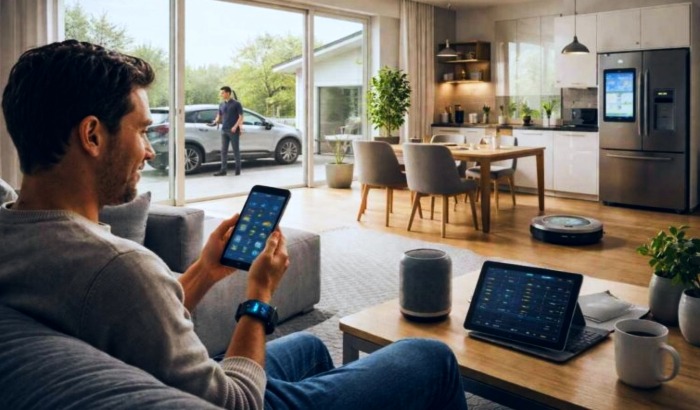
In 2026, AI-driven automation, predictive energy, and improved security will transform everyday life in smart home technologies. Homes will be able to predict needs even before they are stated, providing a smooth, customised experience.
Quantum encryption and AI-based systems will be used to improve security and provide quicker and more confidential responses. Smart home technologies that are health-focused, such as air quality sensors and sleep optimisation, will enhance well-being.
1. AI-Powered Predictive Automation: Knowing What You Need Before You Ask
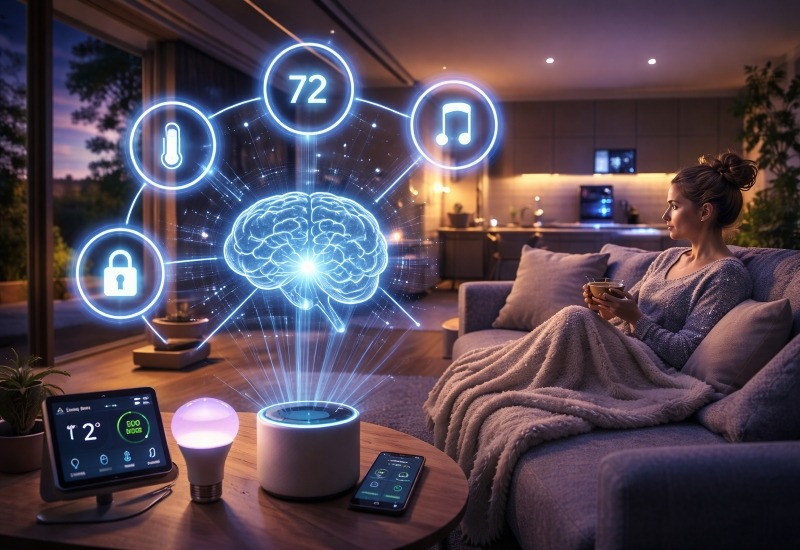
The smart home technologies of the future are not only reactive, but they will also anticipate your needs. Think of your home knowing your preferences so well that it modifies the environment automatically, even before you need to request it.
- The way Machine Learning Builds a Self-Tuning Home.
Homes are becoming self-tuning with sophisticated machine learning algorithms. They constantly examine your daily routine and optimise the settings to make them as comfortable as possible. As an example, when you turn down the thermostat at night, your house will automatically turn it down a few minutes earlier than it did before.
- Smart Automation of Low Energy Consumption.
Energy efficiency is one of the most important advantages of predictive automation. Your house adjusts its energy consumption according to patterns, which helps reduce your carbon footprint. Smart lighting, HVAC systems, and appliances are all designed to work together to consume energy when it is most required and minimise wastage.
- Predictive Maintenance: The Smart Home Appliances Game-Changer.
The current smart appliances are fitted with sensors that are capable of monitoring trends like temperature, vibration, and others. These sensors allow predictive maintenance that informs you of problems before they turn into significant problems.
As an example, a refrigerator may notice that something is wrong with its compressor and notify you, so you can arrange a repair before it fails altogether. This will save hundreds of dollars per year for the homeowner in repair expenses and prevent the aggravation of emergency breakdowns.
2. Solar, Storage, and Blockchain Integration: Energy Independence
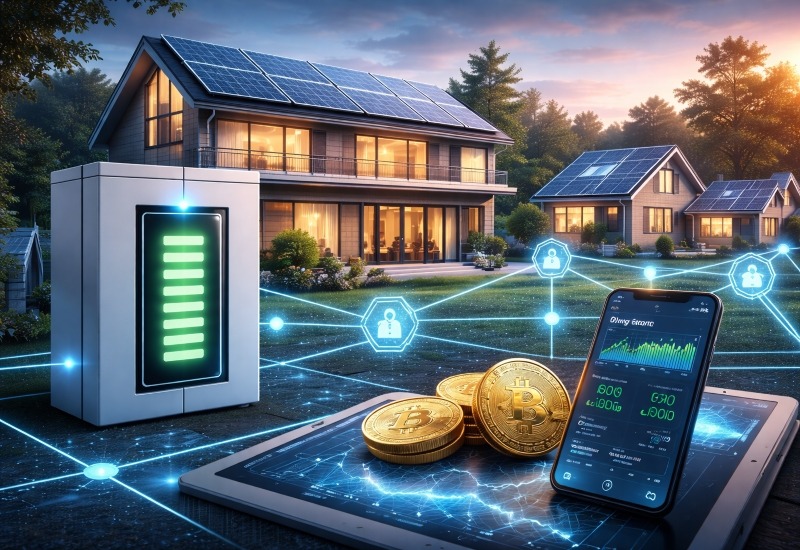
The contemporary houses are becoming mini power plants that can produce and store their own energy. This not only minimises the use of the grid but also guarantees energy independence.
- Smart Energy Storage Systems.
The smart home technologies are becoming more independent with the integration of solar panels and sophisticated energy storage systems. The existing system enables houses in sunny areas to be up to 90 per cent energy independent, which can save a lot of money on energy bills- up to 1500 dollars annually.
- Peer-to-Peer Energy Trading
The blockchain technology is becoming crucial in facilitating peer-to-peer energy trading. The homeowners are now able to sell the surplus solar energy to their neighbours directly without the middleman and make more profits, particularly at the peak hours when the electricity rates are at their highest.
3. Cross-Brand Harmony: The Matter Protocol Revolution
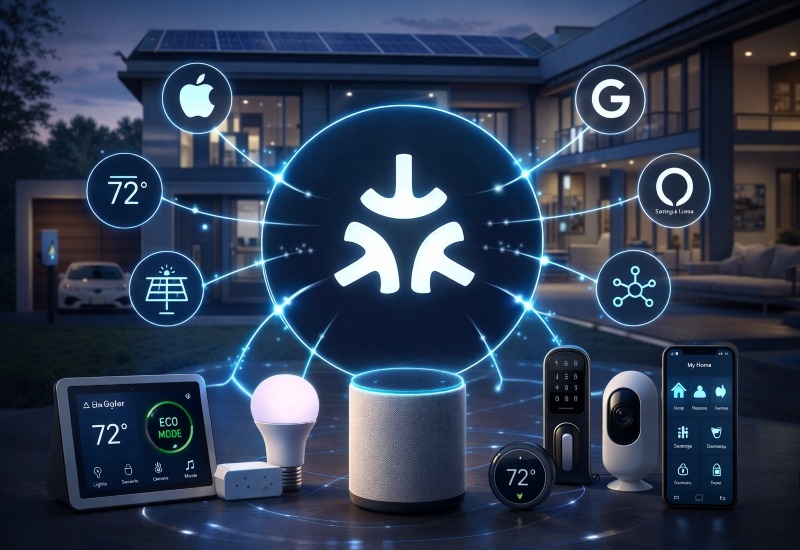
The Matter Protocol is a breakthrough technology that brings universal control to all smart devices in your home. The protocol is aimed at simplifying the connection between devices, irrespective of brand.
- The reason why one standard is superior to multiple standards is that it provides a more comprehensive view.
Smart home technologies can now communicate with one another, with more than 550 tech companies contributing to the Matter protocol. This standardised solution minimises configuration mistakes and enables homeowners to operate devices across different manufacturers on a single platform, significantly enhancing the user experience.
- Better Smart Home Management.
Matter also provides local control, which means that smart home technologies can communicate with each other directly on your home network. This enhances speed and reliability, and your home will remain functional even when the internet is down. Just one touch or voice command can make you control your lighting, heating and music.
4. Quantum Encryption: How to protect your smart home in the future
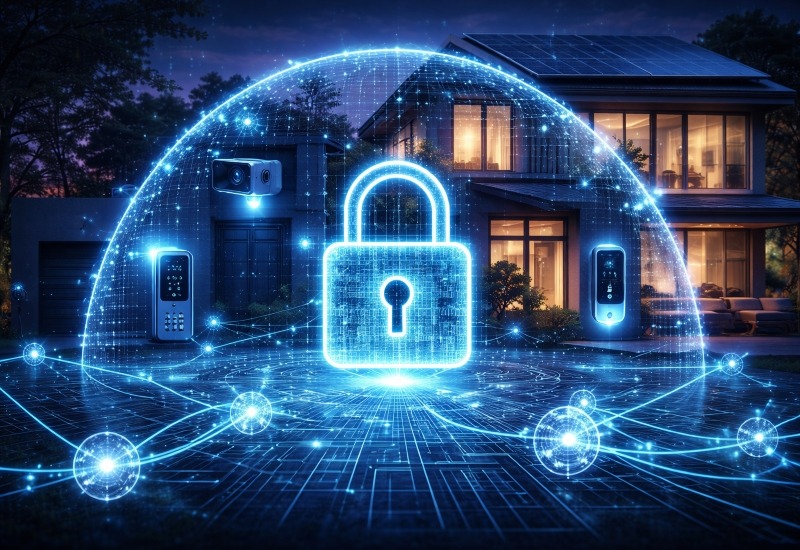
The conventional encryption smart home technologies are no longer sufficient to protect our information in a world that is becoming more and more cyber-threatening. Quantum encryption is the next step in safeguarding our homes.
- The failure of Traditional Security Methods.
With the increasing sophistication of AI-based cyberattacks, conventional encryption strategies are finding it difficult to keep pace. Quantum encryption is based on quantum mechanics to create truly random encryption keys that vary with time and are practically impossible to intercept without being detected.
- Hack-Proofing Your Devices
Quantum encryption is the future of home security in a world where quantum computers have the potential to decrypt data at an unprecedented rate. This technology will make sure that your smart home technologies, such as door locks and surveillance cameras, are encrypted in a way that improves over time, and it is almost impossible to be hacked by hackers.
5. Health-Centric Homes: Air, Sleep, and Wellness Tech
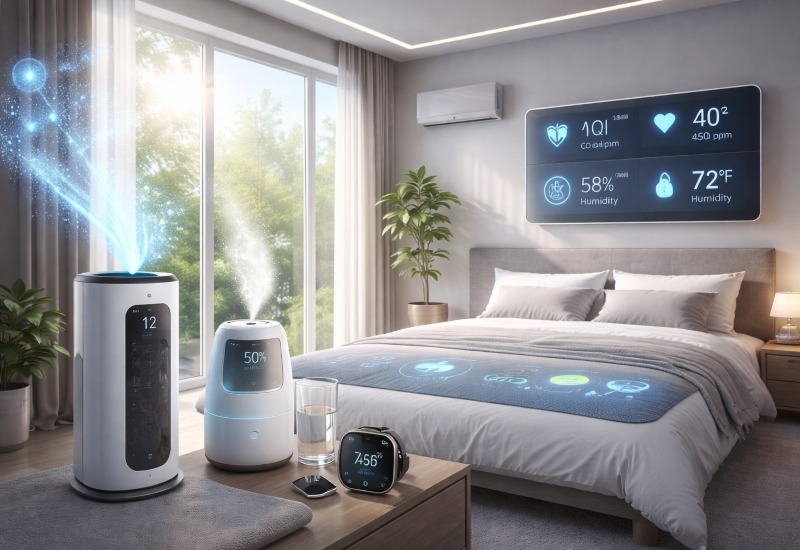
Smart home technologies are getting more health and wellness-oriented. Air quality, sleep optimisation, and wellness smart technology innovations are simplifying the process of living healthier and more comfortable lives at home.
- Real-Time Air Quality Monitoring.
Smart air purifiers have real-time sensors that can identify pollutants such as CO2, VOCs, and particulate matter (PM2.5, PM10). These systems are automatic, and they regulate the air to ensure that it is clean, which minimises health hazards like asthma and allergies. These smart home technologies are very effective in enhancing the quality of breathing in people with respiratory conditions.
- Smart Sleep Systems to Better Health.
Another innovation in health-focused homes is smart sleep technology. Sleep patterns are now tracked by smart home technologies, and environmental conditions such as temperature and lighting are adjusted to ensure that you get restful sleep. Research indicates that intelligent sleep aids improve the quality and onset of sleep, which results in improved health outcomes among users.
6. Edge Computing: Accelerating Performance and Privacy
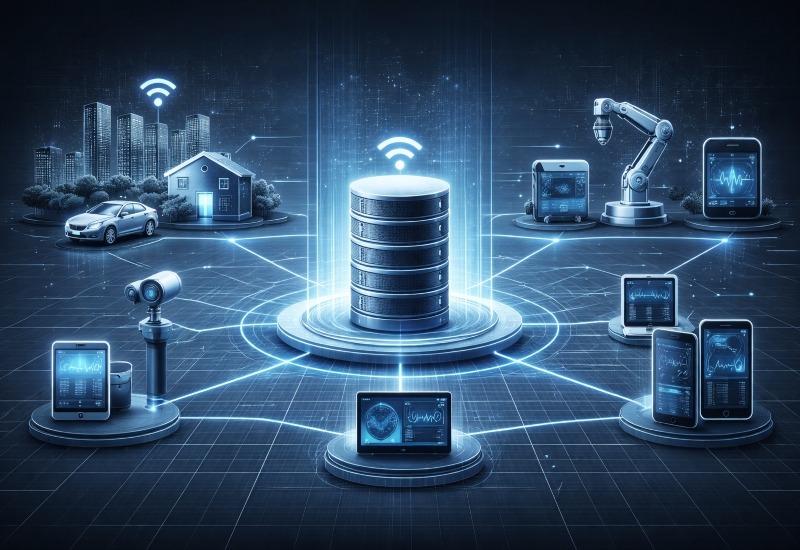
With the increasing power of smart home technologies, edge computing and 5G technology are converging to handle data on the device, improving performance and privacy.
- Edge Computing and 5G: A Match Made in Heaven.
Edge computing enables smart home devices to compute data on the device or home network, eliminating the need to use cloud servers. This offers almost real-time response times, which are essential in time-sensitive activities such as home security. Smart locks and alarms are advantageous in that they respond immediately in case of an emergency due to edge computing.
- Privacy-First Smart Homes
Local processing of data implies that sensitive data does not leave your home network. This improves privacy as your information is safe and the chances of a breach are minimised. Homeowners have the ability to regulate the information they share and keep their personal information confidential.
7. AR/VR Spaces: Designing and Interacting with Your Home in New Ways
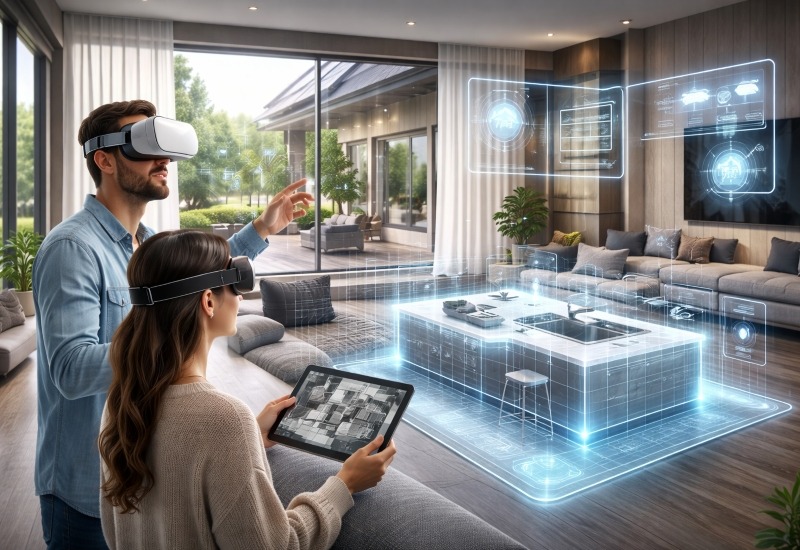
AR and VR are transforming how people live in their homes, providing new opportunities to design, decorate, and even learn.
- Virtual Furniture and Decor Trials.
Homeowners can now see how furniture and decor will appear in their real spaces before they buy them using AR. This try-before-you-buy option saves on returns and improves the buying experience, which saves money and minimises environmental impact.
- Interactive Kitchen Systems
Intelligent projections are transforming kitchen counters into interactive areas. Smart home technologies are able to display recipes, ingredient lists, and cooking instructions on surfaces, enabling users to follow step-by-step instructions without using their hands. This interactive cooking experience transforms the kitchen into a more interactive and practical place.
8. Circular Tech: Reusable and Upgradeable Devices
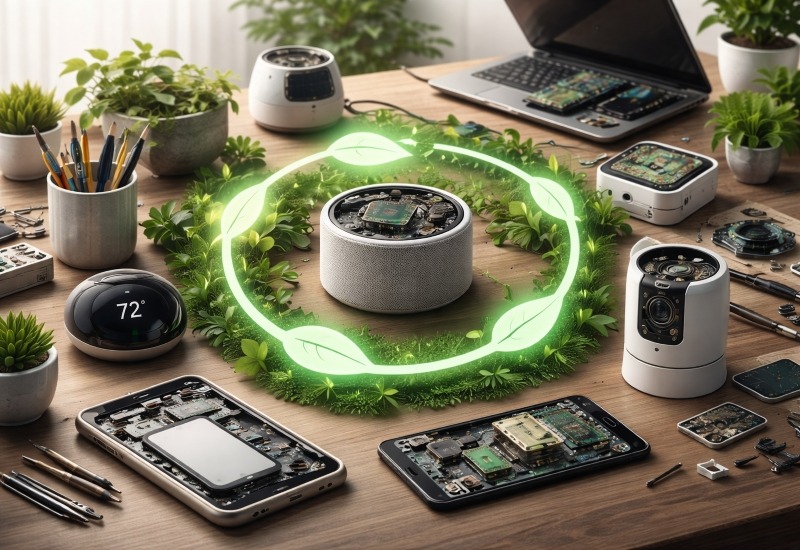
Due to the emergence of modular and circular technologies, smart home technologies are becoming more sustainable. These inventions save money, waste, and contribute to the preservation of the planet.
- Modular Smart Devices
Homeowners can now replace single parts of modular smart home technologies instead of having to replace an entire appliance when a single part fails. This minimises the amount of electronic waste and saves money by enabling users to upgrade or repair their devices without necessarily having to replace them.
- Intelligent Waste Management and Composting.
Smart home composting systems are meant to transform food scraps into nutrient-rich compost, which will greatly decrease the amount of waste that is sent to landfills. This eco-friendly technology is beneficial to the homeowner (who can use the compost to grow plants) and the planet (by reducing the emission of methane).
9. Proactive Safety Networks: 24/7 Home Security by AI
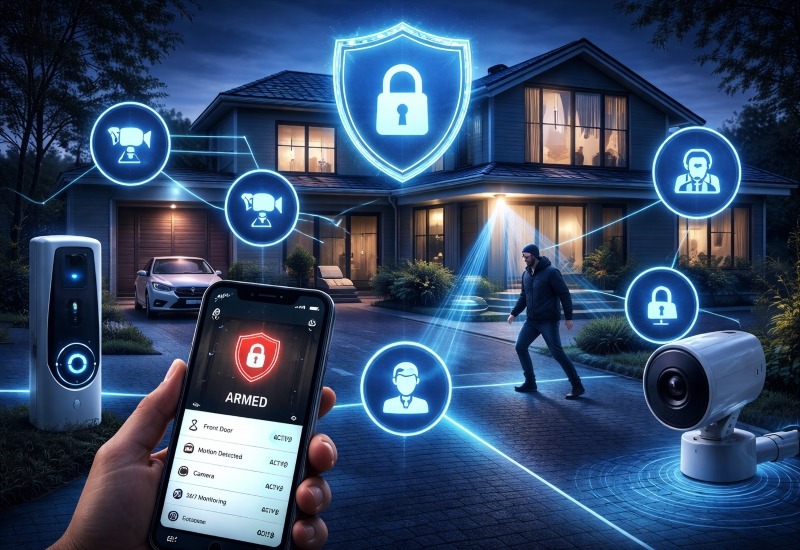
AI-based proactive threat detection is the future of home security. Rather than relying on an intruder to sound an alarm, AI-powered security systems constantly watch over your house and anticipate possible threats.
- Smart Threat Detection
AI cameras are able to differentiate between normal movements (pets or delivery people) and suspicious activity. This is a sophisticated threat detection that reduces false alarms and provides a quicker response to real security threats.
- Neighbourhood-Wide Security Networks
Home protection is being improved with connected community security systems. Neighbourhoods that have these smart home technologies have experienced a 35% decrease in burglaries in pilot programs. The future of residential security is AI-enabled networks, which provide real-time notifications and a more organised response to local threats.
10. Age-Inclusive Design: Tech to All Generations
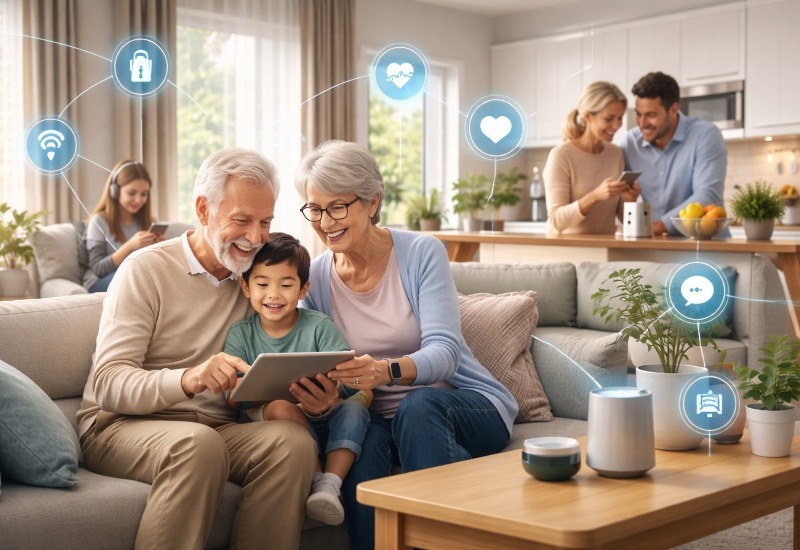
Smart home technology is also becoming more inclusive, making it accessible to all generations, particularly the older generation.
- Smart Homes with Voice Activation for the Elderly.
Smart home voice interfaces have simplified the process of seniors managing their homes. Voice commands enable the seniors to control the lighting, temperature, and even make emergency calls without picking up a device, which makes them feel independent and secure.
- Automatic Emergency Response to Seniors.
High-tech devices in age-inclusive houses are able to detect falls and notify caregivers or emergency services. These smart home technologies are even able to open doors and light up the way to emergency responders, reducing response time and improving the safety of elderly residents.
How Smart Home Technologies Improve Everyday Life in 2026
Smart home technologies will simplify everyday life and make it more comfortable in 2026. AI-powered systems will predict needs, such as automatically adjusting the temperature or switching off lights, thereby saving time and energy.
High-level security will improve safety by identifying threats on the fly and notifying homeowners immediately. Well-being will be enhanced by health-oriented technologies, such as air quality sensors and sleep-optimisation systems.
All in all, these smart home technologies will create homes that are smarter, more sustainable, secure, and healthy.
AI Integration in Best Smart Home Technologies in 2026
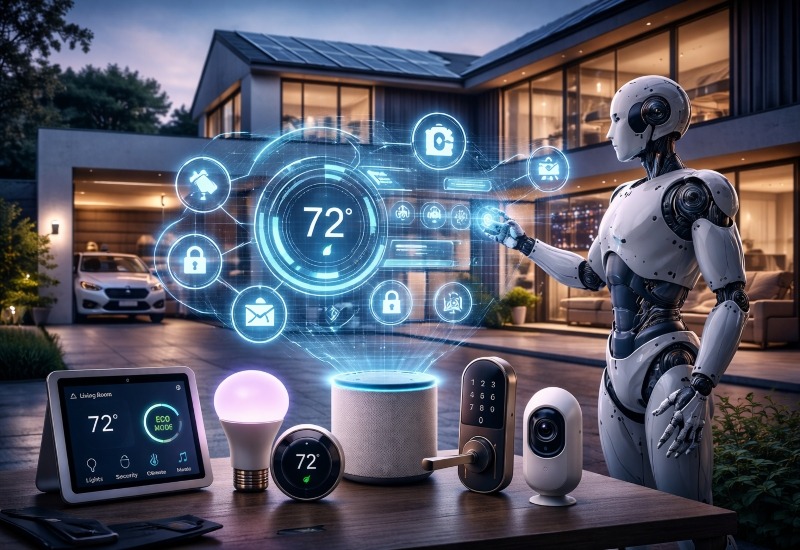
By 2026, AI will make smart home technologies more user-friendly and predictive of the needs of residents. Habit-based systems will be optimised by AI-driven systems that adjust lighting, temperature, and appliances.
Moreover, AI will assist in health-related smart home technologies, such as air quality, sleep, and wellness, to provide a comfortable and healthy environment. In general, AI will transform smart homes to be more responsive, efficient, and secure to enhance everyday life.
FAQs
What technology is in a smart home?
Smart home technologies combine different IoT (Internet of Things) devices that rely on sensors, automation, and AI to improve convenience, efficiency, and security. The most important technologies are smart thermostats, security cameras, voice assistants (such as Amazon Alexa or Google Assistant), smart lights, and energy management systems.
What are some smart home products?
Examples of smart home products include:
- Smart thermostats (e.g., Nest, Ecobee) automatically regulate the temperature in your home according to your preferences.
- Smart lights (e.g., Philips Hue, LIFX) can be remotely controlled or voice-controlled.
- Smart locks (e.g., August, Schlage) with keyless access and locking/unlocking remotely.
- Smart security cameras (e.g., Ring, Arlo) to monitor and watch.
- Voice assistants/smart speakers (e.g., Amazon Echo, Google Nest) that assist in controlling other devices and informing through voice commands.
What is a smart home technology package?
A smart home technology package is a ready-to-use set of smart devices that are set up to form a complete and automated home. It usually involves smart lighting, security, smart thermostats, and voice assistants, which are integrated to provide smooth control.
These packages are usually easy to install and can be tailored to meet various requirements, including home security or energy efficiency.
What are the examples of smart technology?
Smart technology involves devices and systems that apply AI, sensors, and connectivity to enhance efficiency and convenience. Examples include:
- Intelligent refrigerators that monitor grocery levels and recommend recipes.
- Smart plugs that transform ordinary devices into smart devices.
- Smart irrigation systems that change the watering schedule according to weather forecasts.
- Smart sSmart smoke detectors (e.g., Nest Protect) alert you on your phone in case of danger.
Is the energy efficiency of smart homes?
Smart home technologies enhance energy efficiency through the use of devices that automatically regulate the use of energy depending on the activity and the environmental conditions. As an example, smart thermostats can learn your routine and automatically change the temperature.
Smart lighting systems can also be used to turn off lights when no one is present in the room. Also, smart energy meters can be used to monitor and optimise energy use, minimising waste and utility bills.
Is it possible to remotely control a smart home?
Yes, the majority of smart home technologies can be remotely operated with the help of a smartphone application or a web interface. This enables homeowners to manage lights, security systems, thermostats, and other smart home technologies that are connected to it anywhere in the world, provided that they have an internet connection.
Conclusion: The Smart Home Era is Only Starting.
The innovations in smart home technologies are just the tip of the iceberg that will transform the way we live. By 2026, AI, predictive automation, solar energy, and improved security systems will make homes smart ecosystems that automatically adjust to the needs of their inhabitants.
With the development of smart home technologies such as quantum encryption, edge computing, and AI-based wellness systems, our homes will become safer, more efficient, and health-focused. The smart homes of the future will make life easier through better energy independence, smooth connectivity of devices, and more.
It is time to adopt these new smart home technologies to be ready to live in a world where homes will not only be a place to stay but also be alive, responsive and part of our lives. The era of the smart home is only starting, and the future is unbelievably exciting.

Well, this article is about the impact of smart room technology in the hospitality industry in the year 2026. Learn about the different aspects of smart room systems, smart room technology, and devices like smart thermostats, voice assistants, smart locks, and mobile room control apps that make smart room systems automated, personalized for your guests, and more operationally efficient.
The article also emphasises the fusion of AI with IoT, which is creating new avenues for improving guest comfort, safety, and sustainable growth. It also examines smart room tech, including trends in the market, advantages and hurdles, along with a look at technologies on the horizon, such as predictive maintenance and 5G.
In summary, it is clear that smart room technology is a must for hotels to remain competitive, increase guest delight, and enhance operations.
Introduction to Smart Room Technology in 2026

Smart room technology is changing the face of the hospitality business and helping hotels provide a better experience to their customers. Fast forward to 2026, and smart room technology has created more intuitive, user-friendly, and cost-effective tools for hotels that have turned IoT-enabled rooms managed by mobile control systems.
Smart room technology features from smart home thermostats and automated lighting systems to contactless check-ins and voice-activated assistants are redefining how guests engage with their environment. With the advent of technology, smart locks and app-controlled features have made room management secure and hassle-free like never before.
What is Smart Room Technology?
Smart room technology is a group of systems and devices that integrate different features of the hotel room into a single, automated environment that is tailored to the guests’ needs to provide them with a more personalized, efficient, and secure experience.
In 2026, this smart room technology isn’t just a matter of comfort; it’s a matter of convenience. Mobile control apps allow guests to access smart thermostats, smart lights, window treatments, or voice assistants like Alexa or Google Assistant to set the perfect mood.
They lend an additional layer of security to your operations and eliminate annoyance for guests while maximizing operational efficiency through contactless check-ins with smart locks. Ultimately, smart room technology is far from a fad; it’s changing hotel operations and hotel guest experiences, with the future of hospitality within sight.
Top Smart Room Technologies in 2026

By 2026, the evolution of smart room technology has progressed significantly further, with Artificial Intelligence (AI) integration playing a critical role in enabling enhanced guest experience and operational efficiency. The following are the best emerging smart room technologies that are transforming the next generation of the hospitality sector:
- Smart Lighting Systems
Smart lighting systems powered by AI respond to a guest’s preferences by adapting the brightness and color according to the time of day, mood, or even the voice commands of the guest. These systems recognize normal user behavior and adapt to improve comfort and efficiency.
- Smart Thermostats & Climate Control
Smart thermostats, backed by AI, do not needlessly manage the temperature of the room; access to your guest habits allows them to learn more about your preferred settings over time, and maintain optimal room climate, only in order to minimize energy consumption. They are capable of setting different effects based on the time of the day and occupancy for better comfort and energy savings.
- Contactless Access & Smart Locks
Smart locks or AI-powered smart locks are on the rise, boosting security and ease of use. The guest experience is made safer with mobile keys, facial recognition, or QR code-based entry thanks to AI, allowing for smooth check-ins and check-outs. Smart room technology is great for preventing hacking as it can detect unauthorized access attempts, providing additional security.
- In-Room Voice Assistants
AI-powered voice assistants (like Amazon Alexa or Google Assistant) allow you to control room features, such as lighting, temperature, and entertainment, hands-free. With AI, these devices can read (or anticipate) context far better than what the typical human interaction will allow, and thus respond more naturally and helpfully to guests.
- Mobile Room Control Apps
AI-enabled mobile apps allow hotel guests to have voice or touch control over room features like climate, entertainment, lighting, etc. Smart room technology also monitors consumer behavior, giving even more customized experiences along with predictive changes based on guest habits.
- Automated Window Treatments
Window treatments, powered by AI, can also adjust according to real-time signals such as sunlight, time of day, or your guests’ preferences. Even the weather patterns and the guests’ activity schedules can be predicted, enabling better power management in terms of comfort and efficiency.
- Integrated Entertainment Systems
Smart TVs and audio in the room connect to AI, which identifies what the guests watched or how they listened to music the last time they visited, and recommends content, or even connects to the guest’s streaming account directly. AI additionally optimises audio and video quality, depending on the acoustics and lighting inside the room.
Best Devices for Smart Room Technology in 2026
EOS smart thermostat

Overview:
EOS smart thermostats provide automated climate control based on guests’ preferences. Smart room technology integration with hotel management systems means adjustments that keep guests comfortable, also saving hotels on energy costs.
Key Specifications:
- Occupancy sensors for real‑time adjustments
- Remote control via mobile apps
- Eco and guest modes
- PMS compatibility for automated operation
Estimated Price (2026 Market):
- ~ $180 – $350 per unit
Pros:
- Reduces energy consumption
- Personalized temperature settings for guests
- Seamless integration to hotel management systems
Cons:
- Needs initial integration with the hotel infrastructure
- More upfront cost for bigger homes
Conclusion:
So, the EOS Smart Thermostat is the ideal solution for Hotels to enhance Energy efficiency with a personalised experience for the guests.
ZKTeco ZL600 Smart Door Lock

Overview:
ZLTeco ZL600 is a new smart lock system for hotels. It enables contactless mobile and keyless entry through RFID or QR codes to deliver an instant check‑in experience to the guests without any hassle.
Key Specifications:
- Zigbee wireless connectivity
- Mobile key support via smartphones
- Durable, weather‑resistant build
- Real-time access management through integration with the hotel PMS
Estimated Price (2026 Market):
- ~ $250 – $450 per lock
Pros:
- Enhances security with encrypted access
- Less reliance on physical keys
- Easy remote management
Cons:
- Requires Zigbee compatibility
- Regular battery maintenance is needed.
Conclusion:
ZKTeco ZL600 provides an advanced yet simple integrated solution to modern smart room technology, which enhances guest convenience and operational efficiency by creating a secure and seamless experience.
Central Smart Room Control Hub

Overview:
A Central Smart Room Control Hub, or ideally, every device in a hotel room, such as lights, locks, and climate controls, connects to a single hub built into each room, providing a single management presentation platform. This simplifies the room automation for the guests and also for the hotel staff.
Key Specifications:
- Integration of multiple devices—lights, AC, blinds, etc.
- Mobile and tablet control options
- Compatible with IoT and PMS systems
- API integration for custom setups
Estimated Price (2026 Market):
- ~ $500 – $1,500 per room
Pros:
- Centralized control for convenience
- Scalable for larger properties
- Easy-to-use interfaces for staff and guests
Cons:
- Requires professional installation
- It might be expensive for smaller hoteliers.
Conclusion:
Control Hub plays a vital role in fully automating the hotel rooms since smart room technology allows the centralized management of the solutions, leading to the enhancement of guest experience and operational efficiency.
Intelligent Lighting Systems (LED + IoT Controller)

Overview:
With smart lighting systems, guests can personalize lighting in their rooms via mobile apps or voice commands. They enhance energy efficiency and provide a personalized atmosphere for various times of the day.
Key Specifications:
- App and voice control
- Dimmable, tunable color options
- Occupancy sensors
- Seamless control with existing room automation systems
Estimated Price (2026 Market):
- Cost Range: ~ $50 – $200 per unit/controller
Pros:
- It enhances guest experience through personalized lighting.
- Reduces energy consumption
- The easy-to-install and set-up process is flexible.
Cons:
- Some may require integratable smart home ecosystems.
- Some can be easy to install, requiring the connection of the electrical side.
Conclusion:
Smart lighting is a smart room setup that combines versatility and energy savings. Smart room technology creates the ambience and plays intricacies with energy efficiency.
Mobile Room Control App

Overview:
Mobile Room Control app: A guest mobile room control app lets guests control room features such as lighting, climate, and entertainment directly on their smartphone. This enables more convenience and customization when it comes to the guest experience.
Key Specifications:
- Available on iOS and Android
- Day-to-Day Integration with hotel systems (PMS, IoT devices)
- Authentication + Store guest profiles
Estimated Price (2026 Market):
- Monthly subscription plan at roughly $5 – $15 per room
Pros:
- Provides personalized control for guests
- Reduces interaction with hotel staff
- Real‑time adjustments for comfort
Cons:
- It depends on guests having to download and use the app.
- Needs robust cybersecurity measures
Conclusion:
The mobile control app is definitely the most basic component of smart room technology that allows smartening up the guest experience by offering personalization and efficiency to guests and hotels.
Overall Conclusion
Transforming the hospitality industry: Smart room devices in hotels of 2026 in terms of their efficiency, security, and guest-friendliness. Be it climate control, secure access, or tailored lighting, such devices are an ideal investment for improved guest experience as well as enhanced operational efficiency.
Smart room technology integration of these technologies provides a connected and frictionless experience for travelers, a necessity for travelers today.
Comparison of Best Devices for Smart Room Technology

| Device | Key Features | Price (2026) | Pros | Cons | Honest Review |
| EOS Smart Thermostat | Occupancy sensors, mobile & PMS control | $180 – $350 | Saves energy, customizable | Setup cost | Great for energy savings and comfort |
| ZKTeco ZL600 Smart Lock | Zigbee, mobile & QR access | $250 – $450 | Secure, easy check‑in | Needs Zigbee | Secure and convenient access |
| Control Hub | Multi‑device control, mobile/tablet | $500 – $1,500 | Centralized control | Expensive, pro setup | Perfect for full automation |
| Smart Lighting (LED + IoT) | App & voice control, energy-saving | $50 – $200 | Personalized, eco-friendly | Needs wiring setup | Simple, effective lighting upgrade |
| Mobile Room Control App | iOS/Android, integrates with the hotel system | $5 – $15/month | Easy control, real-time changes | Requires guest adoption | Essential for guest autonomy |
Benefits of Smart Room Technology
- Elevated Guest Experience: Personalized control of light, temperature, and entertainment.
- Reduced Waste: Automation minimizes unnecessary energy consumption.
- Operational efficiency: Smart locks and smart central control simplify hotel management.
- Improved Security: Provides contactless access and surveillance solutions.
- Sustainability: Promotes green practices and less energy use.
- Competitive Edge: Gives tech-savvy guests what they want & increases guest satisfaction
Choosing the Right Smart Room Tech

Step 01: Identify Your Needs
- Know which features you need the most from your hotel: comfort, savings on energy, security, or automation.
Step 02: Ensure Compatibility
- Ensure the technology can connect easily with existing hotel systems (PMS, Wi-Fi, IoT).
Step 03: Consider Scalability
- Consider systems that can grow and scale with your property, or ones that can easily be upgraded over the years.
Step 04: Focus on User-friendliness
- Opt for easy-to-use technology that is easy for the guests and the hotel staff to handle without making much effort.
Step 05: Assess Budget & ROI
- Compare the initial costs against the long-term savings, as well as the maintenance requirements and anticipated improvements to guest satisfaction.
Step 06: Check For Support & Warranty
- You can have a tech selection that covers you endlessly, but ensure there is a working tech support, the best installation service, and a warranty for your selection.
Step 07: Ensure Guest Adoption
- Opt for solutions that your guests find easy to use, like mobile control apps or simple interfaces.
What Makes the Best Smart Room Technology?

Top smart room technology solutions should also be able to function seamlessly with the systems already within your hotel: the Property Management System (PMS), Wi-Fi, and the IoT devices. Likewise, smart room technology must operate without any compatibility trouble, promising a seamless hotel management and guest journey experience.
The user experience is essential: the technology needs to be easy to use and intuitive. Smart room technology needs to be easily operable by guests, whether that be via mobile apps or voice commands. To have guests controlling their environment with the least effort and staff managing it with the least effort and time for training.
Some of the greatest smart room technology that offers a more bespoke experience makes use of automation and intelligence. That means systems that learn what the guest prefers and will automatically adjust things like lighting, temperature, and entertainment settings. Such incorporation of AI improves guest experience as it adds a unique touch to every stay.
Challenges of Smart Room Technology
- Expensive to Set Up: The initial cost of smart room systems can be high, owing to the need for hardware, installation, and integration.
- Compatibility Concerns: It becomes difficult to ensure that new technology integrates easily with older technologies present in the hotel.
- Guest Adoption: While most guests are tech-savvy and enjoy being able to control aspects of their room with their own smartphone, they only need the smallest incentive to start avoiding the effort of engaging with yet another smart device.
- Ongoing Maintenance and Support: The ongoing maintenance and support processes can often be long-drawn and need technical expertise.
- Security Issues: Many smart room technology devices are now connected, which means that there is a greater risk for data security and privacy from guests and hotel managers alike.
The Future of Smart Room Technology

AI and machine learning will continue to take center stage for smart room technology, allowing more personalized, intuitive guest experiences. Systems will adjust preferences on their own, predicting lighting, climate, and entertainment preferences. Mobile controls and voice assistants will integrate more and more seamlessly with each other.
Predictive maintenance will prevent hotels from facing any downtime, as the staff will be informed before the fault occurs, and 5G networks will help connect all devices together. More sustainability: Sustainability will take a central role, where systems emphasize the minimization of energy and waste.
All things considered, smart room technologies will be more interoperable, optimized, and individualized, enhancing guest experience and streamlining hotel operations.
AI Integration in Best Smart Room Technology in 2026

Integration of AI Into Smart Room Technology. AI is integrated into smart room technology that can easily recognize guests’ needs and can personalize, as well as make the stay experience far less frictional and much more efficient.
It will analyze the guest’s actions and automatically change the settings of the room, like lighting, temperature, etc. You can then stay more at ease with less effort.
Supercharging operational efficiency with predictive maintenance, AI allows hotels to fix problems before they surface. Voice assistants provide natural language control of room functions and enable guests to ask for hotel services without having to pick up a phone.
AI also ensures guest privacy, improving hotel functioning via intelligent access control over data and threat detection.
FAQs
What is In-Room Technology?
These are a series of smart room technology devices and systems available in a hotel room that enhance the guest experience by automating, enhancing convenience, and providing control to guests. Such innovations enable visitors to manage their lights, climate, amusements, security, and the sky is the limit from there by means of smart frameworks, applications, or voice directions.
Top 5 Technologies: What are they?
- Smart Thermostats: similar technology that automates temperature control according to guest preferences.
- Smart Locks: These locks offer keyless access, allowing entry using a mobile device, through mobile applications, or with an RFID card.
- Voice Assistants: Guests use voice commands to manage functions in your rooms.
- Mobile Room Control Apps: Enable guests to control room settings using their phone.
- Smart Lighting Systems: lighting can be adjusted based on guest settings or occupancy.
What is Smart Room Technology?
Smart room technology is the smart hotel room concept involving connected devices and systems within a hotel room that allow guests to control and automate room features such as lighting, temperature, entertainment, and security. This technology is meant to improve the comfort, use, and energy efficiency of guests and hotel managers.
What is a Room Device?
A smart room technology device is any technical device or equipment installed in a hotel room that enhances the experiences of the individual. Smart room technology might include smart thermostats, lighting controls, entertainment systems, voice assistants, smart locks, and others.
5 Types of Room Status
- Occupied: The room is occupied by a visitor at the moment.
- Not Occupied: The room is currently unoccupied.
- Cleared: A completed move-out room that is prepared for guests.
- Dirtiness: It has not been serviced; thus, it needs cleaning.
- TEMPORARILY UNAVAILABLE: The room is closed for repairs or other reasons.
What Are the Five Emerging Technologies?
- AI & Machine Learning: Enhancing personalization, enhancing the prospect of operational processes.
- 5G Enabled Connectivity: Delivering instant communication and reliable speeds for devices within different areas of a room.
- Opting for Voice-Controlled Devices: Making it easier for guests through voice actions.
- Internet of Things : Devices can connect and communicate with each other for more intelligent room management.
- Augmented Reality (AR): Improving guest experience with immersive technology, such as virtual hotel tours or interactive room features.
Conclusion
To sum it up, smart room technology is changing the way the hospitality industry works with an upgraded guest experience that is personalized, more efficient, and secure for guests and hotel operators alike. Be it smart thermostats, AI-powered spaces, voice assistants, contactless access, or smart lighting systems.
These smart room technology innovations are changing the way guests interact with their environment. New technologies such as AI integration, preventive maintenance, and 5G will continue to elevate the guest experience while enhancing operational efficiency and energy savings.
By adopting such technologies, hotels will not just cater to the evolving needs of tech-oriented travelers but also enhance overall guest satisfaction, security, and sustainability. Forward-looking smart room technology is going to keep evolving in an increasingly interesting manner, allowing even more sky-high hospitality experiences than the ones we already enjoy.

 Home Technology Solutions6 months ago
Best Smart AI Refrigerator 2026: Amazing Features, Pros & Cons (Buy Guide)
- Home Appliance Automation6 months ago
Best Smart Home Cameras 2026: Top WiFi & Security Solutions
- Home Technology Solutions6 months ago
Best AI Washing Machine Technology 2026:Smart Wash, Energy Saving & App Control
- Home Appliance Automation6 months ago
Best Smart Home Hubs in 2026: Features, Benefits & Buying Guide
- Home Appliance Automation7 months ago
Smart Home Automation Ideas 2026: Best Systems for Modern Living
- Home Appliance Automation6 months ago
Best Smart Home Installation (2026): Complete Buyer Guide
- Home Technology Solutions7 months ago
Home Assistant AI Guide 2026: Ultimate Smart Home Automation & AI Voice Control
- Home Security Systems6 months ago
Best Smart Fire Alarms 2026: Top WiFi Smoke Detectors Reviewed