Home Technology Solutions
Best Indoor Air Quality Monitor 2026 Low-Cost You Can Buy

Indoor air quality monitor plays a critical role in everyday health, comfort, and productivity, yet it often goes unnoticed because most pollutants are invisible. This article explores modern indoor air quality monitors and explains how they help users understand what they are actually breathing inside homes and workplaces.
The article compares different types of air quality monitors from simple CO₂-focused devices to advanced multi-sensor models and explains which air parameters truly matter, including carbon dioxide (CO₂), PM2.5, humidity, and temperature. Additional pollutants such as VOCs, NOx, and radon are discussed to clarify when extended detection is useful and when it adds little real-world value.
By analyzing key features, pros and cons, user experiences, and practical use cases, the article helps readers choose the right monitor based on their specific needs rather than marketing claims. It also addresses common questions about accuracy, usefulness, and real-time AQI data to build trust and clarity.
Overall, the article emphasizes that indoor air quality monitors are not just gadgets but practical tools for awareness and prevention. With the right indoor air quality monitor and informed usage, users can make smarter decisions about ventilation, air purification, and daily indoor habits, leading to healthier living environments over time.
What are the Best Indoor Air Quality Monitors in 2026?

It’s stunning how much your life can be touched by the indoor air quality monitor. The quality of the air we breathe is an increasing concern right now, with smoke from raging wildfires combined with normal daily pollution, and that’s why it matters more than ever to protect the air in your home. The E.P.A. estimates that humans spend more than 90 percent of their time indoors, and your indoor air quality monitor can be two to five times dirtier than outdoor air.
Purchasing an indoor air quality monitor is an easy and inexpensive way to reduce a major risk factor for heart disease, lung cancer, respiratory infections, and other health problems.”
You don’t have to reside in a smog-filled locale to breathe bad air, either sounding like the horror-movie cliche of an open-ended question (“And where do you think that All That Bad Air is coming from?”), Your sources for indoor air pollution could be … coming from inside the house! Household chemicals, new furniture, or even your own lungs can create toxic gases if they’re not properly ventilated.
Some indoor air quality monitors can measure some of the most dangerous things commonly found in indoor air, like particulate matter (PM) and carbon dioxide (CO2), as well as temperature and humidity, to better understand how your home’s environment might influence mold growth.
Low-Cost Indoor Air Quality Monitors in 2026
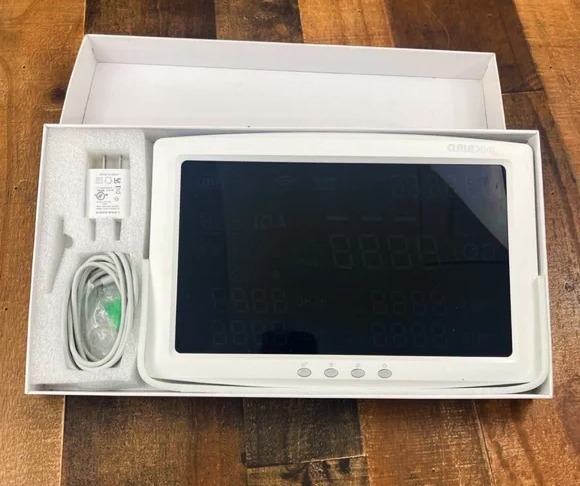
18-in-1 WiFi Indoor Air Quality Monitor
Overview
The SAF Aranet4 Home Wireless Indoor Air Quality Monitor is one of those devices you don’t realize you need until you start using it. At first glance, it looks simple, almost minimal.
But once it’s sitting in your room, it quietly changes how you think about an indoor air quality monitor.
Instead of throwing technical jargon at you, it shows exactly what matters most: CO₂ levels, along with temperature and humidity. When the numbers go up, the room feels stuffy. When you ventilate, the numbers drop. It connects real-life comfort with real data, and that’s what makes it useful daily.
This indoor air quality monitor isn’t designed to impress with smart home tricks. It’s designed to be accurate, consistent, and easy to trust.
Specifications
- Measures CO₂, temperature, humidity, and air pressure
- CO₂ measurement range up to 9,999 ppm
- Uses an NDIR CO₂ sensor for reliable readings
- E-ink display that stays clear in all lighting
- Bluetooth connectivity for app-based tracking
- Powered by AA batteries
- Battery life can reach up to two years
- Supports desk placement or wall mounting
- Suitable for homes, offices, classrooms, and workspaces
Pros
- CO₂ readings feel stable and believable, not random
- Very easy to use, even for non-technical users
- Long battery life means less maintenance
- The screen is calm on the eyes and easy to read
- Helps improve comfort, focus, and ventilation habits
- Compact design blends into any room
- No subscriptions or ongoing costs
Cons
- No Wi-Fi support, only Bluetooth
- The price is higher than that of basic air quality monitors
- An app is required for viewing historical data
- Limited integration with smart home systems
Conclusion
The SAF Aranet4 Home Wireless Indoor Air Quality Monitor focuses on doing one thing well: showing you the real condition of your indoor air. It doesn’t try to be flashy or over-engineered. Instead, it delivers accurate information in a way that actually changes how you use your space.
If you value reliable data, long-term use, and a simple experience, this indoor air quality monitor is worth considering. It may cost more upfront, but over time, its accuracy and low maintenance make it a solid, practical choice for anyone serious about indoor air quality.
Indoor Air Quality Monitor with 10-in-1 Detection
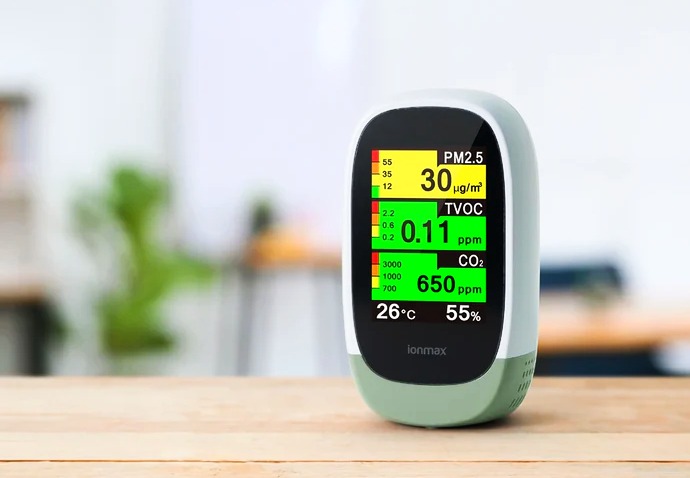
An indoor air quality monitor with 10-in-1 detection is designed for people who want a full picture of their indoor environment, not just basic air data. Instead of focusing on one or two readings, it tracks multiple air-related factors at the same time, helping you understand how indoor air changes throughout the day.
This type of indoor air quality monitor is especially useful in closed spaces such as homes, offices, and classrooms, where air quality can drop without any obvious signs. Showing real-time data clearly, it allows users to take simple actions like ventilating a room or adjusting airflow before discomfort or health issues appear.
The main value of a 10-in-1 monitor is clarity. When several air indicators are visible together, it becomes easier to understand why a space feels stuffy, dry, or uncomfortable and how to fix it.
Specifications
- Measures CO₂, temperature, humidity, air pressure, and additional indoor air indicators
- 10-in-1 detection system for comprehensive air monitoring
- High-accuracy sensors for stable and reliable readings
- Real-time data displayed on a clear digital screen
- Wireless connectivity for monitoring through a mobile app
- Battery-powered for flexible placement
- Suitable for homes, offices, schools, and workspaces
Pros
- Provides a complete overview of indoor air conditions
- Helps identify air quality issues early
- More informative than single-parameter monitors
- Easy to use and understand
- Supports healthier ventilation decisions
- Suitable for long-term everyday monitoring
Cons
- Higher cost compared to basic air quality monitors
- Some users may not need all measured parameters
- App required for a detailed data history
- Advanced features may be unnecessary for small rooms
Conclusion
An indoor air quality monitor with 10-in-1 detection is a practical choice for users who want accurate and detailed insight into their indoor air. By measuring multiple factors together, it helps remove guesswork and supports better air quality management.
While it may be more advanced than an entry-level indoor air quality monitor, the added accuracy and long-term benefits make it a valuable tool for maintaining a healthier and more comfortable indoor environment.
Amazon Smart Air Quality Monitor – Know your air
Overview
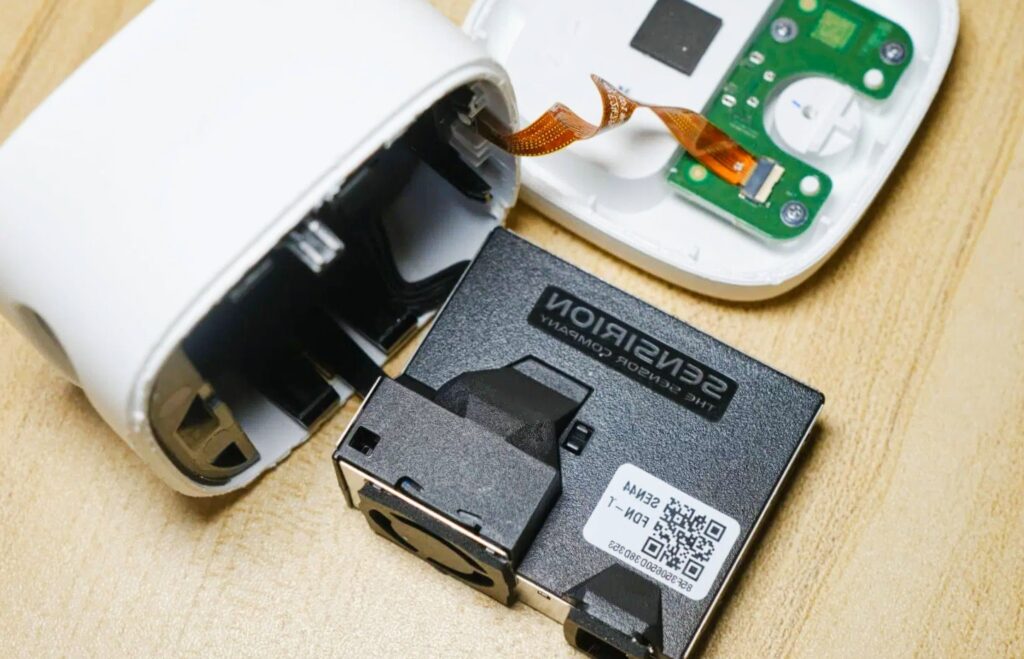
The Amazon Smart indoor air quality monitor is designed for folks who need a straightforward and trustworthy way to know what’s going on in their indoor air quality monitor. It is about awareness, not intricacy: it helps people realise the discreet air quality issues which are around them and that they may never notice in their daily life.
This indoor air quality monitor consistently monitors several important indoor air factors and presents its findings in a way that’s easy to understand. Rather than technical graphs, it features a big notification when air quality falls and explains the reasons why. It seamlessly integrates into the ecosystem in homes that already have Alexa devices, and it does its job quietly behind the scenes.
Its main job is pretty simple: help you spot when the indoor air quality monitor is unhealthy and take action before it starts to make you uncomfortable or ill.
Specifications
- Monitors particulate matter (PM2. 5), VOC, CO, humidity, and temperature
- Air quality indicator by color for easy understanding at a glance
- Smart alerts and insight through the Alexa app
- Works with Alexa-enabled devices
- Powered via USB
- Designed for indoor home use
- Compact and lightweight design
Pros
- Simple to use, even for beginners
- And the integration is seamless with other Alexa smart home tools.
- Instead of just raw data but a very informative guide to the workouts and their purpose
- Aids in the early detection of indoor air quality problems typical of homes and offices
- Design Display Type: Compact design makes it fit everywhere in the room
Cons
- Best used within the Amazon Alexa world
- Do not show detailed information on the device
- Full features require the Alexa App
- Limited advanced analysis features compared with professional monitors
Conclusion
The Amazon Smart indoor air quality monitor is a fine pick for anyone looking for an easy, smart way to monitor the air inside their home. It’s all about clarity and convenience, allowing users to easily understand and act on air quality data.
It doesn’t provide any heavy technical analysis, but it serves as a brilliant awareness raiser for forming better habits indoors. This indoor air quality monitorwill get you practical, everyday value while tracking air quality specifically for Alexa users in the most satisfying way possible.
18-in-1 Indoor Air Quality Monitor with Dual Chips
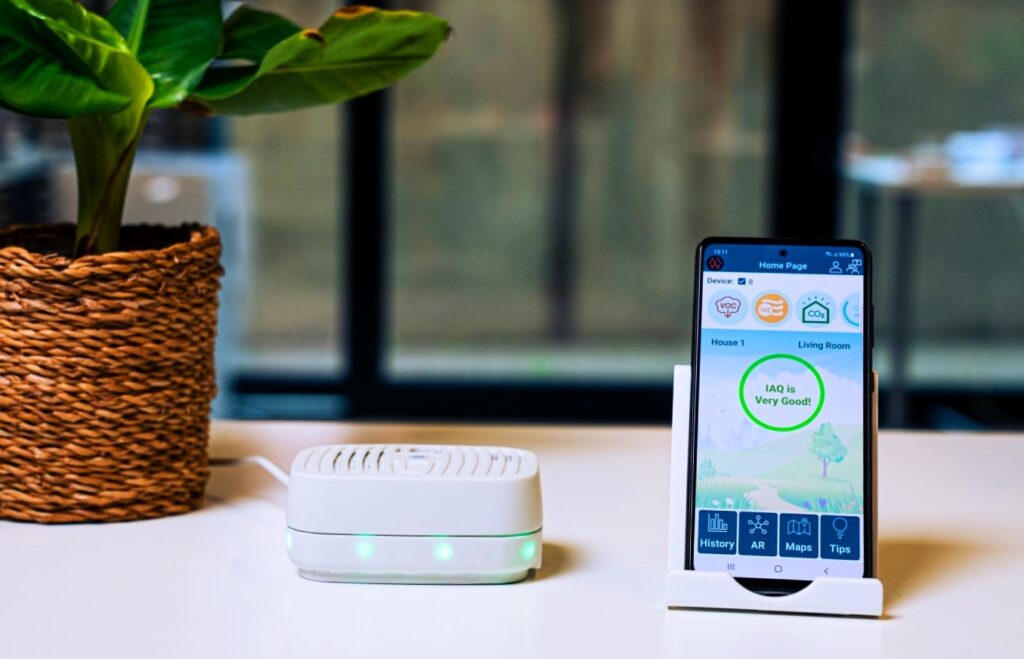
Overview
I still remember the first time I realized how much indoor air affects how I feel. It was a stuffy afternoon, and even though the room looked fine, I felt sluggish and lightheaded. That’s when I started looking for a serious air monitor, and that’s exactly what an 18-in-1 Indoor Air Quality Monitor with Dual Chips does.
This isn’t just your basic CO₂ or temperature monitor. It keeps track of 18 different air parameters, from gases and particles to humidity and temperature. What I love is the dual-chip setup: one chip focuses purely on gathering accurate readings from all sensors, while the other processes the data and handles notifications.
This means even when multiple readings change at once, the monitor stays fast, stable, and reliable. Using it feels almost effortless. You just glance at the screen or open the app, and suddenly, everything about your room’s air makes sense. It’s eye-opening to see how little changes a closed window or running heater can make to air quality.
Specifications
- Monitors 18 air parameters, including gases, particles, temperature, and humidity
- Dual-chip system for accurate readings and smooth performance
- High-precision sensors for long-term reliability
- Real-time display on a clear digital screen
- Wireless connectivity for mobile app alerts and historical tracking
- Stores data over time to spot trends and patterns
- Suitable for homes, offices, classrooms, or professional spaces
Pros
- Covers almost every important aspect of indoor air in one device
- Dual-chip design keeps readings consistent, even when many sensors change at once
- Makes it easy to see air quality trends and act before problems arise
- Helps improve comfort, focus, and health at home or work
- Perfect for bigger rooms or shared spaces
- Gives a real sense of control over indoor air quality
Cons
- The price is higher than that of simple or single-sensor monitors
- Might feel overwhelming for casual users who just want CO₂ or temperature
- App setup is required to access all features
- Slightly larger footprint compared to compact monitors
Conclusion
The 18-in-1 Indoor Air Quality Monitor with Dual Chips is not just a gadget; it’s a full air awareness tool. It’s for anyone who wants to understand exactly what’s happening in their indoor environment, detect issues early, and make their home or office more comfortable and healthier.
Yes, it’s more advanced and pricier than basic monitors, but the accuracy, range of data, and reliability make it worth every penny. If you care about indoor air and want real insights, this monitor is hard to beat.
16-in-1 Indoor Air Quality Monitor with Display
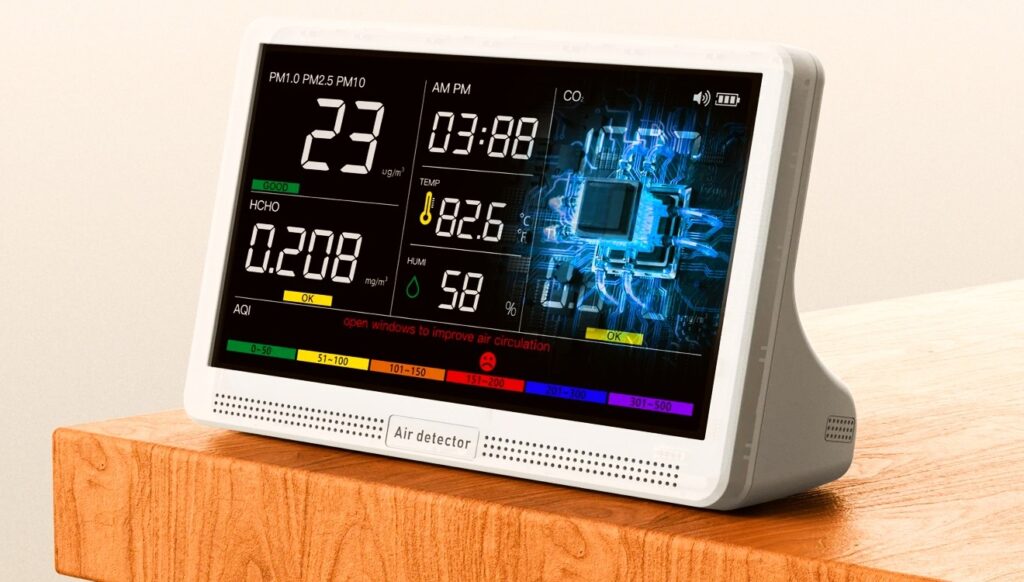
Overview
Something didn’t seem quite right in my apartment a couple of weeks ago. It was neither hot nor cold in here, but somehow I was feeling slow, a little spacey, and even my work focus was going down. Initially, I thought it was simply me, but then I stopped to wonder if perhaps it is the atmosphere.
Enter the 16-in-1 Indoor Air Quality Monitor with Display, which I recently got hold of, and now I realize I had no idea what I was missing. You should take it to heart that this device is a CO₂ and temperature device.
The device monitors 16 unique airborne variables simultaneously, able to measure things ranging from humidity and volatile organic compounds(VOCs) to particulate matter and temperature. And the display? In your face, crystal clear, and legible. No unnecessary apps, no perplexing graphs, only the data you are searching for.
Almost immediately, I began to see patterns. Particulate matter would peak when I cooked. I noticed the humidity lowered when I shut the windows and had the heater running. The multitude of events was laid bare on a monitor for the first time, and I could grasp it. More like a miniature weather station for my room, but much more useful!
Specifications
- Monitor 16 indoor air quality parameters, including CO₂, VOCs, particulate matter (PM2. 5/PM10), temperature, and humidity
- Built-in digital display that provides instant readings
- We focus on stable and accurate tracking with high-precision sensors
- Via wireless connectivity for app-based tracking, trends, and notifications
- Storing historical information for air patterns across days or weeks
- The small size is very practical, hence you can put it anywhere and take it anywhere
- Ideal for home, office, classroom, or other shared indoor location
Pros
- Offers a full-spectrum reading of indoor air quality
- No apps are necessary for basic information; the built-in display displays all of your readings instantly
- It allows you to identify issues before they interfere with comfort or health
- Easy to use: no technical skills required
- Encourages better ventilation habits naturally
- An ideal fit for medium to large rooms and communal offices
- Gives you more consciousness of your surroundings in day-to-day life
Cons
- More expensive than basic monitors
- May seem more than users ask for who just want CO₂ or temperature
- A few advanced insights need app configuration
- A larger footprint than mini or portable monitors
Conclusion
16-in-1 Indoor Air Quality Monitor With Display. It is not just a gadget, it is a tool that will transform indoor life. You find out where the air quality problems begin, and you can take action before it negatively affects your comfort or health.
I did use it, and in the weeks following using it, I found that I was more often ventilating rooms, I was more alert during the day, and I was even sleeping slightly better at night. Sure, it will set you back a bit more than the most basic monitor, but you’ll be reassured and informed and conscious on a daily basis in your mind, for every cent spent.
This indoor air quality monitoris a no-brainer if you care at all about your indoor environment and want to be living in a space that, at least, feels like it is nice and fresh.
Bonoch 16-in-1 Indoor Air Quality Monitor with Alerts
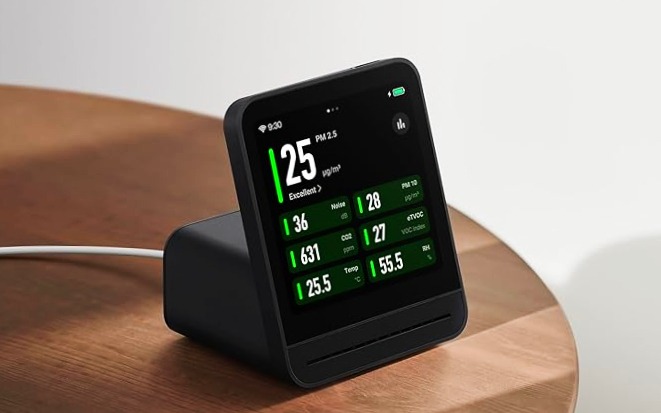
Overview
A few days ago, I noticed my living room felt stuffier than usual. I was halfway through my work, and I just couldn’t focus. That’s when I remembered the Bonoch 16-in-1 Indoor Air Quality Monitor with Alerts sitting on my desk. I had been curious about it, but now it felt like the perfect moment to test it.
This isn’t just a device that passively shows numbers. It monitors 16 different air quality factors, from CO₂ and VOCs to particulate matter, temperature, and humidity. What’s unique is the alert system, which lets you know immediately. For someone like me, who spends long hours indoors, these alerts are a lifesaver.
The display is clear, but even if you’re not staring at it all day, the alerts keep you aware. You suddenly realize that things like closing a window or running the heater can dramatically change your indoor air in minutes. It really changes the way you interact with your space.
Specifications
- Monitors 16 indoor air parameters, including CO₂, VOCs, PM2.5/PM10, temperature, and humidity
- Real-time built-in display for easy viewing
- An advanced alert system to notify when the air quality drops
- High-precision sensors for reliable, consistent readings
- Wireless connectivity for mobile app monitoring and historical data tracking
- Records trends to understand air patterns over time
- Suitable for homes, offices, classrooms, and shared indoor spaces
Pros
- Tracks 16 key air quality factors in one device
- Alerts notify you immediately if the air quality worsens
- Display is clear and easy to read without opening an app
- Helps detect and fix air issues before they affect comfort or health
- Encourages better ventilation and healthier indoor habits
- Great for medium-to-large rooms and offices
- Makes monitoring indoor air effortless
Cons
- Slightly more expensive than basic monitors
- Advanced features require app setup for full benefits
- Some users may find 16 parameters more than they need
- Larger footprint than small portable monitors
Conclusion
The Bonoch 16-in-1 Indoor Air Quality Monitor with Alerts isn’t just a gadget; it’s a practical companion for your indoor environment. With 16 parameters tracked and real-time alerts, you always know when your air quality drops and what to do about it.
After using it for a few weeks, I found myself opening windows more regularly, adjusting heating or cooling, and generally feeling more comfortable in my home. The alerts are subtle but effective, and the device quietly gives you peace of mind without demanding attention.
If you care about health, comfort, and really understanding the air around you, the Bonoch 16-in-1 monitor is a tool that makes a noticeable difference, and it’s worth the investment.
SAF Aranet4 Home Wireless Indoor Air Quality Monitor
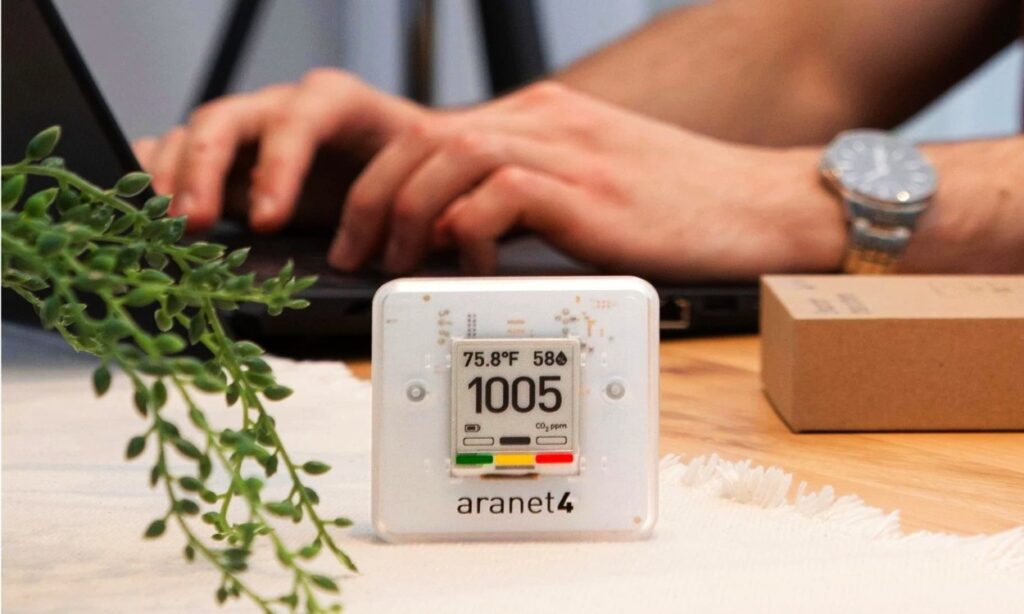
Overview
I still remember the first time I looked at my indoor air quality monitor. I had just moved into a new apartment, and even though everything looked clean, I often felt tired and distracted by late afternoon. That’s when I tried the SAF Aranet4 Home Wireless Indoor Air Quality Monitor, and it honestly changed how I think about the air I breathe every day.
This indoor air quality monitor is simple, but smart. It sits quietly on a shelf or desk and constantly checks what’s going on in the air around you. Unlike cheap gadgets that only show one or two numbers, the Aranet4 focuses on the key things that really matter: CO₂ levels, temperature, humidity, and air pressure. The moment one of these goes out of a healthy range, the screen makes it easy to notice, no guessing, no complicated graphs.
What surprised me most was how often the readings would change with simple things, like opening a window, cooking, or running the heater. Suddenly, all those invisible changes in the air started making sense.
Specifications
- Measures CO₂, temperature, humidity, and air pressure
- Uses a professional-grade NDIR CO₂ sensor for accurate readings
- Wireless Bluetooth connectivity for app tracking and trend analysis
- E-ink display that’s easy to read from a distance
- Powered by AA batteries, lasting many months
- Data logging is available through a mobile app
- Can be placed on a desk or mounted on a wall
- Ideal for homes, offices, classrooms, and shared spaces
Pros
- Accurate and dependable readings — doesn’t jump around
- E-ink display stays readable in all lighting conditions
- Very long battery life, no frequent charging
- Helps improve comfort and awareness of indoor air quality
- Bluetooth app adds trends and history without being intrusive
- Simple, straightforward setup, no technical expertise needed
- No subscription or extra fees
Cons
- Doesn’t support Wi‑Fi, only Bluetooth
- App needed for detailed logs and historical trends
- Not as flashy as some smart‑home devices
- Might feel slightly pricier compared to basic monitors
Conclusion
The SAF Aranet4 Home Wireless Indoor Air Quality Monitor isn’t trying to be a smart gadget with bells and whistles. It’s built for real, reliable air awareness, giving you the right data at the right time so you can take simple steps for better comfort and health.
After using it for some time, I found myself naturally paying more attention to ventilation and air circulation, especially during long work sessions or when guests were over. The Aranet4 doesn’t shout, it just informs, every day, quietly and clearly.
If you want a monitor that tells you what you actually need to know about your indoor air quality monitor, without confusion or complexity, this one is a solid choice.
Comparison of Indoor Air Quality Monitor
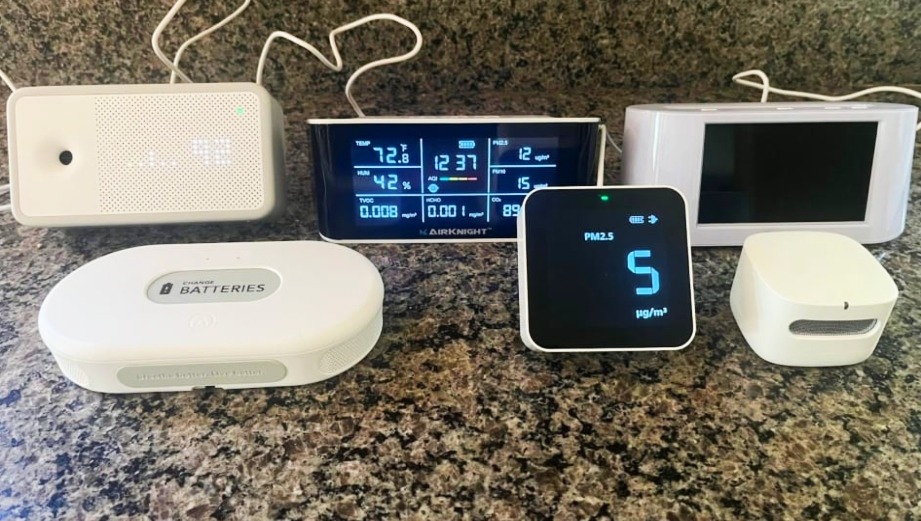
| Feature / Monitor | 18-in-1 WiFi Indoor Air Quality Monitor | 16-in-1 Indoor Air Quality Monitor with Display | Bonoch 16-in-1 Indoor Air Quality Monitor with Alerts | SAF Aranet4 Home Wireless Indoor Air Quality Monitor |
| Key Sensors | 18 parameters: gases, particles, temp, humidity | 16 parameters: CO₂, VOCs, PM2.5/PM10, temp, humidity | 16 parameters: CO₂, VOCs, PM2.5/PM10, temp, humidity | CO₂, temp, humidity, air pressure |
| Display | Digital screen, real-time readings | Built-in digital display | Real-time built-in display | E-ink display |
| Connectivity | Wi-Fi + App alerts | Wireless app tracking | Wireless app tracking + alerts | Bluetooth + App tracking |
| Special Features | Dual-chip system for accuracy | Real-time tracking of 16 parameters | Alert system for immediate notifications | Reliable, long-term air monitoring, low maintenance |
| Battery / Power | Battery / Plug (varies) | Battery-powered | Battery-powered | AA batteries last months |
| Ease of Use | Moderate, requires an app for full features | Simple, instant display | Easy, with alert notifications | Very easy, straightforward setup |
| Pros | Full air coverage, accurate, trend tracking | Full spectrum, clear display, early issue detection | Alerts notify instantly, clear readings | Accurate CO₂ readings, long battery, low maintenance, simple |
| Cons | Pricier, setup needed, slightly larger | Slightly expensive, advanced features need an app | Slightly expensive, app setup needed | No Wi-Fi, limited smart integration, pricier than basic monitors |
| Best For | Users who want detailed air data & insights | Medium to large rooms, daily monitoring | Users wanting alerts & real-time monitoring | Users wanting reliable, simple CO₂-focused monitoring |
What We Picked, and How We Tested Indoor Air Quality Monitors
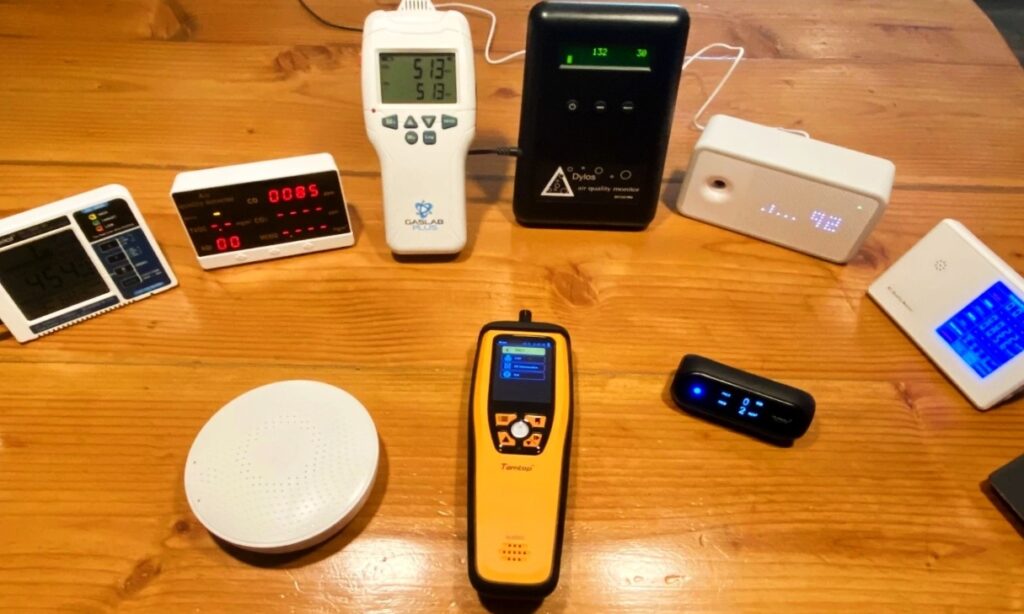
Home air quality monitors tend to be marketed as smart and, in some cases, precise devices, but the reality can be quite different. Research conducted by the Environmental Protection Agency (EPA) has shown that most inexpensive indoor air quality sensors do not provide accurate data. This, as you already know, leads to inaccurate readings and a short lifespan for the sensors, primarily due to sensor quality.
In view of these insights, we paid considerable attention to transparency and credibility in our selection process. We focused on manufacturers that explicitly stated the kind of sensors used, how those sensors are tested, and how accurate their readings are over time. This market seen such rapid growth in recent years that many of the new brands found themselves launching with no track record. In such cases, all that remains are the wings of a reliable monitor, component quality, and testing data.
What Real Users Love About AirVisual Monitors
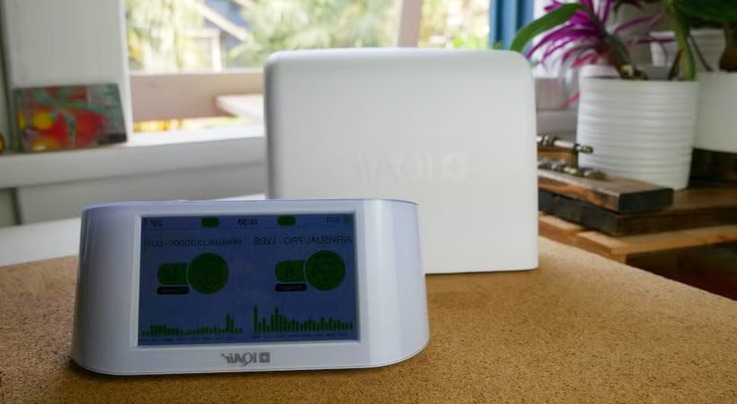
Real-Time Indoor & Outdoor Air Quality Tracking
Users consistently highlight how the monitor provides live indoor and outdoor air quality data, helping them clearly see the difference ventilation or air purifiers make inside the home.
Accurate CO₂, PM2.5 & AQI Monitoring
Many reviewers mention the device’s ability to track carbon dioxide levels, particulate matter (PM2.5), and overall Air Quality Index (AQI) with clear visual graphs, making air conditions easy to understand at a glance.
Clear Historical Data & Trend Graphs
The monitor doesn’t just show current numbers. Users appreciate hourly trend graphs, especially CO₂ history over the past 12 hours, which helps identify patterns throughout the day.
Smart Guidance for Healthier Decisions
Several users note how the monitor actively guides actions, telling you when to open windows to reduce CO₂ or close them to block outdoor pollution. This turns data into practical daily decisions.
Seamless Indoor & Outdoor App Integration
The single app experience for both indoor and outdoor monitoring stands out. Users enjoy viewing all air data in one place, whether at home or checking conditions remotely.
Easy Setup with Quick Activation
Setup is frequently described as fast and straightforward, even for outdoor stations. Approval and public data sharing are smooth, which adds trust and usability.
Clean Design That Fits Any Space
Reviewers often mention the modern, minimal design that looks good on desks or shelves, blending naturally into home or office environments.
Reliable Hardware & Polished Software Experience
Users praise the solid build quality and smooth app performance, highlighting how well the hardware and mobile app work together without glitches.
Community Data Sharing Option
Advanced users appreciate the option to share air quality data publicly, contributing to broader environmental awareness while still monitoring their own space.
FAQs
Do air quality monitors really work?
Yes, air quality monitors do work, but their usefulness depends on the quality of the sensors they use. Basic models can reliably measure trends in things like CO₂, PM2.5 (fine particles), humidity, and temperature, giving you a good idea of how your air changes over time.
Higher-end monitors with professional sensors tend to be more accurate and consistent, while very cheap ones may have less precision or drift over time. Always choose models with transparent sensor information and reputable calibration for the best results.
What is the most accurate air quality monitor?
There’s no single “most accurate” monitor for everyone, but generally, devices that use professional-grade sensors (like NDIR for CO₂ and laser-based sensors for PM2.5) and have documented calibration perform best.
Models tested against reference stations or used in scientific evaluations tend to be more reliable than low-cost units with unclear specs. Independent testing, sensor disclosure, and long-term stability are key indicators of accuracy.
What is an air quality monitor?
An air quality monitor is a device that measures pollutants and environmental factors in the air around you. It tracks things like carbon dioxide (CO₂), fine particulate matter (PM2.5), humidity, temperature, and sometimes gases like VOCs or nitrogen oxides.
The purpose is to give you real-time or historical data about air cleanliness so you can make informed decisions about ventilation, purifiers, or outdoor activities.
What is the AQI in Pakistan today?
AQI (Air Quality Index) shows how clean or polluted the outdoor air is on a standard 0–500 scale. Values below 50 are “Good,” 51–100 “Moderate,” 101–150 “Unhealthy for Sensitive Groups,” and higher values indicate worsening conditions.
Real-time AQI data for any location in the United States is usually updated hourly on official maps and tools (e.g., AirNow). To know the exact current AQI for your city or ZIP code, you can check real-time trackers like AirNow or other AQI data services that pull from EPA monitoring stations.
Conclusion
Indoor air quality is no longer something we can afford to ignore, especially when most of our time is spent inside homes, offices, and classrooms. As this guide shows, even low-cost indoor air quality monitors in 2026 are now capable of delivering meaningful, actionable insights about the air we breathe every day.
Whether you choose a simple CO₂-focused device like the SAF Aranet4, a smart ecosystem option like the Amazon Smart Air Quality Monitor, or a more advanced 16-in-1 or 18-in-1 monitor, the real value lies in awareness. These monitors help turn invisible air problems into clear data, allowing you to ventilate better, use purifiers more effectively, and create healthier indoor habits.
No single monitor is perfect for everyone. The best choice depends on what you care about most: simplicity, accuracy, smart alerts, or deep air analysis. But even an entry-level monitor is far better than guessing. Over time, small changes guided by reliable air data can improve comfort, focus, sleep quality, and overall health.
In short, investing in an indoor air quality monitor isn’t about buying another gadget; it’s about understanding your environment and taking control of the air you breathe, every single day.
A friend of mine came back from vacation last summer. Two weeks away, beautiful trip. He walked into his kitchen, and the floor was completely warped. Cabinets swollen. That specific smell, you know the one, mold mixed with wet wood.
A slow drip under the sink had been running the whole time he was gone.
Repair bill? $18,000. Insurance covered most of it. But the two weeks in temporary housing, the months of back-and-forth with adjusters, the Automatic Water Leak Detection he’d renovated himself — none of that gets reimbursed.
And here’s the part that still bothers me: a $50 sensor and a basic automatic water shut-off system would have caught it the first day.
That’s why I wrote this. If you’ve been putting it off, stop. Let’s figure out what you actually need.
What Is Automatic Water Leak Detection?
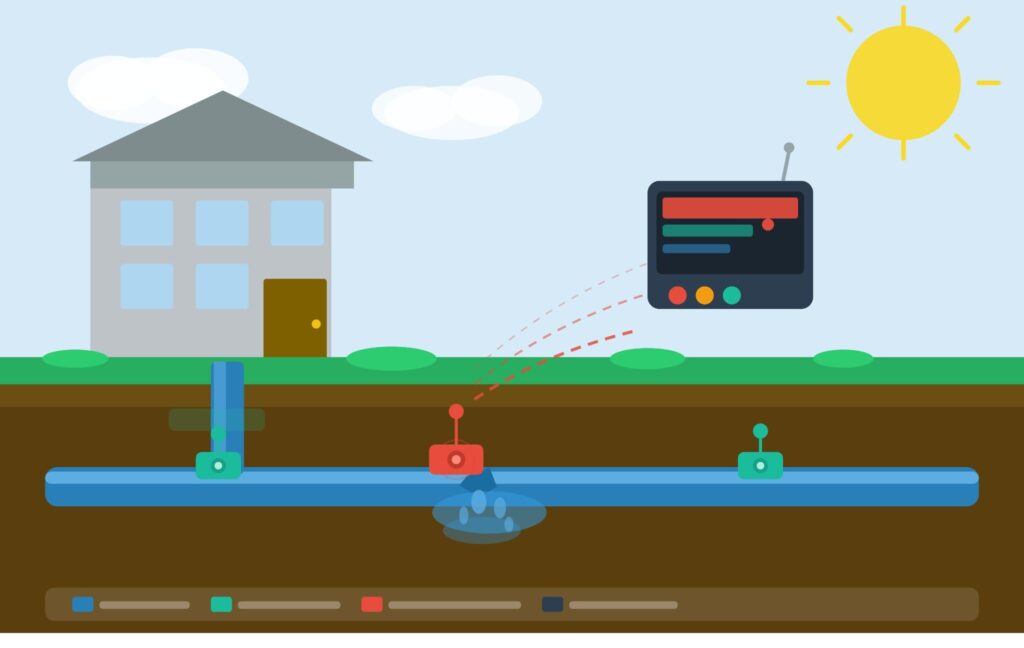
It’s simpler than it sounds, honestly.
An automatic water leak detection system finds water where it shouldn’t be — and then does something about it before damage happens. Not just beep at you. Actually, stop it.
Automatic Water Leak Detection is a basic sensors alert you. A real automatic water leak detection system:
- Detects moisture or abnormal water flow
- Sends an instant alert to your phone
- Closes your main water supply valve on its own
- Does all of this matter whether you’re home or not
Think of it like an automatic water leak detection for your plumbing. Sits there quietly. Does nothing 99% of the time. But when something goes wrong, it moves fast.
These automatic water leak detection systems have been standard in hotels and hospitals for years. The reason you’re hearing about them now for homes is simple: the price dropped, the tech got easier, and the apps actually work in 2026.
Why You Seriously Need One This Year
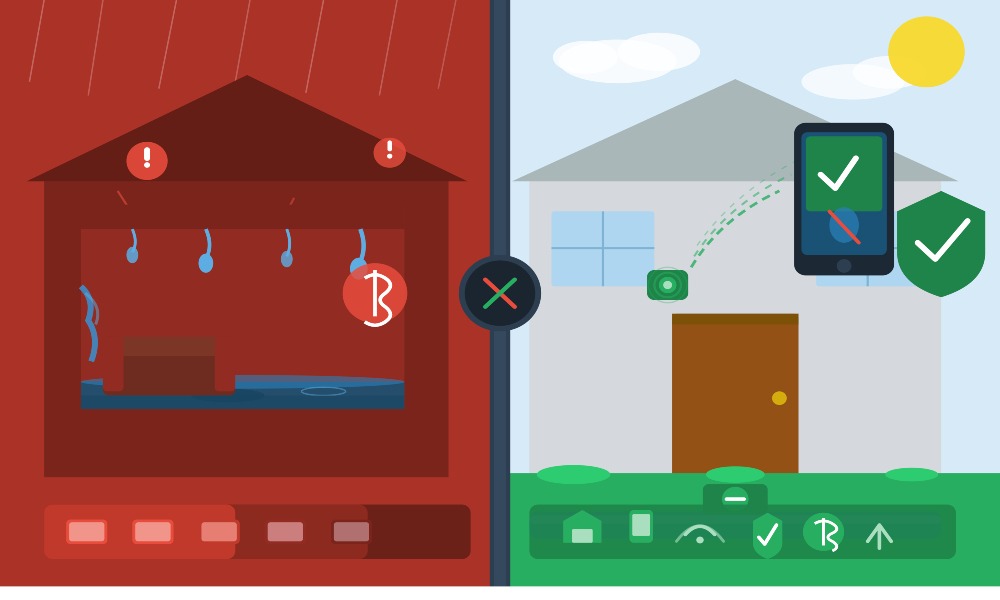
Water damage is the second most common home insurance claim. Not fire. Not theft. Water.
Average claim? Somewhere between $10,000 and $25,000. And that’s before your deductible, before your premium goes up next renewal, before you spend three weeks living out of a suitcase.
The part that makes it worse is that it’s usually quiet. It hides inside walls, under floors, behind appliances. By the time you smell something or see the floor bubbling, it’s been going on for weeks.
Here’s what’s specific to automatic water leak detection 2026 that makes now the right time:
- Water rates are rising in most cities. A hidden drip isn’t just damaging your home — it’s quietly running up your bill every month.
- Insurance discounts are real. Some insurers knock off 5–15% for homes with certified automatic water shut-off systems. Call your agent and ask. Seriously.
- Smart home integration finally works. Alexa, Google Home, Apple HomeKit — these automatic water leak detection systems connect without fighting you.
- Remote monitoring is a game-changer. Traveling for work? Get a push notification, shut your water off from your phone, and call a neighbor. Done. No $18,000 kitchen.
How Does an Automatic Water Leak Detection System Actually Work?
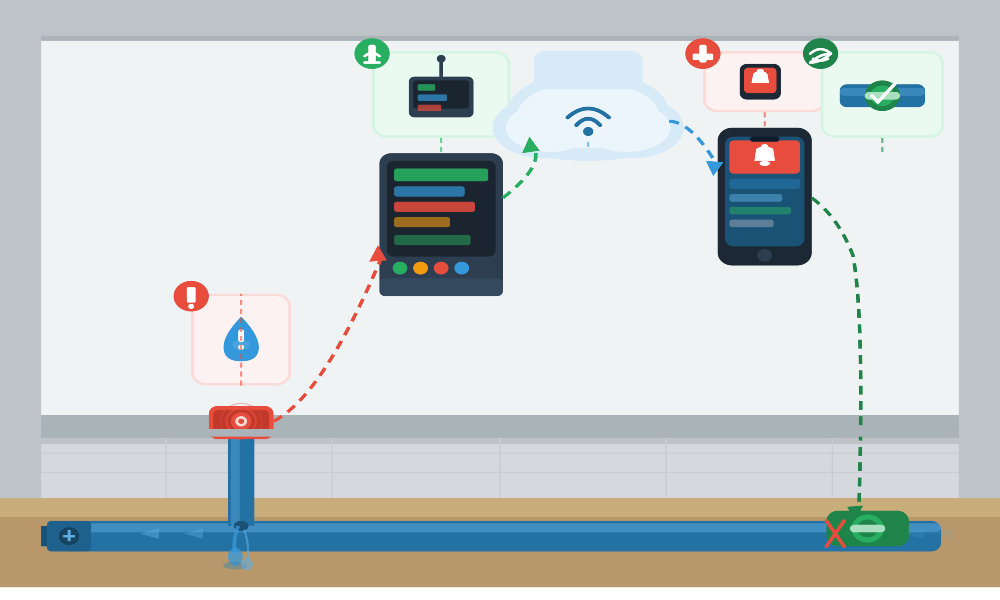
Two approaches. Very different. Both are valid depending on your situation.
Spot Sensors — Simple and Cheap
Small sensors. Place them on the floor in risky spots:
- Under kitchen and bathroom sinks
- Next to the water heater
- Behind the washing machine
- Near the toilet base
- In the basement by the sump pump
When water touches the metal probes on the bottom, it triggers an alert. Loud local alarm. Push notification. And if connected to a shut-off valve, water stops automatically.
The limitation? They only catch automatic water leak detection where you placed them. A pipe bursting inside a wall? You’d never know until the drywall starts bubbling.
Whole-Home Flow Monitoring — Smarter Coverage
One device installs on your main water supply line. It watches flow, pressure, and temperature 24 hours a day.
The smart part — automatic water leak detection systems like Moen Flo and Phyn Plus actually learn your home’s habits:
- They know when your sprinklers run.
- They know how long your showers usually are
- They know what “normal” looks like for your specific house.
So when water runs at 3 a.m. when nobody’s awake — or pressure drops suddenly like a pipe just burst — it flags it. Triggers the automatic water shut-off valve. Done.
You don’t have to be home. You don’t have to see the notification.
How the Shut Off Valve Works
A motorized ball valve sits on your main supply line. When the system confirms an automatic water leak detection— usually within one to five seconds — it rotates closed. Water stops flowing to the entire house.
You also get manual control through the app. Traveling and got an alert? Shut the water off yourself remotely until someone can check it out.
Types of Water Leak Detection Systems
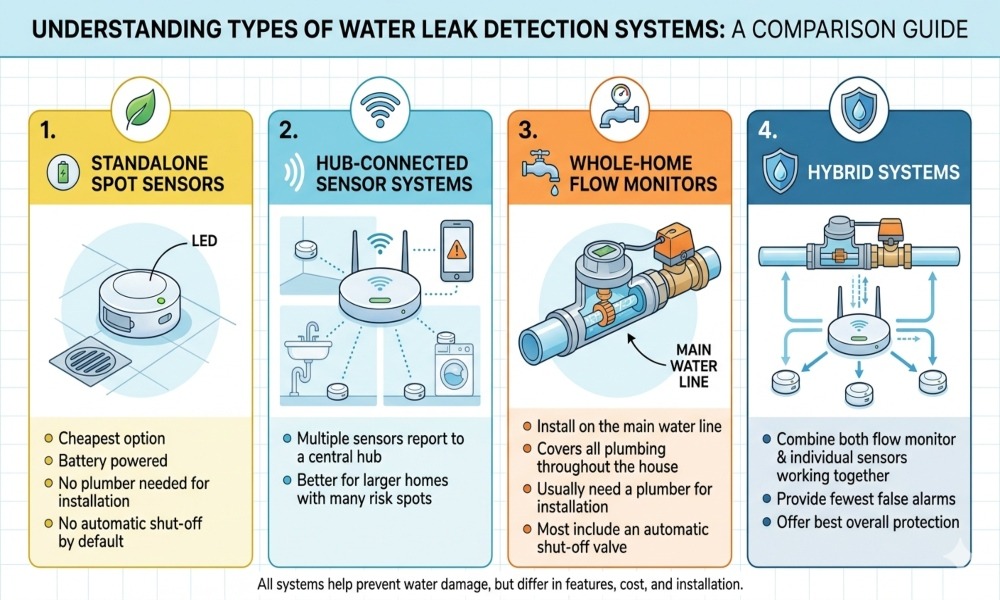
Not all automatic water leak detection systems are the same thing. Here’s how to tell them apart:
- Standalone spot sensors — cheapest option, battery powered, no plumber needed, no automatic shut off by default
- Hub-connected sensor systems — multiple sensors report to a central hub, better for larger homes with many risk spots.
- Whole-home flow monitors — install on the main line, cover everything, usually need a plumber, and most include an automatic shut-off.
- Hybrid systems — combine both; flow monitor plus individual sensors working together, fewer false alarms, best overall protection.
Best Automatic Water Leak Detection Devices in 2026
Here’s what’s actually worth buying right now. I’ve gone through the options and cut out the ones that don’t hold up in real use.
1. Moen Flo Smart Water Monitor and Automatic Shut Off
Best overall for whole-home protection
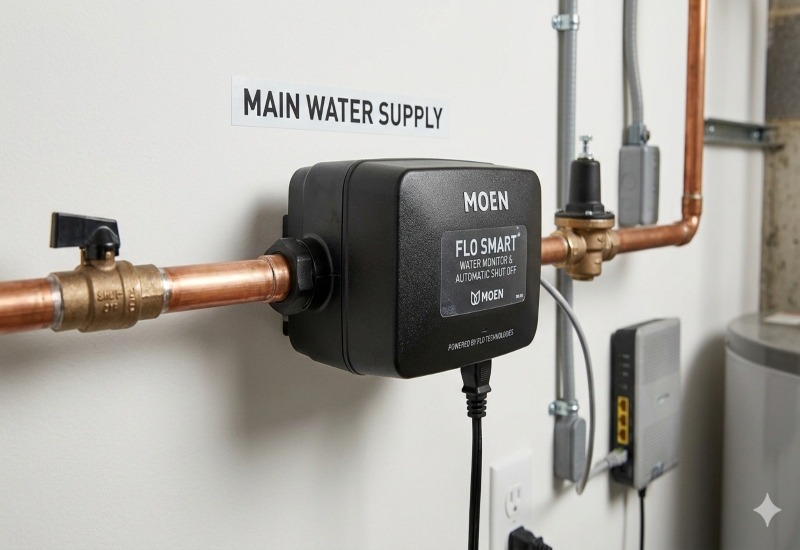
This is the one most people should seriously consider if budget isn’t the only factor.
It installs on your main water supply line and runs a quiet “health check” every single day — catching micro-leaks so small you’d never notice them on your own. Slow drip inside a wall. The toilet is running just slightly more than it should.
What makes it stand out:
- FloSense technology learns your home’s specific usage patterns.
- False alarms are genuinely rare — it understands your house.
- Built-in motorized valve shuts water off automatically.
- Daily usage data in the app — useful for spotting waste
- Works with Alexa, Google Assistant, Apple HomeKit
The downside is the cost of the automatic water leak detection device, plus a plumber to install it. But for homeowners who want real peace of mind, this is the benchmark everything else gets compared to.
Price: $500–$600 device + $100–$300 installation
2. Phyn Plus Smart Water Assistant
Best for detailed water data and pinpoint accuracy
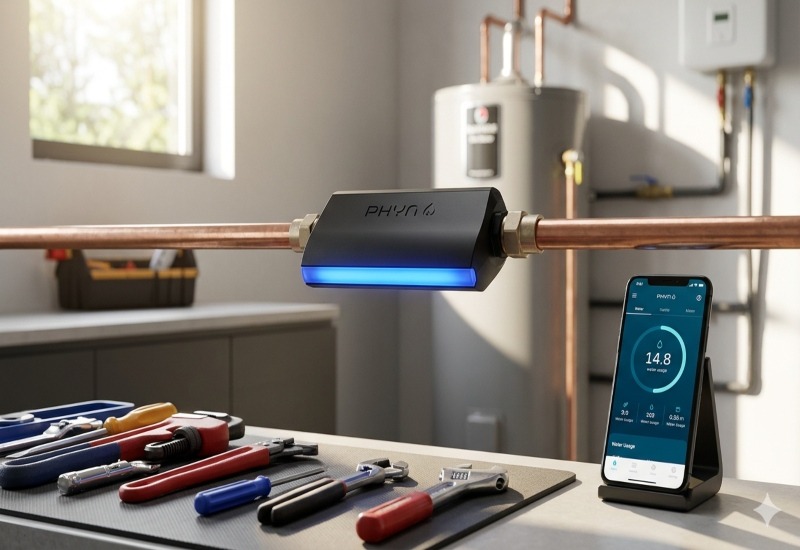
The Phyn Plus samples your home’s water pressure 240 times per second. That’s not a typo. Per second.
That level of detail means it can actually identify which fixture is running at any given time. And when it sends you a leak alert, it’s not just “something seems off.” It’s closer to “unusual flow near your main bathroom that looks like a dripping faucet.”
- Fixture-level identification is genuinely impressive.
- Automatic shut-off built in
- Best app data visualization in this category
- Alexa, Google Home, and Apple HomeKit are supported
It costs more than the Moen Flo and still needs a plumber. But if you want maximum detail about what’s happening in your plumbing — this is your system.
Price: $700–$800 device + professional installation
3. Flo by Moen Smart Water Detector Sensors
Best targeted spot protection without the big investment
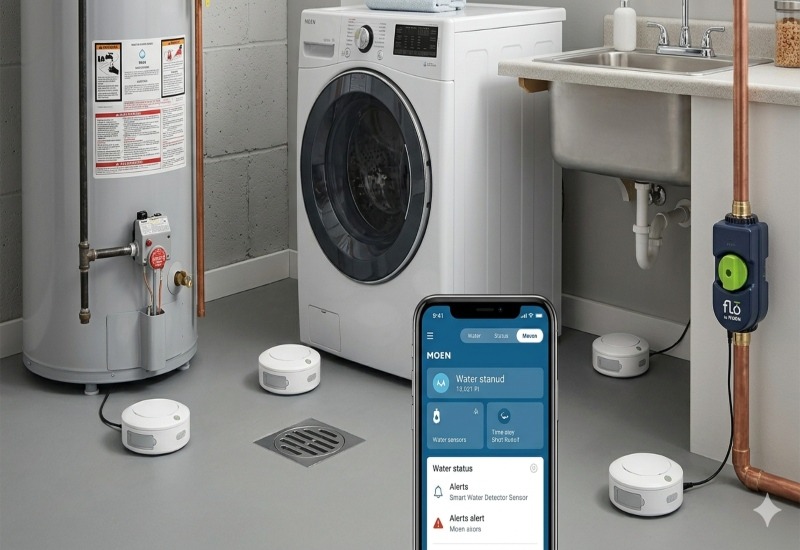
Not everyone needs a whole-home monitor. And for a lot of homes, a few well-placed automatic water leak detection sensors cover 80% of the real risk.
These small wireless automatic water leak detection sensors connect to the Flo app and alert you the moment moisture is detected. Battery life runs three to five years without thinking about it.
- Works standalone or paired with the Moen Flo main-line system
- Easy to expand — add more sensors as needed
- Clean app, reliable alerts
- Great starting point before upgrading later
Price: $50–$70 per sensor
4. Govee Water Sensor
Best budget option that actually delivers
Not everyone can spend $600 on a whole-home monitor. That’s completely fine. The Govee sensor proves you don’t have to.
- Connects directly via Wi-Fi — no hub needed
- Push notifications to your phone when moisture is detected.
- Built-in alarm loud enough to hear from another room
- Setup takes about five minutes.
No automatic shut off. No flow analytics. Just honest, simple automatic water leak detection at a price that makes sense for renters or anyone starting out.
Price: $15–$25 per sensor
5. Resideo 5800FLOOD Wireless Flood Detector
Best for existing Honeywell/Resideo security system owners
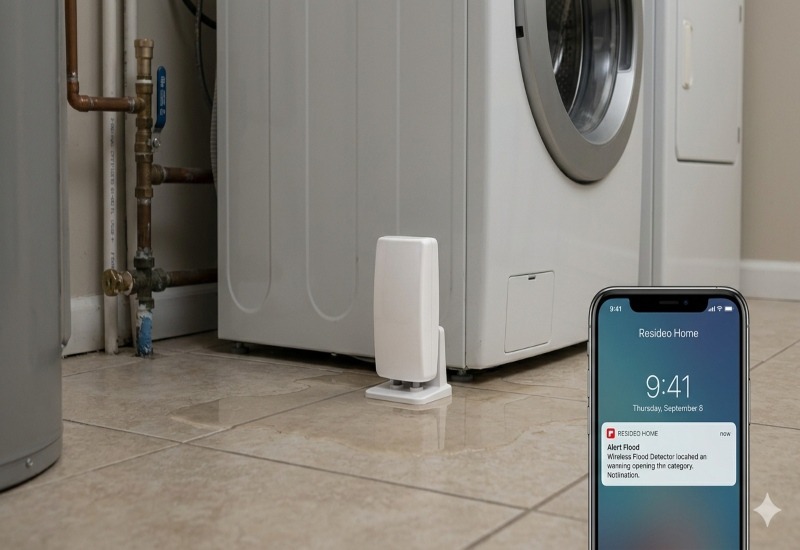
Already have a Resideo or Honeywell security panel? This is a natural add-on.
- Integrates directly with your existing alarm system
- Water leak alerts go through the same panel as your security monitoring.
- If you have professional monitoring, they respond to leaks just like break-ins.
- No separate app to manage
For anyone already in this ecosystem, it’s the cleanest option available.
Price: $40–$60 per sensor
6. LeakSmart Whole Home System
Best DIY whole-home shut off without hiring a plumber.
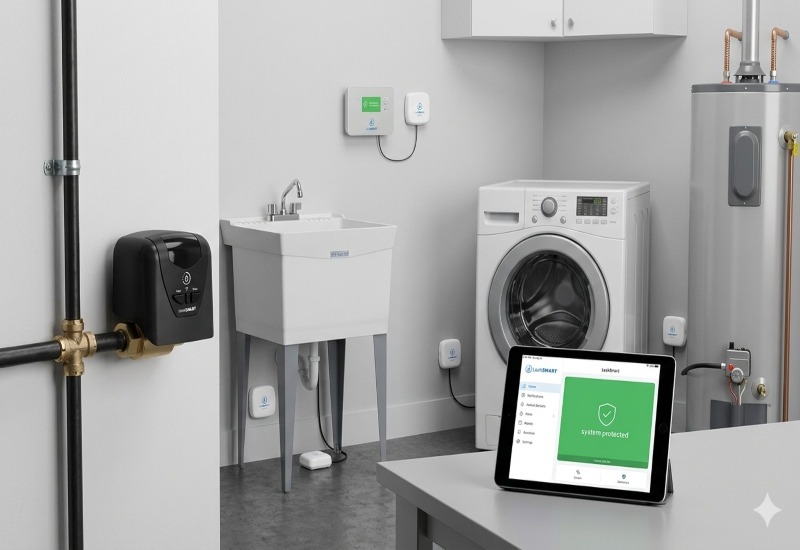
This one fills a gap that most competitors ignore.
The Moen Flo and Phyn Plus require professional installation. LeakSmart offers a whole-home automatic shut-off valve in a kit that handy homeowners can actually install themselves.
- Supports up to 32 sensors
- Valve closes in under five seconds when a leak is detected.
- Connects with Alexa, SmartThings, and other platforms
- Not as sophisticated as Moen for analytics — but the protection is real.
For DIY whole-home protection without the plumber bill, this is genuinely the best option in 2026.
Price: $200–$350 for a complete starter kit
How to Pick the Right System for Your Home
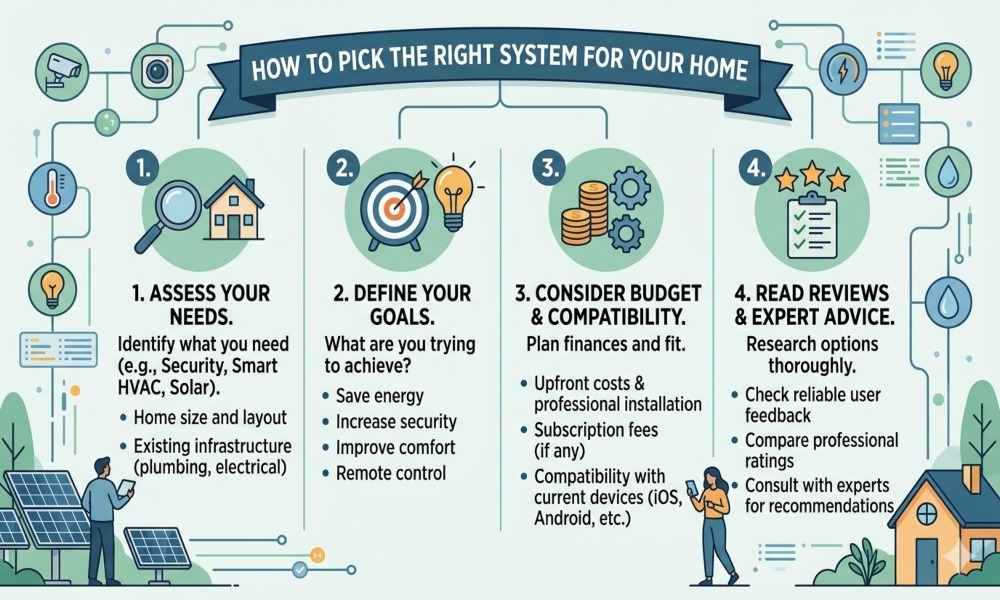
Don’t overthink it. Ask yourself these four questions:
Where are your real risk spots?
- Old water heater, basement sump pump, and washing machine that’s been there ten years?
- If you can name three to five spots, a few smart sensors cover most of your real risk cheaply
Do you want automatic shut-off?
- Sensors alert you. Shut off automatic water leak detection systems even if you don’t see the alert.
- If you travel or just want real protection, Shut Off is worth the extra cost.
How comfortable are you with plumbing?
- Not at all comfortable — hire a plumber, go with Moen Flo or Phyn Plus
- Reasonably handy — LeakSmart gives you shut-off capability without the labor bill.
What smart home ecosystem are you in?
- Most systems support Alexa and Google Home.
- Apple HomeKit is not universal — check before you buy
Installation — What to Actually Expect
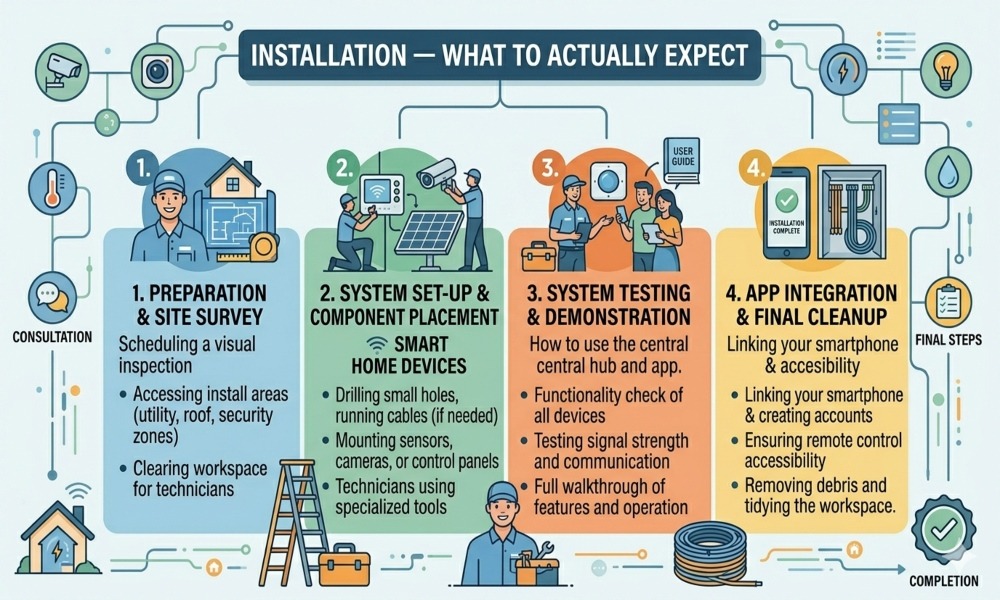
Spot sensors:
- No plumber needed
- Place on the floor — not mounted on walls, water runs down.
- Connect to the app, test with a wet cloth on the probes.
- Done in about twenty minutes total
Main-line flow monitors:
- Requires cutting into your water supply line
- Unless you’re experienced, hire a licensed plumber.
- Budget $100–$300 for labor, depending on your location
Tips that apply to every system:
- Keep sensors away from showers — steam and humidity cause false alarms.
- Test every sensor after setup — don’t assume it works.
- Check battery levels once a year, even if the app hasn’t alerted you.
Real Cost Breakdown
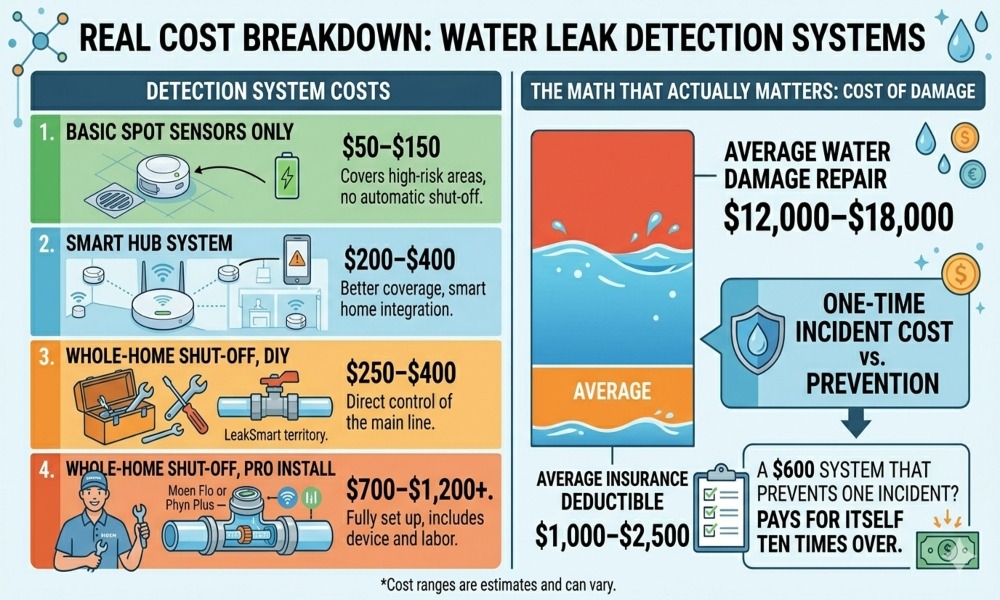
- Basic spot sensors only: $50–$150 — covers high-risk areas, no shut off
- Smart hub system: $200–$400 — better coverage, smart home integration
- Whole-home shut off, DIY: $250–$400 — LeakSmart territory.
- Whole-home shut off, professional install: $700–$1,200+ — Moen Flo or Phyn Plus fully set up.
Here’s the math that actually matters:
- Average water damage repair: $12,000–$18,000
- Average insurance deductible: $1,000–$2,500
- A $600 system that prevents one incident? Pays for itself ten times over.
FAQs
Will this lower my home insurance premium?
It can. Some insurers offer 5–15% discounts for certified automatic shut-off systems. Not all of them do. Call your agent directly and ask.
Do I need a plumber?
For spot sensors — no. For main-line monitors — usually yes, unless you’re going with LeakSmart and you’re comfortable with basic plumbing.
What’s the difference between a sensor and a whole-home monitor?
A sensor for automatic water leak detection and moisture at one specific spot. A whole-home monitor watches your entire plumbing system through flow and pressure data — no sensor placement needed.
Will it accidentally shut off my water?
Modern automatic water leak detection systems with smart flow learning have gotten much better at this. False positives still happen sometimes — especially with unusually heavy water use. Most let you adjust sensitivity and manually override through the app.
Can I use this in an apartment?
Spot sensors — yes, absolutely. Main-line shut off — no, you typically don’t have access to your own supply valve in a multi-unit building.
What if my Wi-Fi goes down?
Most automatic water leak detection systems still alarm locally. You won’t get a phone notification, but the sensor beeps. Some higher-end systems have cellular backup.
How long do batteries last?
Two to five years typically. Good automatic water leak detection sensors send a low-battery alert to your app before they die.
Final Thoughts
You wouldn’t skip an automatic water leak detection. You wouldn’t skip a carbon monoxide alarm. Those protect against things that are statistically far less likely to happen to you than a water leak.
Roughly one in fifty homeowners deals with water damage every single year. It’s not rare. It’s quiet, slow, and expensive — and in most cases completely preventable.
Start small if you have to:
- A sensor under the kitchen sink
- One next to the water heater
- One behind the washing machine
That alone puts you in a dramatically better position than doing nothing.
And when you’re ready to go further, a whole-home automatic water leak detection system with shut off is one of those purchases you make once and then genuinely stop worrying about. That’s rare. Take it.

In 2026, home climate control has evolved into an essential aspect of modern living, blending technology, efficiency, and sustainability to enhance comfort and air quality.
This article explores the transformative nature of smart climate control systems and how they extend beyond temperature control to offer energy savings, air quality control, and integration with other smart home devices.
Featuring an in-depth comparison of the top 7 smart climate control devices of the year, it explores AI-driven learning algorithms, multi-zone control, and real-time climate adjustments.
Be it families that want to customise their comfort or homeowners that are environmentally conscious and want to minimise their carbon footprint, the article provides the main features, advantages, and factors to consider when selecting the appropriate smart home climate control system in 2026.
Be ahead of the curve with innovative solutions that will not only maximise comfort but also help to create a sustainable and cost-effective future for your home.
Why Home Climate Control Matters in 2026
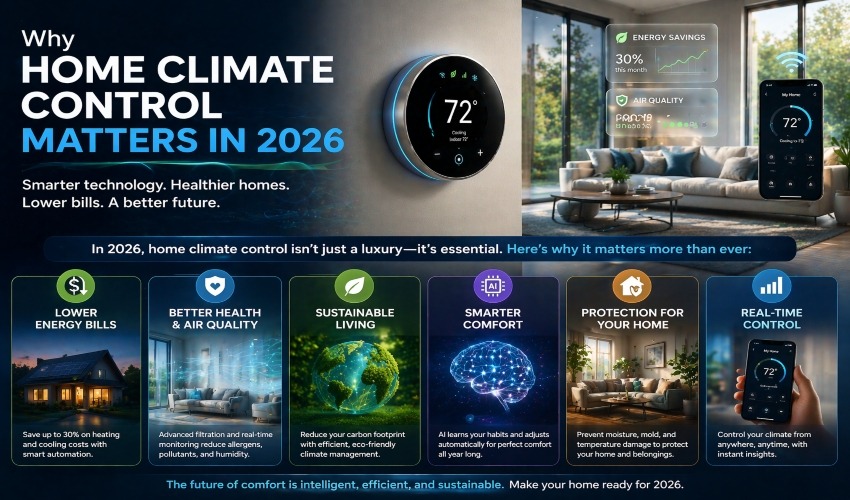
The way we manage temperature, humidity, and air quality in our homes has drastically evolved over the years. In 2026, home climate control has become more than just a matter of comfort; it’s about efficiency, sustainability, and technological integration.
Smart home climate control systems are becoming a staple in modern homes, offering not only improved energy efficiency but also better air quality, enhanced comfort, and full integration with other home automation systems.
In this article, we’ll explore why home climate control is essential for today’s homeowners, and how smart home systems with climate control are transforming the way we live. We’ll also delve into the key benefits of integrating climate control into your home’s ecosystem.
What is Home Climate Control?
Home climate control refers to the technology and systems used to maintain and regulate the environment inside a home, particularly with regard to temperature, humidity, and air quality.
Climate control systems for homes include traditional HVAC systems (heating, ventilation, and air conditioning), as well as newer smart home climate control systems that offer more personalised, energy-efficient solutions.
These systems are designed to create a comfortable living environment year-round by controlling both the temperature and airflow. But with advancements in home automation climate control, today’s systems go beyond just adjusting temperature.
How Do Smart Home Climate Control Systems Work?
Smart home climate control systems are designed to make life easier and more comfortable by using advanced technology to regulate the home’s temperature and air quality automatically.
- These systems leverage IoT devices (Internet of Things) and AI home climate control algorithms to learn about the occupants’ preferences, adjust the settings accordingly, and even adapt to seasonal changes.
- One of the main features of smart home climate control is that it allows for remote monitoring and control.
- Homeowners can adjust the settings through a mobile app, even when they are away from home.
- This can save energy by ensuring that the system only runs when needed and can also optimise energy usage by adjusting the temperature based on whether someone is home or not.
- As smart home climate control technology continues to evolve, 2026 introduces groundbreaking devices that integrate AI, energy efficiency, and automation to revolutionise home comfort.
- Smart climate control systems are no longer just about keeping temperatures steady; they now monitor air quality, adjust humidity, and seamlessly integrate with the rest of your smart home ecosystem.
Top 7 Smart Home Climate Control Devices 2026 Latest
In this article, we’ll dive into the top 7 smart home climate control devices for 2026, detailing their key specifications, pros, cons, and real-life impact. Whether you’re upgrading your home or just getting started, these smart automation devices will ensure that you stay ahead of the curve in comfort and sustainability.
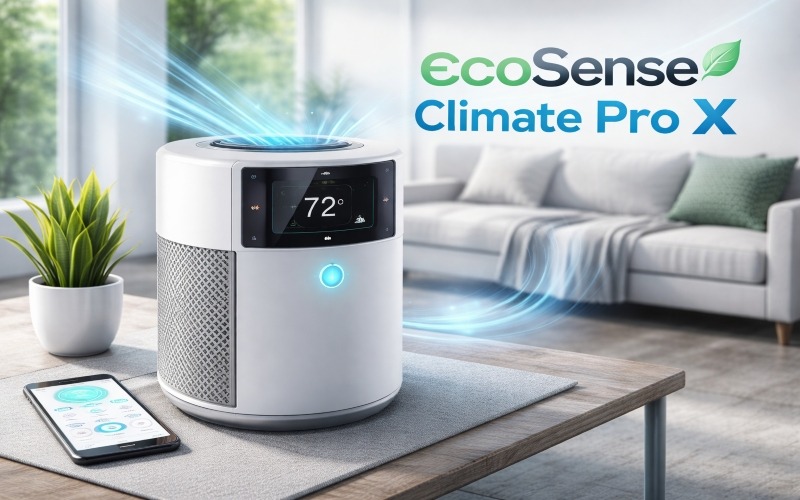
1. EcoSense Climate Pro X
Overview
The EcoSense Climate Pro X is a game-changer for those looking for a combination of AI-powered climate control and energy efficiency. Designed to automatically learn and adjust to your schedule, this system brings both convenience and sustainability.
Key Specifications
- An AI Learning Algorithm that adapts to daily routines
- Dual-Zone Temperature Support for multi-room control
- Smart Humidity Monitoring
- Integration with Alexa, Google Assistant, and other smart devices
- Energy Use Reporting for optimised savings
Pros
- Automatically adjusts based on your routine.
- Energy-efficient, helping to reduce utility bills.
- User-friendly mobile app with remote access
- Seamless integration with smart home systems
Cons
- Dual-zone system only; not for larger homes with more zones
- Needs consistent Wi-Fi for advanced features
Real-Life Impact
For busy families, EcoSense Climate Pro X offers a stress-free solution. Its adaptive nature means that you can rely on it to keep rooms at optimal temperatures, even when you’re not home. Many users have reported up to 25% savings on energy costs by allowing the system to intelligently control their home’s climate.
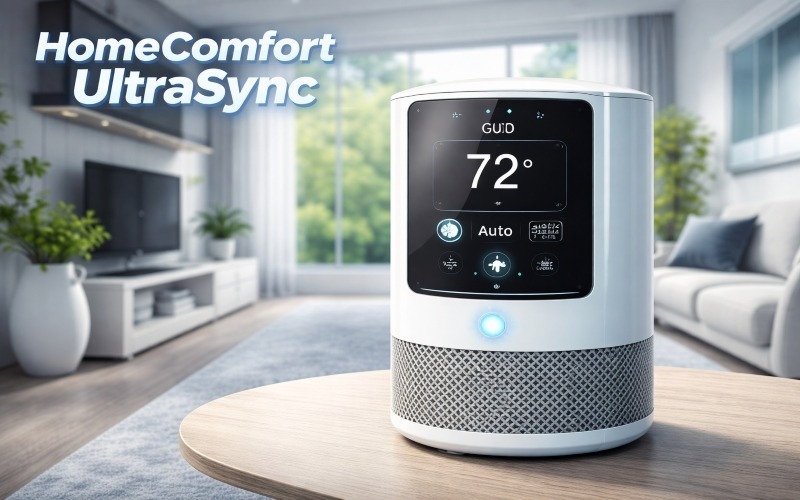
2. HomeComfort UltraSync
Overview
If you have a large or multi-level home, HomeComfort UltraSync is the perfect solution. It allows for multi-zone climate control, ensuring that different areas of the home remain at optimal temperatures.
Key Specifications
- Multi-Zone Control (up to 6 zones)
- Voice-Control Integration (Alexa, Google Assistant)
- Real-time Climate Adjustments
- Mobile App for remote monitoring and control
Pros
- Ideal for large homes with multiple living areas
- Easy to install and configure
- High customisation options for each zone
- Provides energy consumption insights
Cons
- Slightly more expensive compared to basic models
- It can be overkill for small apartments
Real-Life Impact
HomeComfort UltraSync is particularly beneficial for families with diverse temperature preferences. It provides individual temperature zones that can be tailored to personal preferences, for example, a cooler bedroom for sleeping and warmer spaces for living areas. Users have reported more even comfort throughout the house with significantly reduced temperature fluctuations.
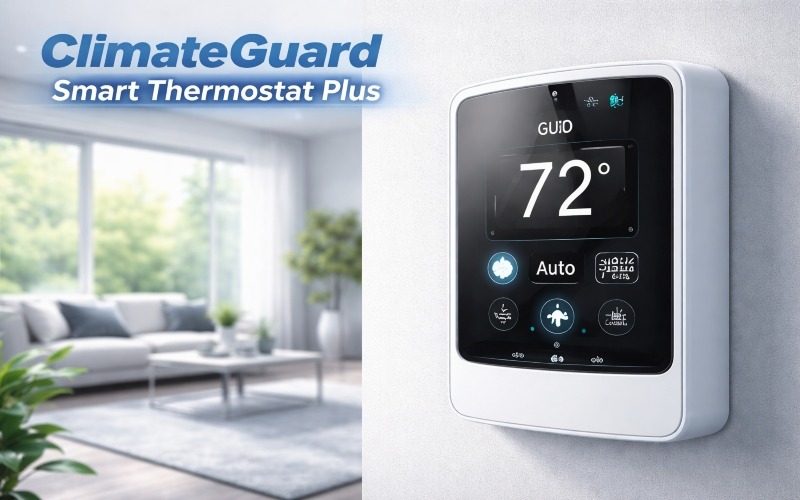
3. ClimateGuard Smart Thermostat Plus
Overview
The ClimateGuard Smart Thermostat Plus is a reliable option for those looking to upgrade their home climate control without breaking the bank. It offers basic smart functionality with energy-saving features.
Key Specifications
- Smart Scheduling that learns your preferred settings
- Mobile App Control for remote adjustments
- HVAC Health Alerts to maintain system efficiency
- Compatible with most HVAC systems
Pros
- Affordable and simple smart upgrade
- Easy to install without needing a professional
- Offers energy-saving insights
- Compatible with existing HVAC systems
Cons
- No advanced features like humidity sensors
- Limited to single-zone control
Real-Life Impact
For homeowners new to smart home climate control, ClimateGuard offers a quick and affordable solution. Users report feeling more in control of their home’s energy use, and many love how they can easily adjust the temperature before arriving home, ensuring the house is comfortable without wasting energy.
4. Aura AirMaster Climate Hub
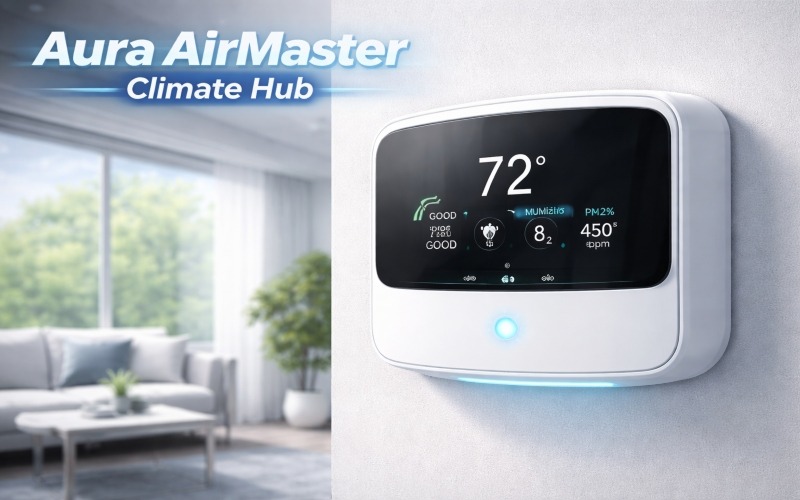
Overview
Designed for those who value air quality just as much as temperature control, the Aura AirMaster Climate Hub combines climate control with advanced air purification to improve indoor air quality.
Key Specifications
- HEPA and Activated Carbon Filtration for air purification
- Smart Climate Scheduling with temperature and humidity control
- VOC and Particulate Sensors for real-time air quality data
- Integration with smart home systems
Pros
- Excellent air purification alongside climate control
- Ideal for homes with allergy sufferers or smokers
- Real-time air quality monitoring and feedback
Cons
- Higher upfront cost
- Bulky design compared to other thermostats
Real-Life Impact
For families with asthma or allergies, Aura AirMaster offers cleaner air and better comfort. Many users have noted fewer allergy flare-ups and a healthier environment overall, especially in highly polluted urban areas. It’s a great choice for those seeking a healthier, more sustainable living space.
5. ZenTemp Adaptive System
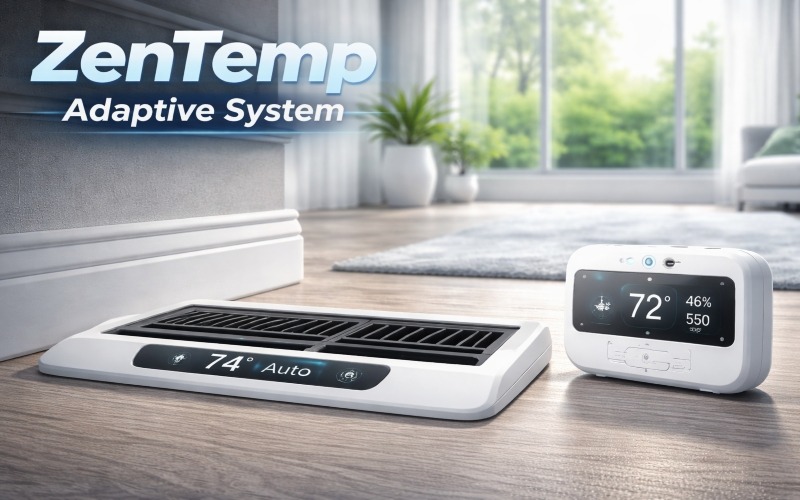
Overview
The ZenTemp Adaptive System is a smart solution that adjusts your home’s climate based on your personalised preferences. It features predictive AI, ensuring your home is always at the ideal temperature when you need it most.
Key Specifications
- AI-Powered Learning to predict the best temperature settings
- Smart App and Voice Control
- Integrated Sensors for better temperature distribution
- Energy Efficiency Reports for optimised savings
Pros
- Predictive AI adapts to your lifestyle.
- Seamless integration with other smart devices
- Energy-efficient for long-term savings
- User-friendly interface with intuitive controls
Cons
- Requires strong Wi-Fi for advanced features
- Advanced analytics may overwhelm new users.
Real-Life Impact
For tech-savvy homeowners who value predictive comfort, ZenTemp excels at automatically adjusting settings for peak efficiency. People have reported minimal manual intervention and a noticeable improvement in temperature stability at all hours of the day. It’s perfect for those who want smart, hands-off climate control.
6. SmartBreeze Climate Control Tower
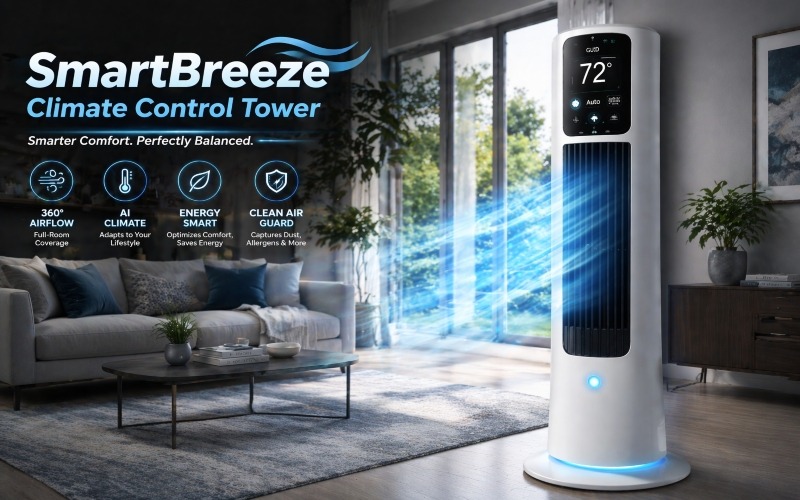
Overview
SmartBreeze is a climate control tower that provides airflow management in addition to temperature regulation. Perfect for open floor plans, this device is all about balancing airflow and creating a consistent climate.
Key Specifications
- Zonal Airflow Management for temperature balancing
- Mobile and Voice Control
- Advanced Sensors to adjust airflow and temperature
- Energy-efficient Smart Features
Pros
- Excellent for open, interconnected spaces
- Helps eliminate hot/cold spots in your home
- Smart energy savings based on airflow optimisation
Cons
- Bulkier design compared to traditional thermostats
- Limited to larger spaces; not ideal for small rooms
Real-Life Impact
For homeowners with open concept layouts, SmartBreeze ensures even temperature distribution throughout the house. People living in multi-room spaces report improved comfort, particularly in areas that previously had trouble maintaining a steady temperature.
7. ThermoBalance Smart Climate 360
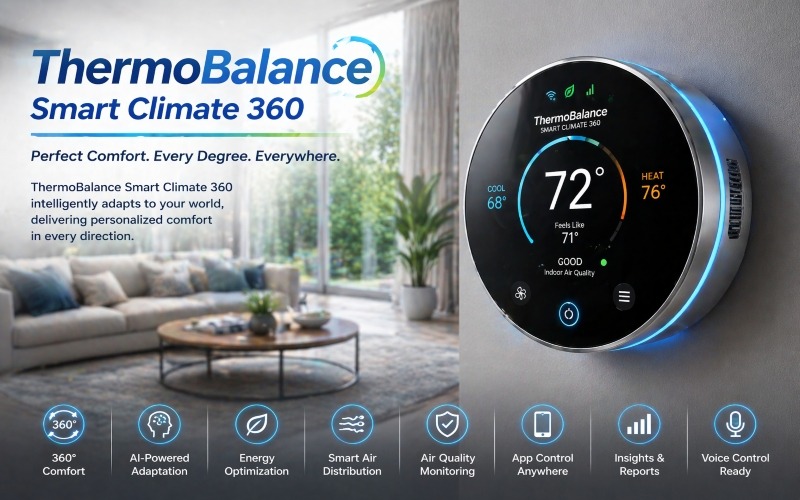
Overview
The ThermoBalance Smart Climate 360 combines temperature, humidity, and air quality regulation, giving you a complete climate solution in one system.
Key Specifications
- 360° Climate Sensing with humidity and air quality control
- Real-time AI Optimisation
- Smart Zone Control for individualised settings
- Comprehensive Reports on energy and air quality
Pros
- Holistic climate control (temperature, humidity, air quality)
- Energy optimization for lower costs
- User-friendly app for easy management
Cons
- More expensive than basic models
- Some users find the features excessive for smaller homes.
Real-Life Impact
For large families or homes with varying temperature needs, ThermoBalance offers a comprehensive solution. It has reduced heating costs by 20% for many users who were previously using manual systems. The ability to track air quality and temperature ensures everyone stays comfortable, no matter their preferences.
Comparison of Best Smart Home Climate Control Devices
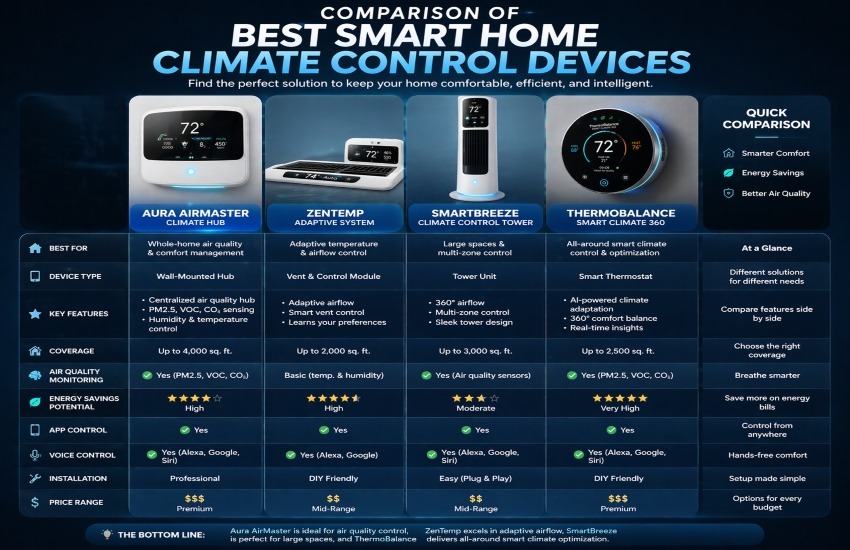
| Device | Best For | Key Features | Pros | Cons |
| EcoSense Climate Pro X | Budget-friendly, Energy-saving | AI scheduling, Dual-zone, Humidity | Energy savings, Smart | Dual-zone, Wi-Fi dependent |
| HomeComfort UltraSync | Large Homes, Multi-zone | Multi-zone, Voice control, Real-time | Customizable zones | Expensive |
| ClimateGuard Smart Thermostat | Budget smart upgrade | Smart scheduling, HVAC alerts | Affordable, Easy install | Single-zone, No humidity |
| Aura AirMaster Climate Hub | Air quality-focused homes | HEPA filtration, Air quality sensors | Excellent air purification | High cost, Bulky |
| ZenTemp Adaptive System | Predictive comfort seekers | AI learning, Smart integration | Predictive, Energy efficient | Needs strong Wi-Fi |
| SmartBreeze Tower | Open concept homes | Airflow management, Smart energy | Even temperature, Efficient | Bulky, Not for small spaces |
| ThermoBalance 360 | Full climate control | 360° sensing, Humidity control | All-in-one, Energy efficient | Expensive, Overkill for small homes |
Key Features of Home Climate Control Systems in 2026

Home climate control systems have advanced significantly over the last few years, thanks to new innovations in technology and automation. Here are some of the standout features that make smart home climate control systems a must-have for modern homes:
1. AI-Powered Climate Control
- Artificial intelligence (AI) is revolutionising home climate control systems. AI algorithms can now predict and learn your behaviour, adjusting the temperature based on your daily routines.
- Whether you like your living room cooler during the day and warmer at night, AI-powered systems can automatically set the right home climate control temperature without requiring manual input.
2. Dual-Zone Climate Control
- For larger homes, dual-zone climate control is an increasingly popular option. This allows for different temperature settings in separate areas of the home, making it more energy-efficient.
- For instance, you might prefer the upstairs rooms to be cooler while maintaining a warmer environment downstairs. This is ideal for homes with multiple floors or distinct areas with varying heating and cooling needs.
3. Smart Integration with Other Home Systems
- The best home climate control systems today are designed to integrate with other smart devices, creating a seamless home automation system.
- Whether it’s your smart thermostat, smart lights, or even your smart home security system, a climate-controlled home can adjust everything based on your preferences.
- Imagine arriving home to find the perfect temperature, the lights automatically adjusting, and even your security system activated—all controlled from your mobile phone or voice assistant.
4. Real-Time Monitoring and Alerts
- Smart climate control systems can also monitor air quality in real-time. Many smart home climate control appliances come equipped with air quality sensors to detect pollutants like carbon dioxide or airborne particles.
- If the air quality drops, the system will alert you and can even adjust the ventilation or temperature to improve the air quality in your home.
5. Energy Efficiency and Cost Savings
- One of the biggest advantages of a smart climate control system is its energy efficiency. Unlike traditional HVAC systems that run continuously, automating home climate control systems ensures that the system only works when necessary.
- For example, your home might automatically adjust its temperature when you leave, then return to your desired comfort level before you arrive. This not only saves energy but also reduces your utility bills.
Why Should You Invest in Home Climate Control in 2026?
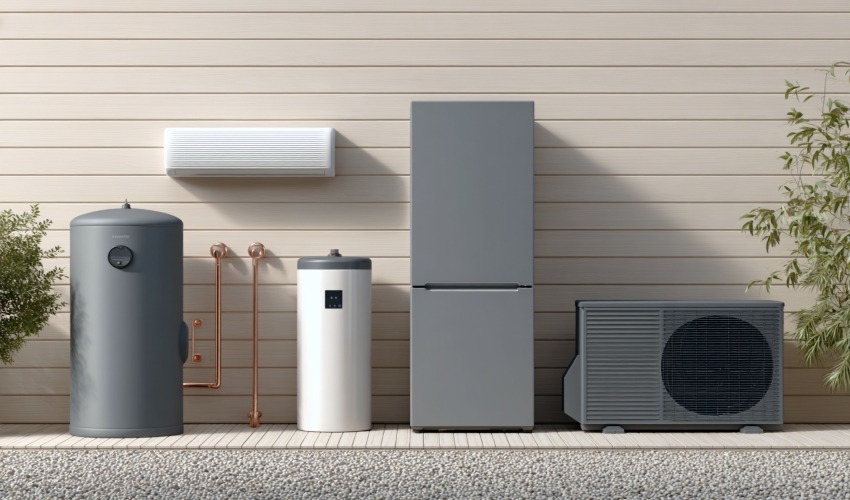
The need for efficient home climate control systems is growing, especially as homes become smarter and more interconnected. Smart home climate control devices can create a personalised, energy-efficient, and healthier living environment.
1. Better Comfort
- With the smart climate control features available today, you can set your home’s temperature exactly the way you want it. Whether you want your bedroom cool for sleeping or your living room warm on chilly evenings.
- Best Home Climate Control Systems can do it all. It adapts to your needs, ensuring that your home is always at the right temperature.
2. Improved Health and Air Quality
- Air quality plays a vital role in overall health, and home climate control systems with air quality monitoring can significantly improve the air you breathe.
- By maintaining optimal levels of humidity and filtration, these systems help reduce allergens and pollutants, creating a cleaner and healthier environment.
3. Save Money on Energy Bills
- By optimising energy use and only running the system when needed, automating climate control systems can result in significant savings on energy costs.
- These systems can detect when you’re away and adjust the temperature settings, meaning you’re never paying for energy you don’t use.
4. Sustainability
- With more people becoming conscious of their environmental impact, sustainable home climate control is increasingly important.
- Many systems now use energy-efficient technologies like solar-powered climate control units, reducing your home’s carbon footprint while maintaining the comfort you deserve.
How to Choose the Best Home Climate Control System

Choosing the right home climate control system can be overwhelming due to the variety of options available. Here are some factors to consider:
- Size of Your Home: Larger homes with multiple floors may benefit from dual-zone climate control or separate thermostats for different areas.
- Energy Efficiency: Look for systems that provide smart energy management to help you save money on energy bills while maintaining comfort.
- Integration: Ensure the system is compatible with other smart devices in your home, such as smart thermostats, lighting, and security systems.
- Budget: Consider your budget and whether you want a high-end AI home climate control system or a more basic option.
FAQs
What is climate control in a house?
Climate control in a house refers to the management of temperature, humidity, and air quality to create a comfortable living environment. It typically involves HVAC systems (Heating, Ventilation, and Air Conditioning), smart thermostats, and air quality monitoring.
Modern smart home climate control devices go beyond temperature regulation, integrating air purification, humidity control, and energy-saving features for improved comfort and efficiency.
What is the $5000 rule for AC?
The $5000 rule is a guideline used to determine when it’s more cost-effective to replace rather than repair your air conditioning unit. According to this rule, if the cost of repairs plus the age of the AC unit exceeds $5000, it might be time to invest in a new unit.
For example, if your unit is 10 years old and a repair costs $1000, the total comes to $6000, making replacement the better option.
Is 23 degrees too hot for a house?
23°C (73°F) is generally considered a comfortable room temperature for most people. However, personal preferences and climate conditions vary. In hot climates, 23°C might feel quite cool, while in cooler areas, it might be too warm.
Ideally, setting your thermostat between 20-22°C (68-72°F) is recommended for a balanced, energy-efficient home temperature.
What is the 3-minute rule for AC?
The 3-minute rule for air conditioners refers to the recommended waiting time before turning an AC unit on or off. If you’ve just turned off your AC, it’s best to wait about 3 minutes before restarting it. This is to prevent damage to the compressor, as it needs time to equalise pressure inside the system. Restarting too quickly can strain the compressor and reduce the unit’s lifespan.
Conclusion
In 2026, smart home climate control devices have become essential for creating comfortable, energy-efficient, and healthier living spaces. From AI-powered systems like the EcoSense Climate Pro X to comprehensive solutions like ThermoBalance Smart Climate 360, there is a device to suit every home and lifestyle.
Whether you’re looking to optimise energy savings, enhance indoor air quality, or enjoy predictive comfort, these devices offer a range of benefits, including personalised climate control, remote management, and real-time monitoring.
Each of these systems plays a pivotal role in the future of smart home technology, allowing homeowners to enjoy greater convenience, cost savings, and sustainability.
Choosing the right system depends on your specific needs, whether it’s multi-zone control, predictive AI, or air quality management. By investing in the best smart climate control devices, you ensure your home remains comfortable and efficient, not just for today, but for years to come.

In the ever-evolving landscape of Roombanker home security, technology plays an increasingly crucial role in safeguarding our most valuable asset, our homes. Among the various options available, one smart home innovation stands out in 2026: the Best Roombanker.
A Roombanker is a cutting-edge home protection system designed to provide round-the-clock monitoring and smart security. The rapid growth of smart homes and IoT (Internet of Things) devices has made Roombankers more efficient, accessible, and affordable than ever before.
In this article, we will dive deep into the world of Best Roombankers for 2026. We’ll explore the key features, how they work, and why investing in one can significantly improve your home’s security. Let’s discover how the Best Roombanker can transform your smart home automation into a faster, safer place to live.
What is the best Roombanker 2026?

A Roombanker is a revolutionary home security solution that integrates advanced technology to protect your home. At its core, it is a smart device designed to monitor your living space, detect any security threats, and offer real-time protection to your property.
In essence, it serves as the central hub for all your home security needs. It is capable of integrating with existing smart home devices like cameras, sensors, lights, and locks. Whether it’s a door left unlocked, an unexpected motion in the living room, or a potential fire hazard, the Roombanker is always vigilant.
What sets Roombankers apart from traditional home security systems is their ability to provide intelligent protection. This helps reduce false alarms and ensures that only genuine security events trigger alerts.
In 2026, are equipped with the latest sensors and connectivity options, including Wi-Fi, Bluetooth, and even 5G for faster communication. They are also designed to be more user-friendly, with mobile apps that allow homeowners to monitor their properties.
Why You Need the Best Roombanker in 2026?

As we enter 2026, home security has evolved far beyond traditional locks and surveillance cameras. The increasing reliance on smart technology and connected devices has made our homes more vulnerable to cyber threats, and the need for robust, innovative security solutions has never been greater.
In today’s fast-paced world, home security systems are no longer just about preventing break-ins. With the advent of smart homes and automation, homeowners require a solution that not only safeguards their property but also integrates seamlessly with their lifestyle. Roombankers are designed to meet this demand by offering a multifaceted defence system.
The need for in 2026 is particularly relevant because of the increasing complexity of modern living environments. Many homes now feature a growing number of IoT devices, from smart thermostats to voice assistants.
It acts as the brain of your home security, ensuring that all devices are connected and working in harmony to detect and prevent risks before they escalate.
Top Features of the Best Roombanker for 2026
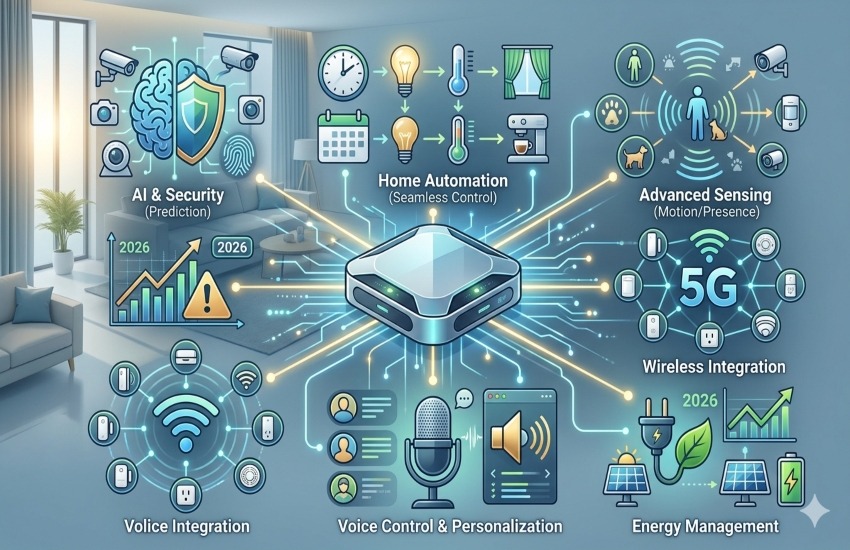
As we look ahead to 2026, they have become much more than just basic security devices; they are now intelligent, multi-functional systems designed to provide comprehensive protection and convenience for your home.
The Best Roombanker in 2026 combines advanced technology, user-friendly interfaces, and cutting-edge security features to ensure your home is safe, smart, and well-protected. Below are the key features that make these devices stand out.
1. AI-Powered Threat Detection
One of the most important features of the Best Roombanker is its AI-powered threat detection system. By analysing data from sensors and cameras around your home, it can quickly identify unusual activities and differentiate between false alarms and real threats. Whether it’s a person moving through your living room at an odd hour or a door left ajar.
2. Smart Integration with IoT Devices
Modern homes are full of smart devices, from thermostats to voice assistants to smart appliances. The Best Roombanker acts as the central hub that integrates all these devices. It can connect with your existing smart home system, such as Amazon Alexa, Google Assistant, and Apple HomeKit, to provide seamless automation. For example, it can automatically turn off lights, lock doors, and activate security cameras.
3. Real-Time Monitoring and Alerts
In the world of home security, a timely response is everything. The Best Roombanker offers real-time monitoring and sends instant alerts directly to your phone or other connected devices. Whether you’re at work, on vacation, or just in the other room, you will receive notifications if something seems off.
4. Remote Control via Mobile App
One of the most valued features is the ability to control and monitor your system remotely. The mobile app offers users the flexibility to arm/disarm their system, adjust settings, view real-time footage, and receive notifications no matter where they are.
5. 24/7 Video Surveillance with Cloud Storage
Continuous video monitoring is a critical component of a modern home security system. The Best Smart Home Device is equipped with HD cameras that provide round-the-clock surveillance of your home. The system stores video footage in cloud storage, allowing you to easily access recordings in the event of an incident.
6. Fire, Flood, and Environmental Hazard Detection
The Best Roombanker doesn’t just protect against intruders; it also monitors for environmental hazards. Equipped with smoke detectors, carbon monoxide sensors, and water leak detectors, it provides comprehensive protection against a range of household dangers.
In the event of a fire, leak, or toxic gas buildup, the system will alert you immediately and can even trigger automatic responses like shutting off the gas or notifying emergency services.
7. Facial Recognition and Smart Entry Systems
Security systems are becoming increasingly advanced with the use of facial recognition technology. The Best Roombanker in 2026 includes this feature, allowing it to recognise familiar faces and grant access without the need for traditional keys or entry codes.
Paired with smart locks, it can automatically unlock doors when authorised individuals approach, making entry convenient and secure.
8. Voice Command Integration
For added convenience, many of the Best Roombanker systems now include voice command integration. You can issue commands like “Lock the doors” or “Arm the security system” using only your voice, either through the mobile app or by using virtual assistants like Alexa or Google Assistant.
9. Customizable Security Settings
Every home is different, and so are the security needs of its occupants. The Best Roombanker comes with customizable settings to cater to various lifestyles and preferences.
Whether it’s adjusting the sensitivity of motion sensors or scheduling when the system arms itself, homeowners can tailor the device to fit their specific needs. This flexibility ensures that the system works for you, not the other way around.
10. Cybersecurity Features
As homes become smarter, they also become more vulnerable to cyber-attacks. The Best Roombanker takes this into account by offering advanced encryption and secure data transmission to ensure that your system and personal information remain safe from hackers.
How the Best Roombanker 2026 Protects Your Home?
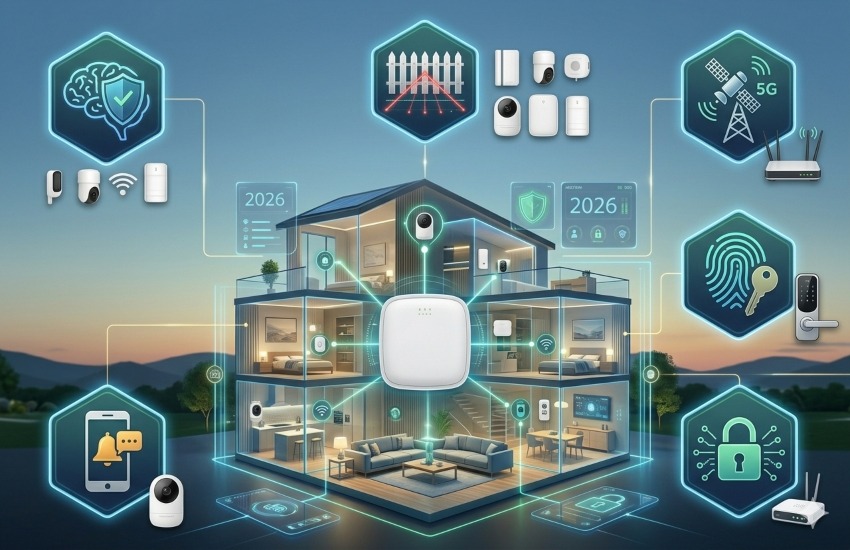
A Roombanker is more than just a smart security device—it acts as the central pillar of your home’s defence system, ensuring that your property remains safe from a variety of potential threats.
From intruders to environmental hazards, the Best Roombanker leverages a combination of advanced sensors, AI-powered analysis, and real-time monitoring to provide round-the-clock protection.
1. Intruder Detection and Response
The primary role of any home security system is to protect against unauthorised entry, and Roombankers excel in this regard. Using motion sensors, cameras, and AI-driven software, the Best Roombanker is able to detect any suspicious movement around your property. When an intruder attempts to break in, the system reacts instantly. In many cases, it will trigger an alarm, lock all doors and windows, and even send real-time alerts to your phone, so you can take immediate action.
What’s more, many Roombankers have two-way audio functionality, allowing you to communicate with intruders through your system. This can serve as a deterrent, as the intruder will hear your voice, letting them know they’ve been detected and that help is on the way.
The Best Roombanker 2026 can also be connected to local authorities, automatically notifying the police or security personnel if a break-in is confirmed.
2. Fire and Carbon Monoxide Protection
A Roombanker is not just about preventing intrusions; it also guards your home against environmental hazards. Smoke detectors and carbon monoxide sensors are integrated into the system, providing immediate alerts if dangerous levels of these substances are detected.
In the event of a fire, the Best Roombanker will notify you instantly, and in many cases, it will trigger automatic responses like shutting off electrical devices to prevent further risks.
3. Flood Detection and Emergency Response
Floods and water damage are some of the most common yet devastating threats to homes. The Best Roombanker can help you avoid these disasters by monitoring for water leaks and sudden changes in moisture levels. Integrated water sensors are placed in key areas like basements, kitchens, and bathrooms.
When these sensors detect water, the system alerts you immediately, allowing you to take action before the damage becomes severe.
In some cases, the system can even shut off water valves to prevent further flooding, providing a comprehensive defence against water damage. This proactive approach is crucial in protecting your home from costly repairs and potential structural damage.
4. Real-Time Alerts and Mobile Control
The Best Roombanker operates seamlessly with a mobile app, allowing you to monitor your home’s security from anywhere in the world. Whether you’re on vacation or at work, you can always check the status of your system in real time.
The app sends push notifications for any unusual activity, such as an open door or a detected motion event, and it gives you the option to take immediate action, whether it’s locking a door, calling for help, or reviewing live camera footage.
In the event of an emergency, the Best Roombanker can automatically contact emergency responders or local authorities, ensuring that the right people are alerted even if you’re unavailable. This built-in connectivity ensures that help is never too far away, no matter the situation.
5. Smart Automation for Daily Protection
The Best Roombanker doesn’t just wait for emergencies to occur; it also proactively protects your home by integrating with your smart devices and automating everyday tasks. For example, when you leave for work, the system will automatically arm itself, lock all doors, close windows, and turn off lights.
The system can also create schedules for routine tasks like turning on lights in the evening to make it appear as if someone is home, thus deterring potential burglars. Additionally, it can automatically adjust your thermostat to save energy when you’re not at home, offering both security and energy efficiency.
6. Advanced AI Analysis for Threat Prediction
One of the standout features of the Best Roombanker is its ability to learn. Using AI and machine learning, the system analyses your home’s activity patterns over time. It knows when you typically leave and return home, when your family members move around, and what activities are considered normal.
For instance, if the system detects unusual motion at a time when no one is supposed to be home, or if a door is opened during odd hours, it will trigger an alert. This predictive capability ensures that threats are detected and mitigated before they escalate, offering a much more dynamic and effective security solution than static, traditional systems.
Customer Reviews and Expert Opinions

One of the best ways to determine whether the Best Roombanker lives up to its promises is by hearing from the people who use it daily, homeowners, security experts, and technology reviewers.
Below, we’ll explore some real-world customer reviews and expert opinions that highlight its effectiveness and how it’s changed the landscape of home security in 2026.
Real-World Customer Experiences
Homeowners who have integrated the Best Roombanker into their smart homes rave about its ability to seamlessly blend with existing systems while enhancing security. Sarah, a homeowner in New York, shares her experience:
“I was initially sceptical about investing in a Roombanker, but after seeing how easy it was to install and how responsive it was in detecting potential threats, I’m completely convinced. The real-time alerts give me peace of mind when I’m away, and I feel safer knowing that the system is constantly learning and adapting to my home’s needs.”
Sarah’s feedback reflects a common sentiment among users: Roombankers are easy to use, responsive, and integrate smoothly with other smart devices, offering convenience alongside advanced security features.
Expert Opinions
Industry experts have also weighed in on the rise of Roombankers as the go-to solution for home protection. John Reynolds, a tech analyst at SmartHomeSecurity.com, points out:
“In 2026, security solutions are no longer just about surveillance; they’re about smart, predictive systems that can anticipate threats before they happen.
The Best Roombanker takes this concept to the next level by combining AI and real-time monitoring to create a truly proactive system. It’s a game-changer for anyone serious about protecting their home.”
Experts highlight that the integration of artificial intelligence and machine learning in Roombankers sets them apart from traditional security systems, providing homeowners with real-time insights and preemptive security measures that were once only available in high-end commercial systems.
Customer Satisfaction and Trust
One of the most compelling reasons customers trust the Best Roombanker is its dependability. Mark, an entrepreneur in California, shares his experience:
“As a frequent traveller, I used to worry about leaving my family home unattended. Since installing the Best Roombanker, I’ve been able to monitor everything remotely, and I feel reassured knowing the system is always protecting my home—even when I’m across the globe.”
Customers like Mark value the system’s ability to offer remote access, constant monitoring, and easy management through mobile apps, ensuring that they have control at all times.
Comparison: Best Roombanker vs Competitors
With a growing number of smart home security systems available, it’s essential to compare the Best Roombanker to other popular devices on the market to understand what makes it stand out in 2026. Below, we will compare the Best Roombanker 2026 with some of the top competitors, highlighting the unique features that set it apart and make it the top choice for homeowners seeking the most advanced home protection.
1. Best Roombanker vs RoombaGuard 360

RoombaGuard 360 has been a long-standing competitor in the home security market. While it offers similar functionalities, such as AI-driven detection and integration with smart home systems, the Best Roombanker excels in customisation and real-time adaptability.
- Key Difference: The Best Roombanker features more advanced AI algorithms that allow it to learn and predict patterns in your home environment more efficiently than the RoombaGuard 360. This leads to fewer false alarms and a more personalised experience.
- Verdict: While RoombaGuard 360 is effective, the Best Roombanker’s superior AI capabilities make it a better choice for users who want a smarter, more intuitive security solution.
2. Best Roombanker vs SafeZone Pro
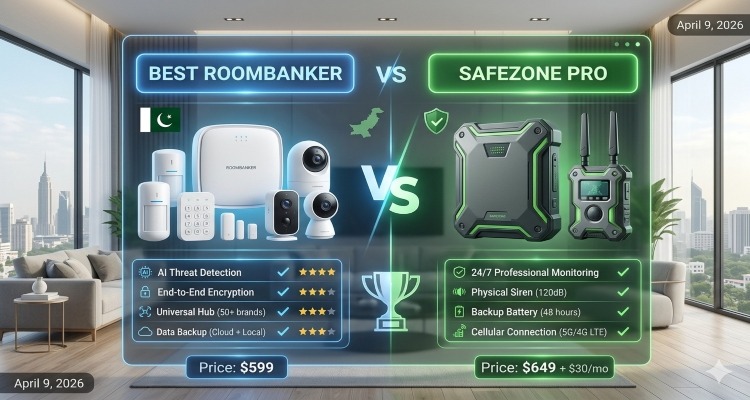
SafeZone Pro is another competitor that provides smart home security, but its reliance on basic motion detectors and manual controls limits its overall effectiveness in comparison to the Best Roombanker.
- Key Difference: The Best Roombanker offers full integration with a wide range of IoT devices, allowing for automated responses to security threats.
- It also includes cloud storage for video surveillance, ensuring that no data is lost in case of system failure. SafeZone Pro lacks these features and only offers basic functionalities.
- Verdict: If you are looking for a comprehensive, automated security system, the Best Roombanker outshines SafeZone Pro with its advanced integration and cloud-based features.
3. Best Roombanker vs ProtectoHome 2026
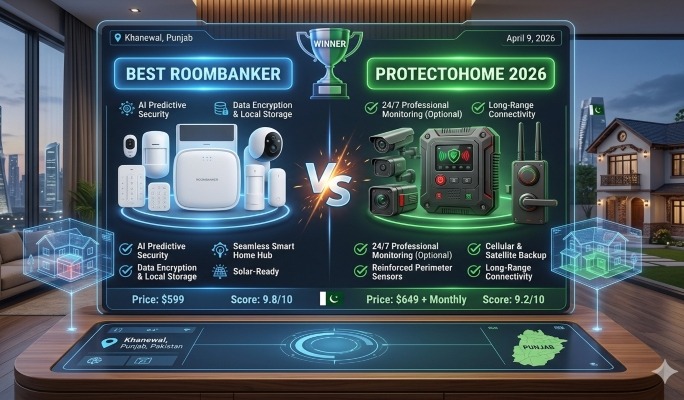
ProtectoHome 2026 is a popular smart security system that offers a range of sensors and surveillance features. However, it falls short when it comes to remote control and AI-driven automation.
- Key Difference: ProtectoHome 2026 doesn’t offer the same level of AI adaptability as the Best Roombanker. While it does provide smart home integration, it lacks the predictive capabilities that the Best Roombanker has in identifying security threats before they even happen.
- Verdict: For homeowners who want a more proactive security system that evolves with their home and offers remote management, the Best Roombanker offers significant advantages over ProtectoHome 2026.
4. Best Roombanker vs SecuroTech

SecuroTech is known for its comprehensive security cameras and alarm systems, which offer basic home protection. While effective for some, SecuroTech’s systems rely heavily on manual intervention and constant monitoring.
- Key Difference: The Best Roombanker stands out with its AI-driven automation and ability to seamlessly integrate with other smart devices, creating a more automated, hands-off experience for the user. Unlike SecuroTech, which requires continuous manual oversight, the Best Roombanker offers a set-it-and-forget-it approach that ensures 24/7 protection with minimal user effort.
- Verdict: If you’re looking for a system that automates security responses and reduces manual input, the Best Roombanker is a more efficient choice than SecuroTech.
Why the Best Roombanker Wins
The Best Roombanker clearly outshines its competitors in several key areas:
- Advanced AI capabilities that provide smarter, predictive security.
- Full IoT integration, allowing for automated responses to various threats.
- Remote monitoring and mobile app integration, providing complete control from anywhere.
- Cloud storage for video surveillance ensures that all footage is securely stored.
When compared to its competitors, the Best Roombanker offers superior automation, customisation, and predictive features, making it the go-to choice for homeowners seeking the most innovative and reliable home protection in 2026.
How to Choose the Best Roombanker for Your Home?
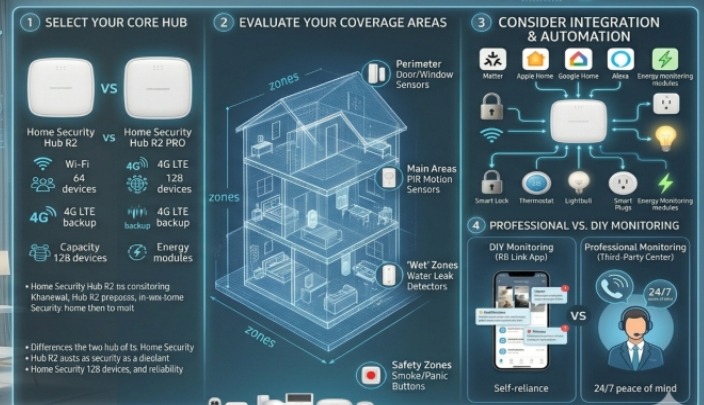
Choosing the right Roombanker for your home is crucial to ensuring optimal security, efficiency, and peace of mind. With so many options available in 2026, it’s important to consider a few key factors before making your decision.
Here’s a step-by-step guide on how to select the Best Roombanker that suits your unique needs and lifestyle.
- Assess Your Home’s Security Needs
Before selecting a Roombanker, consider the size and layout of your home. Larger homes with multiple entry points might require multiple sensors and extra cameras, while smaller homes may only need basic protection.
Identify areas of vulnerability, such as windows, doors, and even hidden entry points like basements or attics. The Best Roombanker should cover all these areas with sufficient sensors and surveillance options to ensure comprehensive protection.
- Look for AI-Driven Features
One of the most important features to consider when choosing a Roombanker is artificial intelligence. The Best Roombanker utilises AI-powered threat detection to learn and adapt to your home’s environment, ensuring fewer false alarms and more accurate responses.
Look for a system that uses AI to analyse motion, sound, and environmental data to provide proactive rather than reactive protection. This can be especially helpful in avoiding unnecessary notifications while still ensuring high-level security.
- Check Compatibility with Your Smart Home System
If you already have a smart home setup, such as smart lights, thermostats, or voice assistants like Alexa or Google Assistant, you’ll want a Roombanker that integrates seamlessly with your existing devices.
IoT compatibility is a key feature of the Best Roombanker, as it can automate security tasks like locking doors, adjusting lights, and setting the thermostat to an energy-saving mode when you’re away.
Choose a Roombanker that offers easy integration with your preferred smart home ecosystem to ensure smooth functionality.
- Ensure Mobile Access and Control
A significant benefit of modern security systems is the ability to monitor and control your home remotely. Choose a Roombanker with a user-friendly mobile app that allows you to receive real-time alerts, view video footage, and manage your system from anywhere. Whether you’re on vacation or simply away at work, the ability to monitor your home security from your smartphone adds convenience and peace of mind.
- Evaluate Storage and Data Security
Look for a Roombanker that offers cloud storage for video surveillance. This ensures that in the event of a security breach or system malfunction, your footage is safely stored and accessible.
Encrypted data transmission is another essential consideration to protect your personal information and ensure the privacy of your home’s data. Always choose a model with robust cybersecurity features to safeguard your home from digital threats.
- Budget and Value for Money
Finally, consider your budget and how much you’re willing to invest in a home security system. The Best Roombanker is an investment in your home’s safety, so it’s worth considering the long-term benefits.
While some models may come with a higher upfront cost, they often provide more advanced features and better protection. Look for a Roombanker that offers the best value for your budget, keeping in mind the essential features that align with your security needs.
FAQs
What is a Roombanker, and how does it work?
A Roombanker is an advanced home security system that integrates artificial intelligence (AI), IoT devices, and real-time monitoring to provide comprehensive protection for your home.
It learns your home’s patterns, detects potential threats, and can take automatic actions, such as locking doors, alerting emergency services, or turning off appliances when danger is detected.
Is the Best Roombanker easy to install?
Yes, the Best Roombanker is designed to be user-friendly, with easy installation that typically requires no professional help. Most systems come with clear instructions and a mobile app that guides you through the setup process.
The system can be integrated with your existing smart home devices, making the installation process even more seamless.
Can the Best Roombanker integrate with other smart home devices?
Absolutely! The Best Roombanker is designed to work with other smart home devices, including thermostats, cameras, lights, and voice assistants like Amazon Alexa and Google Assistant.
This integration allows for automated actions, such as adjusting the thermostat or turning on lights when you leave or return home.
Does the Best Roombanker offer mobile app control?
Yes, the Best Roombanker comes with a mobile app that allows you to monitor your home’s security, receive real-time alerts, view camera footage, and control the system remotely. This feature is particularly useful for homeowners who want to keep an eye on their property while they’re away or travelling.
How does the Best Roombanker prevent false alarms?
The Best Roombanker uses advanced AI-powered threat detection to learn your home’s unique activity patterns. By analysing motion, sound, and environmental data, it can distinguish between normal activities and actual threats, significantly reducing false alarms. The system becomes smarter over time, ensuring only real security threats trigger alerts.
Is the data from the Best Roombanker secure?
Yes, data security is a top priority for the Best Roombanker. The system uses encrypted data transmission and offers cloud storage for video footage, ensuring that your data is protected from potential cyber threats. The footage is securely stored and can only be accessed by authorised users, giving you peace of mind that your privacy is protected.
Conclusion
In 2026, home security has advanced far beyond traditional alarm systems, and the Best Roombanker stands at the forefront of this revolution. By integrating cutting-edge AI technology, seamless smart home connectivity, and real-time monitoring.
With features like AI-driven threat detection, environmental hazard sensors, and remote mobile control, the Best Roombanker provides homeowners with a smart, automated security solution that adapts to their unique needs.
Whether you’re looking to protect your home from intruders, environmental dangers, or simply want a more intelligent, automated security system, the Best Roombanker delivers. It offers peace of mind with real-time alerts, seamless integration with other smart devices, and remote monitoring, all from the palm of your hand.
Investing in the Best Roombanker isn’t just about securing your home; it’s about future-proofing your protection with a system that evolves with technology and keeps you connected no matter where you are.

 Home Technology Solutions6 months ago
Best Smart AI Refrigerator 2026: Amazing Features, Pros & Cons (Buy Guide)
- Home Appliance Automation6 months ago
Best Smart Home Cameras 2026: Top WiFi & Security Solutions
- Home Technology Solutions6 months ago
Best AI Washing Machine Technology 2026:Smart Wash, Energy Saving & App Control
- Home Appliance Automation6 months ago
Best Smart Home Hubs in 2026: Features, Benefits & Buying Guide
- Home Appliance Automation7 months ago
Smart Home Automation Ideas 2026: Best Systems for Modern Living
- Home Appliance Automation6 months ago
Best Smart Home Installation (2026): Complete Buyer Guide
- Home Technology Solutions7 months ago
Home Assistant AI Guide 2026: Ultimate Smart Home Automation & AI Voice Control
- Home Security Systems6 months ago
Best Smart Fire Alarms 2026: Top WiFi Smoke Detectors Reviewed